

Wasps – the good, the bad and the downright irritating
Whether trying to cajole one out of your office or running for cover after it seems a little too interested in your food we have likely all encountered the common wasp (Vespula vulgaris) more than once during this particularly wasp-heavy summer. But did you know that this is just one of 9000 species of wasp…
New Trial Eradicated 80% of a Disease-Carrying Mosquito Population
A new trial experiment undertaken in Australia has been shown to successfully eliminate 80% of the disease-bearing mosquito Aedes aegypti.
Back from the brink: how biocontrol saved St Helena’s national tree from extinction
By Wayne Coles At first sight the humble scale insect, Orthezia insignis doesn’t seem like it could pack much of a punch in a ‘fight’ against a range of native flora – but to make such an assumption would be very dangerous indeed. In fact Orthezia insignis is a genuine invasive menace which in Hawaii,…
Navigating the Nagoya Protocol – CABI’s commitment to Access and Benefit Sharing of genetic resources
CABI scientists have penned an important paper published in the journal Biocontrol Science and Technology which pulls no punches when it boldly states ‘the future of humankind and the rest of Earth’s biodiversity depend upon our research efforts generating solutions to the global challenges.’ Now this stark realisation has grabbed your attention, what does the…
National Meadows Day 2018
National meadows day is an annual awareness event focussed around the first Saturday of July, but up and down the country activities took over the whole weekend. Traditionally managed British meadows are characterised by low soil fertility and actively managed cutting or grazing, supporting a range of colourful flowering species including the oxeye daisies…
This World Environment Day it’s time to beat plastic pollution
World Environment Day, held annually on 5th June, is considered to be the UN’s most important day for promoting global awareness and action to protect the environment. This year’s theme is one that shines a spotlight on what has become a particularly hot topic over the last year – plastic pollution. Coincidentally, it was also…
Climate change and its implication on Biological Control: Case studies from Latin America
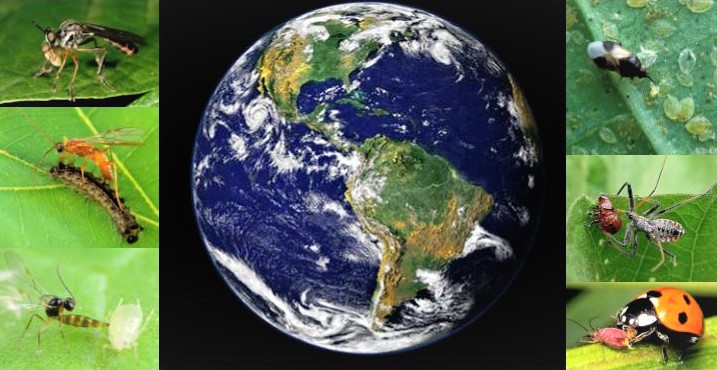
Dr Yelitza Colmenarez, CABI Brazil Centre Director & Plantwise Regional Coordinator – Latin America and Caribbean, recently presented at the First International Congress of Biological Control in Beijing, China, on the fascinating issue of climate change and the impact on the Biological Control of agricultural pests and diseases in Latin America. Here we present Dr Colmenarez’s…
Mapping out ‘Biological control for a healthy planet’ – notes from a China conference
By Dr Sivapragasam (Siva) Annamalai, Regional Director/Plantwise Regional Team Leader at CABI More than 1000 biological control researchers and practitioners from 46 countries came together in Beijing, China during the week of 14 to 16 May 2018 to participate in this First International Congress on Biological Control (ICBC-1). The theme of the Congress was “Biological…
To bee or not to bee

This Sunday the UK celebrated World Bee Day (May 20th); the first year of the now to be annual UN awareness event aimed at increasing our sensitivity to the global importance and increasing struggle of pollinators. Whilst the event hopes to increase understanding of pollinators generally, including butterflies, moths, birds and bats, the focus is…
International Day for Biological Diversity 2018
This year the 22nd of May will be a celebration of the progress made since the implementation of the Convention on Biological Diversity 25 years ago. The International day for Biological Diversity was designed to overlap with the UNs post-2015 Sustainable Development Goals and the date chose to commemorate the adoption of the Convention of…