

Land sparing vs. land sharing: how best to reconcile food production and biodiversity?
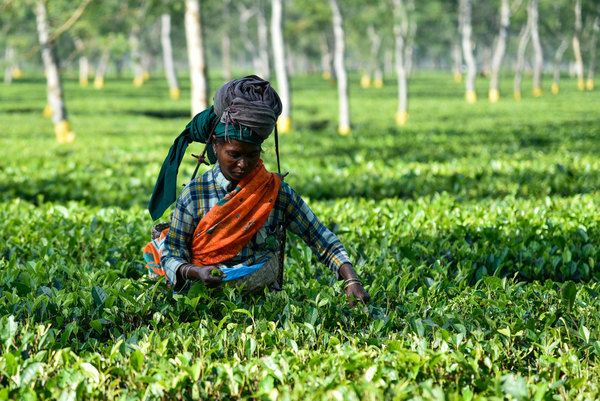
In a world of climate instability and ever-growing population, global food security is becoming an increasing concern. How do we feed a population of some seven billion (set to reach 9 billion by 2050) without losing even more of our precious biodiversity by diverting ecosystems such as forests and grasslands to cropland? Do we squeeze…
Getting kids to eat healthy- mission impossible?
There’s a challenge! How to do it? Stealth, education, marketing, example. Which do you choose? Should we hide fruit and vegetables in meals so children eat them without realising as suggested in American Journal of Clinical Nutrition recently or use marketing to improve the image of healthy food, employing packaging and advergames? Or in fact…
Ever wondered what the carbon footprint of your spam emails is?
An article in Tuesday’s Guardian online quoted that a European Commission report, published in 2008, estimated that technologies such as email and mobile phone texts contribute 2% to the European greenhouse gases emissions and, furthermore, that this figure might double by 2020, if we continue using these technologies at the same rate. The article also…
Whoever said that science and religion didn’t mix?
Hello, here is a blog from our guest blogger Rosaline Hulse. Rosaline studied Human Biology at the University of Birmingham and is currently working for a renewable energy trade association in London. With a particular interest in engaging the public in scientific debate and communicating science in an accessible format, especially in relation to climate…
One year from the Olympics: Will home advantage favour Team GB?
It is now exactly a year until the 2012 Olympics open in London, and events to mark the occasion are being held throughout the capital. Like a number of my colleagues I've been fortunate enough to get tickets for at least some events next year, although having missed out on athletics and cycling while getting…
Pop forest to compensate for festival’s carbon footprint
Rock festivals, like many other activities produce carbon emissions, for example, from people travelling to the festivals, the performers transport of equipment and the energy used in lighting and instruments used, to name just a couple of emission sources, and not forgetting the amount of pollution incurred too. Are organizers and participants doing anything to…
Want to be happy? Log off now.
It was Bhutan which first famously came up with the concept of Gross National Happiness. Back in 1972, the then-King Jigme Singye Wangchuck asked why countries were obsessed with GDP. "Why are we so obsessed and focused with gross domestic product?" he asked a journalist inquiring about the country's economy. "Why don't we care more…
Ever wondered how much carbon is stored in the vegetation of a whole city?
The UK government has recently set a target of an 80% reduction in greenhouse gas emissions by 2050, based on 1990 levels. Carbon storage within biomass and soil has become a common feature of governments' policies to mitigate climate change. Many studies have been carried out recently on the carbon sequestration of forests, wetlands, soil and…
‘Great things can come in small packages’
Being only 1.5 m tall, I’m aware I might seem biased; when I say I’m a firm believer in the saying ‘great things can come in small packages’. However, today I came across yet another example which might once more prove that there’s an element of truth in the above proverb. A paper published in…
Veterinarians Target Next Virus for Eradication
Following the recent eradication of rinderpest virus in cattle (see blog), the veterinary profession is contemplating which viral disease of animals should be targeted for eradication next. This is not an easy task considering the vast number of viral diseases that plague livestock animals and have devastating effects on animal health, public health and people’s livelihoods. According to…