

CABI contributes to infographic revealing impacts of COVID-19 on farm households in Pakistan
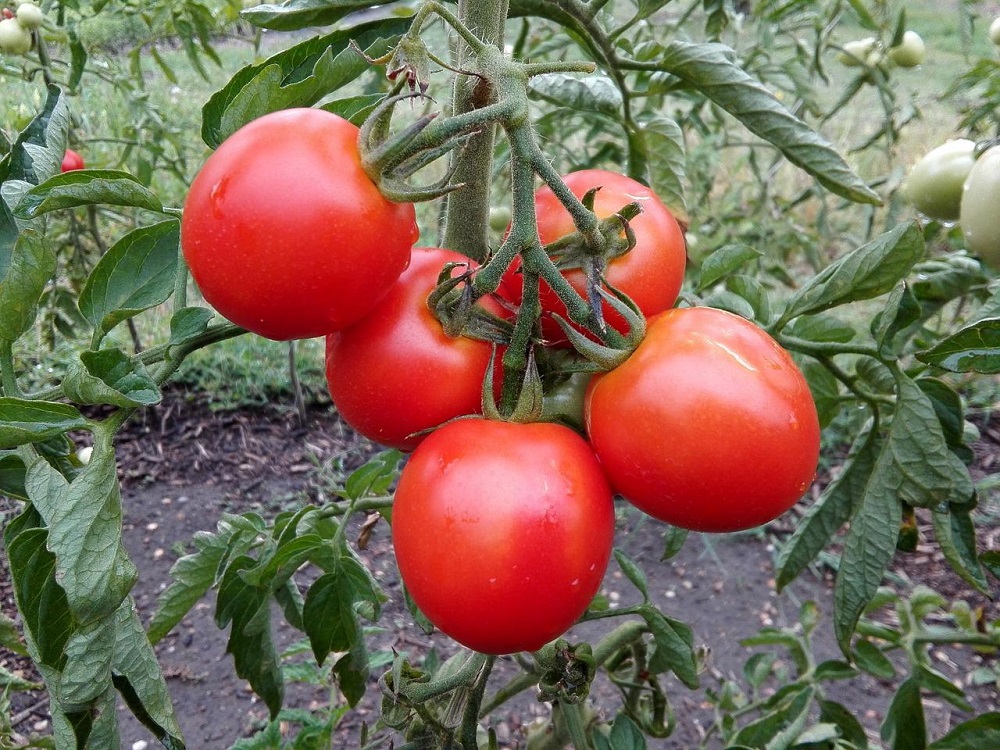
CABI has contributed to new research findings in an infographic from the Asian Development Bank (ADB) which reveals the continuing impacts of the COVID-19 pandemic on farm households in Pakistan.
Dutch ambassador to Pakistan receives update on country’s potato capacity building project
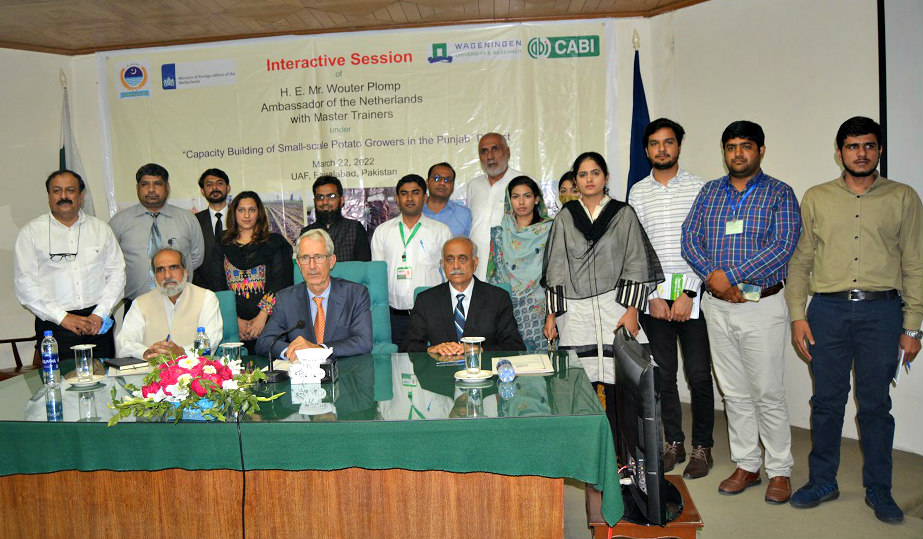
His Excellency Wouter Plomp, Ambassador of the Embassy of the Kingdom of the Netherlands to Pakistan, has received an update on the CABI-led project which aims to build the capacity of 950 smallholder potato growers in the Punjab region.
International Day for Biological Diversity: the rising threat of invasive species

On Sunday 22 May 2022 the world celebrates International Day for Biological Diversity – a day in which the global community is called to re-examine our relationship to the natural world.
CABI extends collaboration to mitigate harmful aflatoxins in red chilies
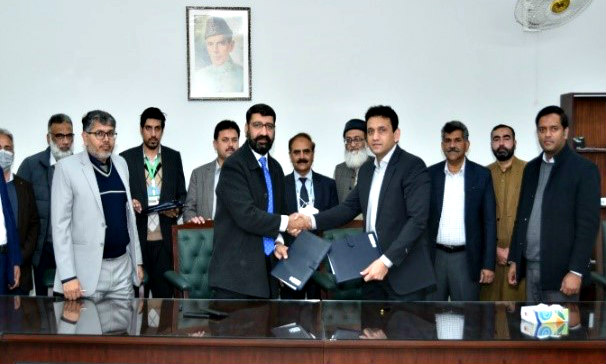
CABI in Pakistan has joined forces with the Pakistan Agricultural Research Council (PARC) and Ministry of National Food Security and Research (MNFS&R) to further research into a biological control to mitigate aflatoxins in red chilies.
A Q&A with the editors of CABI One Health

While drafting the inaugural Editorial for CABI One Health, an interesting discussion took place within the Editorial Board. We share some of these thought-provoking points in the form of a Q&A with Editor-in-Chief Jakob Zinsstag and Deputy Editor Lisa Crump.
CABI in Pakistan welcomes students from country’s leading agricultural universities for internship opportunity
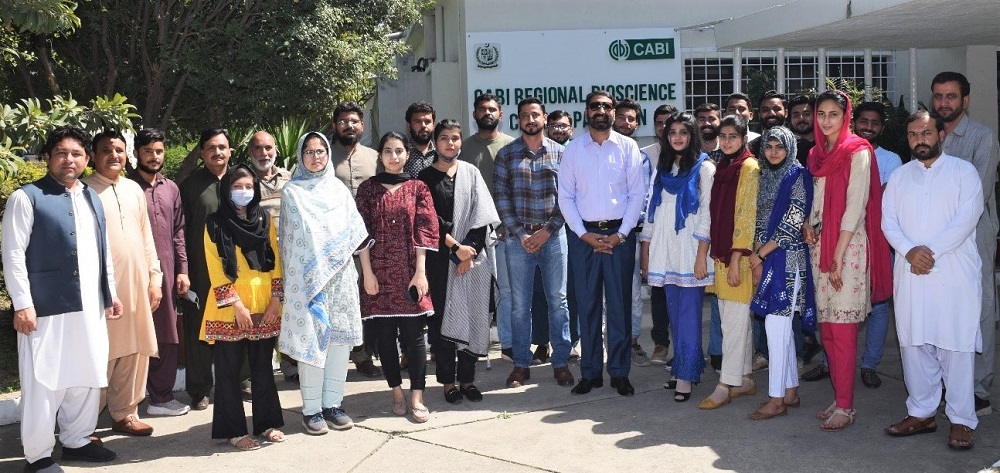
CABI in Pakistan has welcomed Bachelor’s and Master’s degree students from the country’s leading agricultural universities as part of an internship programme which provides the opportunity to sample projects and activities at the regional centre in Rawalpindi.
Project to investigate the microbial diseases of St Helena’s crop plants takes root

St Helena is famous for its unique habitats from the lush endemic cloud forests on the peaks to the dry and rocky coastal fringes. Many of the islands plants and invertebrates are found nowhere else on earth and their populations and diversity have been studied extensively since scientists arrived in the 1800s. However, despite this…
CABI podcast
Welcome to the CABI podcast, a series dedicated to agricultural science and how it can improve lives and address the challenges faced by people around the world.
Taking steps towards female empowerment through Better Cotton Initiative in Pakistan
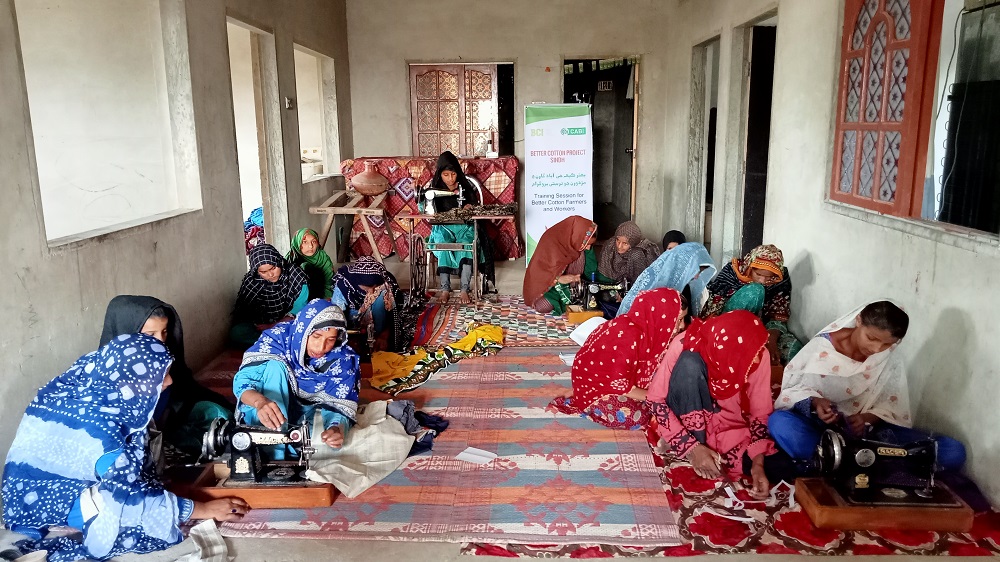
CABI’s centre in Pakistan is dedicated to helping improve the empowerment of female cotton farm workers as part of its remit under the Better Cotton Initiative (BCI) which is tasked with trying to avert annual cotton crop losses of around $350m.
Doctor turned science journalist launches first newspaper of its kind
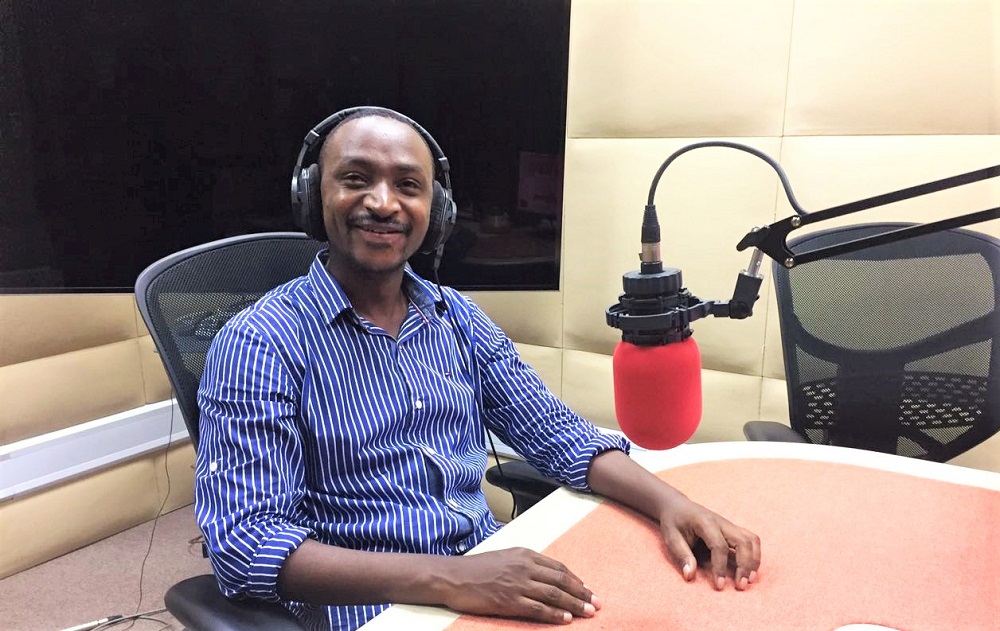
Meet Syriacus Buguzi – a pioneering medical doctor turned science journalist from Tanzania. He is making the headlines after spawning the first Swahili language science and technology newspaper, MwanaSayansi.