

Calling tomorrow’s leaders: Apply today to earn a sustainable agriculture degree from CABI
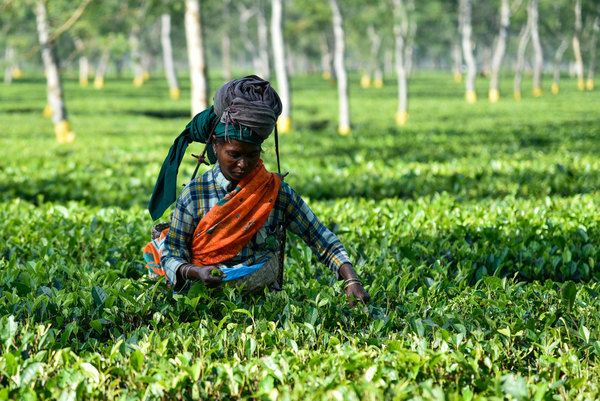
CABI is on the lookout for students to join a crop management degree programme aimed at tackling food insecurity around the world and helping to feed the growing global population. Scholarship opportunities are available to qualified individuals who work with the Plantwise programme activities in their countries. With the population estimated to reach…
Sharing open data in agriculture and nutrition to help make decisions
GODAN, in collaboration with the Open Data Institute, yesterday launched a discussion paper: How can we improve agriculture, food and nutrition with open data? at the 3rd International Open Data Conference in Ottawa (IODC). The paper highlights how open data is already making a difference in the agriculture and nutrition sectors. CABI is a partner…
Invasive Mikania weed threatens people’s livelihoods and endangered iconic species
22 May 2015 is Biodiversity Day. Non-native invasive species like Mikania can detrimentally affect biodiversity – natural habitats and the people and animals that live in them. CABI’s Sean Murphy explains why. Mikania (Mikania micrantha) is a tropical vine which is native to the Americas. Often referred to as the ‘Mile-a-Minute Weed,’…
New report highlights link between forests, farms and food security
With the global population estimated to reach 9 billion by 2050, there has been much debate around the issues of nutrition and food security. Amid these concerns, a report published on May 6 by the International Union of Forest Research Organizations (IUFRO), calls for greater consideration of the use of forests as a food source as…
How to attract a blackfly – researching blackflies’ aroma preferences.
(Photo: electron micrograph of a blackfly with Onchocerca parasite, credit:USDA) The idea of sitting in a field and letting blackflies potentially carrying an unpleasant disease bite you sounds like a job best avoided, yet this is the way in which populations of blackflies carrying the river blindness parasite Onchocerca are monitored in Sub-Saharan Africa. Research…
New study produces biofuel and animal feed from the same crop
‘First generation’ bioethanol is produced directly from food crops such as corn and sugarcane. Global production of bioethanol has been increasing in recent years due to policies in many countries that consider biofuel as a renewable alternative to fossil fuels. While it is widely recognised as means to improve future energy security, the rapid expansion…
Using lasers to map forest carbon
Forests cover approximately 4 billion hectares of the Earth's surface, equivalent to a third of it's total land area. According to the WWF, between 12-15 million hectares of forests are lost every year due to human impacts, such as deforestation. It is estimated that forest loss is responsible for around 15% of global carbon emissions.…
Insecticide threat to aquatic biodiversity highlighted in new study
Insecticides can be beneficial to humans in many ways, such as providing crop protection from disease and defoliation and as a tool used in the reduction of mosquitoes and other insects that can transmit diseases such as malaria, to humans. However, once they enter an aquatic system, the environmental costs can be very high. Just…
Changing attitudes to wood

Wood has many different uses, including shelter, fuel and paper to write on, as well as having a key role in maintaining a healthy planet. More recently however, the development of engineered wood for use in the construction of tall buildings has led to a new generation of ‘ply-scrapers’. So is our attitude to wood…
Milk Quotas in European Union to Be Abolished after 31 Years
By Miroslav Djuric, DVM, Editor of Dairy Science Abstracts Milk quotas in the European Union (EU) will be abolished from the 1 April 2015, exactly 31 years after its introduction. The Dairy Produce Quota Regulations were introduced by the European Economic Community (EEC) on the 2 April 1984 and were originally due to run until…