
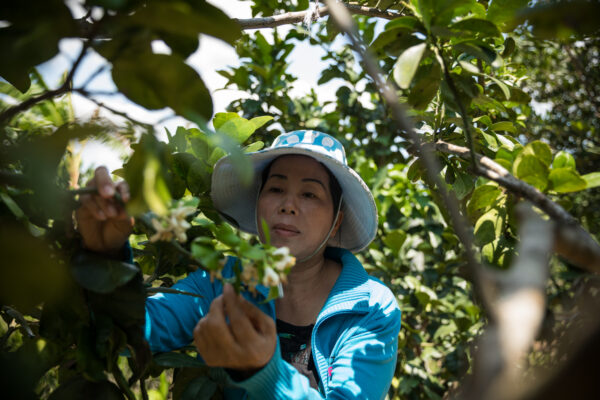
Rural Women’s Day is an important milestone in the UN calendar, celebrating the vital contributions that women make in rural communities. While women farmers still face significant barriers in agriculture, they are also driving change in their families and farms.
When women are empowered through knowledge and skill sharing, the effects are felt far beyond the individual, benefitting entire communities. In this blog, we look at the ways in which rural women are driving change at a local level, helping to boost yields and incomes worldwide.
From financial crisis to agripreneur
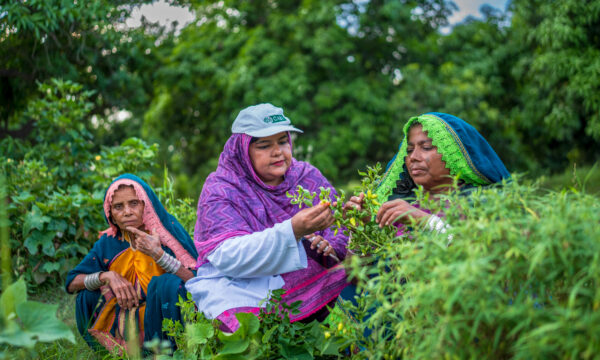
Razia Sultana is a farmer from Rangpur, Bangladesh. She’s rebuilding not only her livelihood, but also the livelihoods of other women in her community.
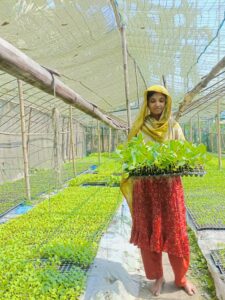
Following the collapse of the family’s sapling business, Razia stepped up and embraced business and technical training from the CABI-led PlantwisePlus programme. She learnt about modern nursery management and marketing to help expand her business. Equipped with new skills, she increased her seedling nursery from 100 trays to 800. She tripled her monthly income and began repaying the family debt.
She now mentors other women through an entrepreneur network, boosting local employment opportunities. Her success has inspired other women to pursue business ventures, showing the ripple effect that women’s empowerment can have, helping to scale up change.
“My story shows how targeted support, determination and innovation can transform financial crisis into opportunities and empowerment.” Razia Sultana
Knowledge sharing increases yields and reduces farming costs
In Vietnam, a coffee production project has introduced women-only training events. The results show how one woman who attended was able to increase yields on her family farm at the same time as reducing its input costs.
Attending in Lam Dong province, she learnt practical new skills and techniques such as pruning and soil sampling. She also attended a women’s focus group – her first experience of this kind of group. These types of events create valuable spaces where women can connect, speak up, and build confidence.
The project also designed its sessions to fit in with women’s schedules, tailoring them around two slots in the morning and afternoon. This enabled the women to incorporate the training around household tasks such as meal preparation.
The project was a success. The woman farmer from Lam Dong increased her coffee yields to around eight tonnes per hectare while reducing household fertiliser and pesticide costs.
Financing for women coffee farmers boosts business
Agricultural knowledge sharing is critical for rural women, but financing support is important too, as women often have less access to credit and land. New approaches are helping women coffee farmers across Africa to access finance.
In Ghana, Liberia, and Malawi, legal reforms that recognize “movable” assets as collateral for loans have unlocked substantial finance for women. These are assets such as livestock, machinery and stored crop inventory. Using this model, organizations that register assets have already helped to unlock more than $3 billion in loans in Ghana and $230 million in Liberia. Women entrepreneurs have received around 30% of this financing.
In Rwanda, Tanzania, and Uganda, organizations like Root Capital have revolutionized lending for women through three-way lending agreements. This approach uses a buyer’s future purchase agreement as security instead of land titles. As a result, women, especially young women who do not own land, can still qualify for loans based on prospective future sales. These changes are helping women to build lucrative businesses.
The ripple effect: cultivating leadership increases opportunities
Women’s empowerment is not only important for farmers. It is equally important for the women agricultural advisors who support them.
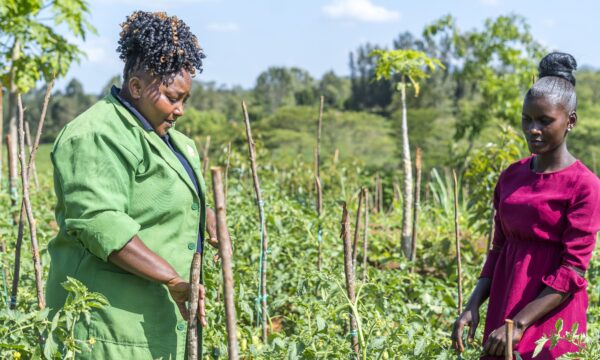
Wanza Simon is a trained plant doctor from Kenya. Her own PlantwisePlus training marked a major turning point in her confidence and career. From regenerative agriculture and fruit tree management to agribusiness skills and recordkeeping, training has helped her to show women farmers how they can grow more and boost their incomes. As her own confidence grew, she connected with more women farmers, improving their access to quality inputs and contributing to better productivity in her community.
Hira Manan is an agricultural advisor from Pakistan. She took part in CABI’s gender ‘training of trainers’ programme, which helps advisory services become more gender inclusive and reach greater numbers of women farmers. The teachings transformed Hira’s confidence and boosted her professional identity. She began leading field visits, market surveys, and women-focused training sessions. Hira’s presence enabled women farmers to speak openly and participate actively. These women, in turn, have become local changemakers, sharing knowledge and supporting other farmers in their villages.


Beyond farming: empowering women throughout the food value chain
Rural women play important roles not only in farming, but throughout the food value chain – from production to processing. Research shows that when women are empowered, compliance with safe food practices increases.
A recent study in Uganda highlighted how addressing persistent gender inequalities across the food value chain can help strengthen food safety. The country is currently developing a National Food Safety Policy. By embedding gender responsiveness into its governance, it could help to build systems that boost gender equality, while simultaneously making them more effective and robust.
The study proposes a framework based on consideration, inclusion, and influence. This means creating policies that recognize the different needs and roles of women working in the food value chain. Women must be meaningfully included in decision-making to strengthen their influence around food safety. Empowering women in this way can help create more resilient food systems that benefit everyone.
Looking to the future
There are an estimated 500 million smallholder farmers globally, and around half are women. Rural women often struggle to access the same resources as men, leaving a significant part of the agricultural workforce at a disadvantage.
Women’s empowerment is critical for solving global challenges such as hunger and poverty. When we reach women farmers with knowledge and skills, they create a ripple effect throughout their communities. Women like Hira, Razia, and Wanza show how it is possible to create change in women’s lives that reaches far beyond the farm, into their villages and beyond. On Rural Women’s Day, we celebrate the women who are making this happen.
Further information
Main image: A woman farmer in Vietnam tending to her crop. Credit: CABI
Related reading
Related News & Blogs
Gender disparities among farmers in Ghana – who gets left behind by digital agriculture?
Gender disparities are widespread among rural smallholder farming communities. While digital technologies can help farmers access vital agricultural advice and close the gap, women – particularly older women – can face barriers to using them. New research looks at these barriers and the solutions to overcome them.
6 October 2026