
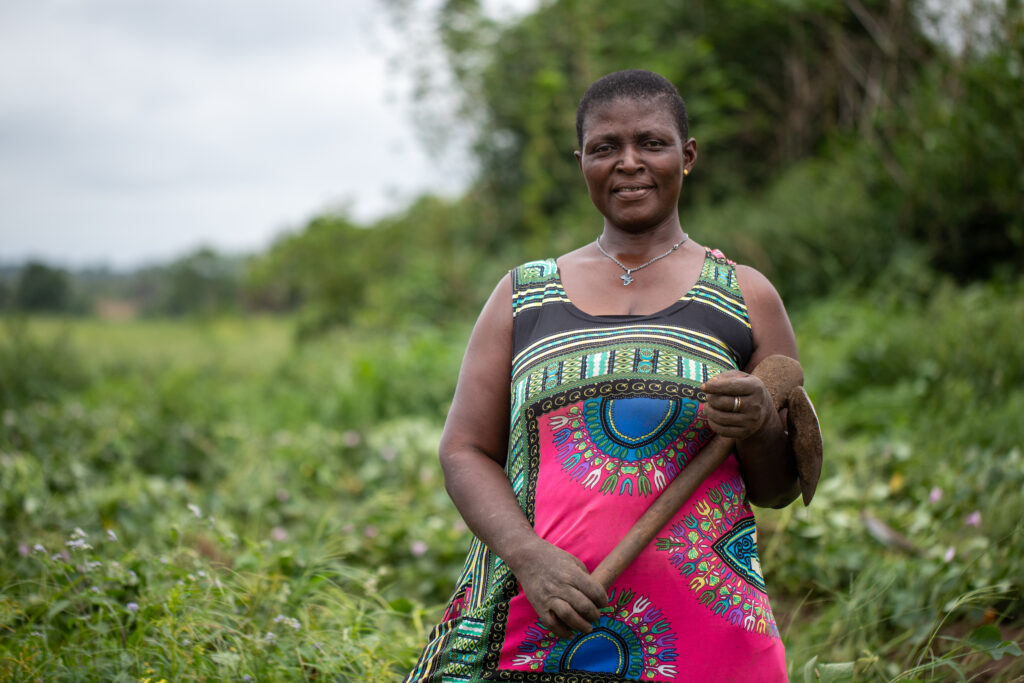
Gender disparities are widespread among rural smallholder farming communities. Women and men often face very different barriers and opportunities when it comes to building sustainable livelihoods from agriculture. Digital technologies can help them access vital farming advice, but women – particularly older women – can face barriers to using these technologies.
A new study published in Frontiers in Sustainable Food Systems explores how gender, age, literacy, finances, infrastructure, and social norms shape farmers’ access to digital advisory services with a focus on Ghana. With Rural Women’s Day (15 October) and World Food Day (16 October) in focus, we take a look at gender disparities in agriculture.
Why closing the gender gap matters
According to the FAO, if women had the same access to resources as men, they could grow enough food to lift an additional 100-150 million people out of hunger worldwide. Part of addressing access to resources includes addressing access to knowledge. Digital tools like those created by CABI, such as the PlantwisePlus Knowledge Bank and Crop Sprayer app, can deliver agricultural knowledge to farmers, including women farmers, as well as the extension services that support them.
The recently published study sought to understand gender disparities in access to digital advisory services among women and men farmers in Ghana. Its aim was to shed light on this issue, identifying barriers and, therefore, also solutions to closing the gender gap in farming.
How the study explored the digital divide
The research was carried out in Ghana’s Ashanti and Bono regions, focusing on areas where digital tools in agriculture are actively promoted by CABI and other organizations. The approach provided an in-depth understanding of how farmers (both men and women, disaggregated by age) access and use digital advisory tools. The study sought to capture lived experiences, perceptions, and challenges that cannot be fully understood through quantitative approaches alone. Above all, the work sought to understand gender disparities among farmers.
Farmers included both subsistence and commercial producers. This was important because women are often overlooked in agricultural research, as they are assumed to be subsistence rather than commercial farmers.
The findings – who uses what when it comes to digital technology?
The gender disparities study revealed interesting findings. All farmers reported using a mix of traditional and digital advisory channels. These included:
- Community information centres
- Interactive Voice Response (IVR) services such as Farmerline 399
- Mobile phones (basic and smartphones)
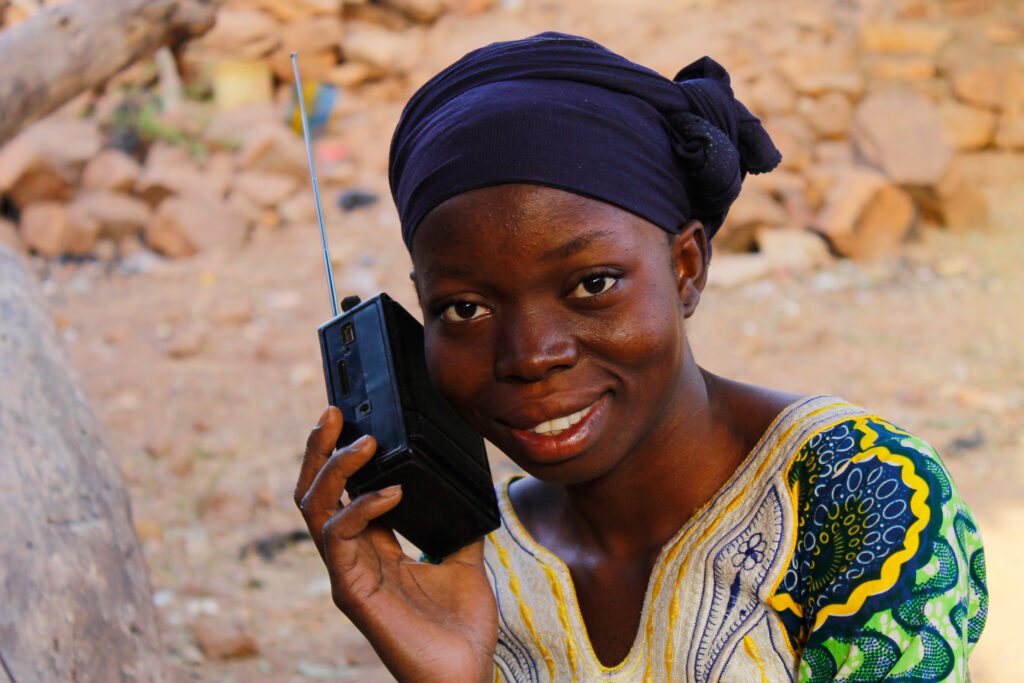
- Radio
- SMS
- Television
- Occasional use of social media platforms
Mobile phones emerged as the main way that men and women farmers access agricultural information. Moreover, they aid communication with extension officers, customers, and peers, and support mobile money transactions. As one adult female farmer noted:
“Mobile phones are very important to us. As farmers and marketers, we need phones to seek agricultural advice from extension officers and to communicate with our customers.”
Barriers to access for women
A major finding was that access differed considerably by gender and age, and that barriers for women were diverse. Younger men tended to make greater use of smartphones and online platforms, while adult women often rely on basic phones, radio, and voice-based services.
Literacy and language
One of the main barriers for women farmers is digital literacy and language. Many adult and young female respondents could neither read nor write and did not understand English – the language most often used in agricultural apps. This made the use of digital devices, smartphones in particular, challenging. Few women farmers had access to formal education or adult literacy programmes. Consequently, many relied on others to operate digital devices, make calls, or read messages. One adult female respondent explained:
“I find it hard to read or even write. That is why I avoid using a smartphone. Even the one I am using now, it is very hard to retrieve a number and call the person I want. So, I have to rely on others to make calls.”
Cultural and social norms
Cultural and social norms also influenced women’s access to and use of digital advisory services, worsening gender disparities. Women’s access to shared media, such as radio and television, was often limited by social norms that discouraged them from travelling to public places, including markets, or spending time in other households. This made access dependent on having these devices at home. One adult female participant said:
“As a woman, it is very inappropriate for me to go to another person’s home, sit down, and listen to the media.”
Infrastructure and finance
A lack of digital infrastructure, such as poor mobile network coverage and unreliable electricity, constrained men and women farmers’ ability to access digital advisory services. However, women faced additional barriers to accessing digital technologies, particularly because of their cost. Both adult and young women highlighted the high cost of purchasing smartphones and maintaining data subscriptions. These barriers to using digital technologies, therefore, further limited their ability to access agricultural information.
How can we drive women farmers’ access to digital advisory services?
While many gender disparities persist among farmers in Ghana, greater access to digital technologies can help to address imbalances and support women’s participation in agriculture. Focus group discussions highlighted the importance of access to mobile phones, smartphones in particular. They enable women to engage with different types of content, including audio and video content. They can also be better tailored to their circumstances and needs, incorporating local languages, for example.
Moreover, greater use of smartphones inside the family helps with information empowerment. The more tools are available within the household, the more likely girls and women are to learn how to use them. Digital literacy or inclusion often occurs through informal, intergenerational learning. Younger household members, particularly schoolchildren, show older women how to use the technology.
Many women surveyed said they owned basic feature phones but would need financing to buy a smartphone. Deferred payment arrangements or co-financed digital device contracts would help. Ironically, having a smartphone could help them with mobile phone financing. Escaping this loop is something that governments and telecom companies could help with.
The study also highlighted the need to create relevant content tailored to women farmers’ agricultural needs. Radio is especially valuable as it delivers agricultural advice without requiring reading skills, making it more accessible. Programmes like “Farmers Time”, for example, offer guidance on crop management, pest control, and appropriate insecticides.
Community networks are also valuable for helping women to access agricultural knowledge through digital technologies. Connecting women farmers with each other not only fosters group learning but also empowers them to exchange their experiences and knowledge about agriculture.
Looking to the future
This piece of research has highlighted clear gender and age-related differences in access to and use of digital advisory tools. Women, especially older women, face intersecting challenges. Although some constraints were experienced by both men and women, their impacts were not gender neutral. We must address gender barriers and leverage drivers to improve women farmers’ access to digital advisory services. In so doing, we can foster more inclusive and sustainable agricultural development. We must tailor projects at their outset to consider gender disparities and the different needs that women farmers have.
Rural Women’s Day and the International Year of the Women Farmer helps to put a spotlight on the role women have in agrifood systems, and how they are central to food security and nutrition. We want to raise awareness about the opportunities that closing gender gaps in digital agriculture can bring. When we boost women’s access to digital advisory, we empower not only individual women, but often entire families and communities. Digital inclusion is not simply about putting information online. It is about making sure each farmer can access, understand, and use it. In this way, we strengthen generations today and for years to come.
Further information
Main image
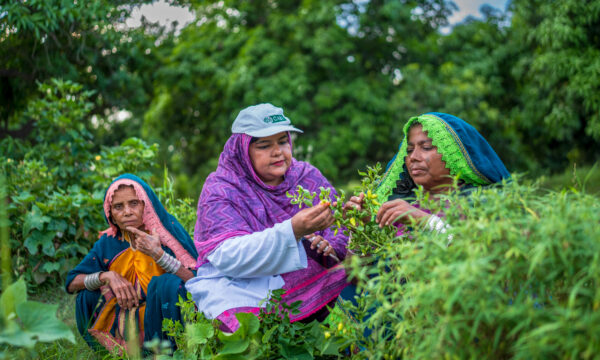
Female smallholder farmer stood in a field. Credit: CABI
Read the full paper
More reading
Related News & Blogs
Rural women are transforming agriculture – here’s how
Rural women are at the heart of global food security. Across farming communities worldwide, women are increasing productivity, growing businesses, improving food safety and helping others succeed. We celebrate the women farmers, advisors and entrepreneurs helping to achieve this.
13 October 2026