
A study recently published in Frontiers in Sustainable Food Systems examines the connection between food safety and gender in Uganda’s agrifood policies. The research, led by CABI scientists and supported by CABI’s PlantwisePlus programme and AWARD, highlights how food safety is critical to public health, economic stability, and the Sustainable Development Goals (SDGs). However, agrifood governance in Uganda remains fragmented and shaped by persistent gender inequalities. In this blog, we look at the gaps that exist in the current agri-food policies that may undermine food safety and women’s empowerment.
Women at the heart of Uganda’s food system
The paper states that unsafe food is a major but often overlooked public health threat. Contaminated food causes illness in an estimated 600 million people each year worldwide. It also leads to 420,000 deaths annually, mostly in low- and middle-income countries. In Uganda, foodborne illnesses affect millions of people every year. Around 1.3 million cases are diagnosed annually, representing 14% of all treated illnesses. Over 60% of cases are linked to fresh and perishable foods, which are often sold in formal and informal markets.
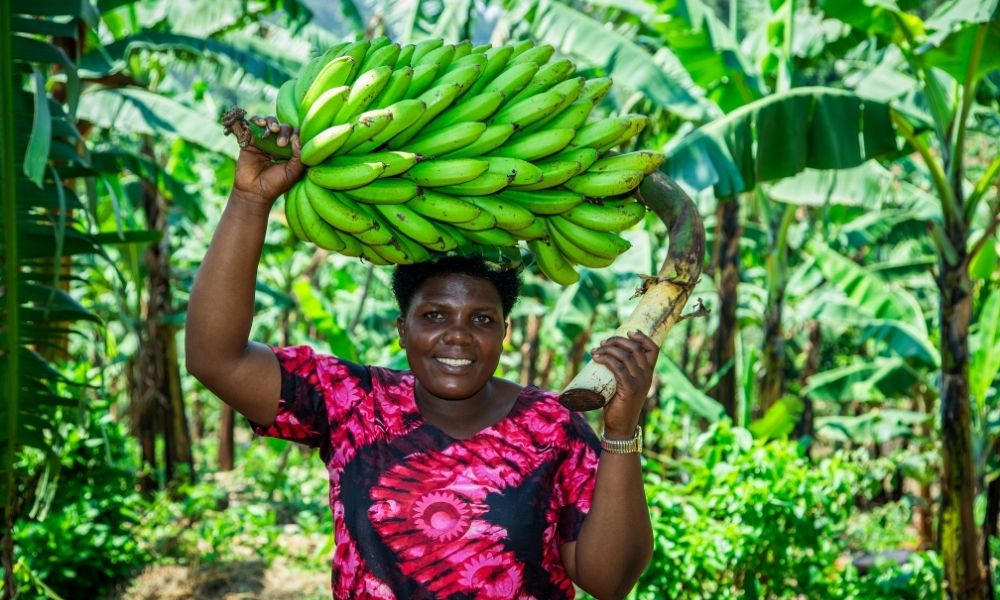
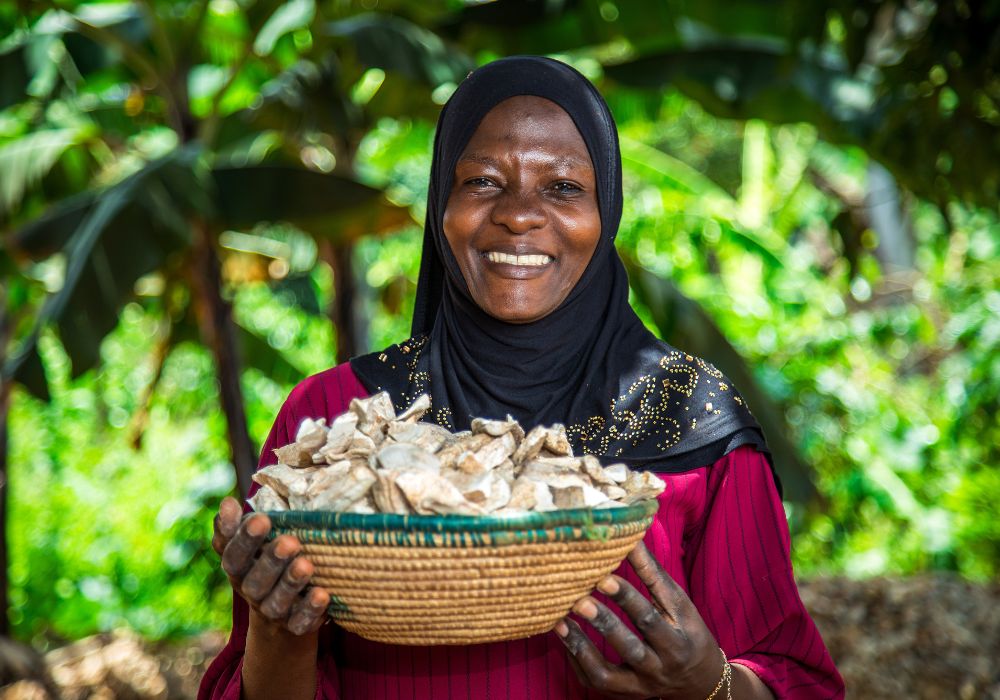
Across the food chain in Uganda, women play a central role. They participate actively in the production, processing, distribution, retailing, handling, and preparation of food. This involvement means they have the potential to influence food safety at many points. However, they often lack access to resources such as finance, inputs, and training, meaning the potential does not always manifest. Social and cultural norms can also limit their ability to take on leadership roles and become involved in decision-making processes. This includes processes that shape and enforce food safety standards.
Why gender matters for food safety
Recognizing this gendered dimension of food safety is important for both women’s empowerment and improving food safety overall. Research shows that when women are empowered, compliance with safe food practices increases. Empowerment also enhances household nutrition. Connections between food safety and gender equality help to achieve long-term food security and well-being.
What the research reveals
Uganda’s agrifood safety system is governed by multiple laws and institutions. The Food and Drugs Act of 1964 is the primary legal framework. However, responsibilities are spread across several agencies. The Uganda National Bureau of Standards sets general food standards, for example. Sector-specific bodies regulate areas such as crops, dairy, fish, and meat. Local authorities enforce hygiene through the Public Health Act.
Uganda is currently developing a National Food Safety Policy, which makes of a review of the agrifood systems and gender all the more pertinent. The proposed creation of an Agriculture and Food Safety Agency is also under discussion. These efforts aim to create a more coherent regulatory framework. However, for this framework to succeed, it must integrate gender considerations, many of which have been overlooked.
Policy analysis shows that Uganda’s agrifood policies recognize gender at a basic level. All reviewed policies mention equality, gender, and women’s roles, and several policies mainstream gender considerations. Others include gender in dedicated sections. However, this commitment is not consistently translated into action. Only 60% of policies clearly recognize women’s specific challenges and roles in relation to food safety, and some key policies lack strong provisions to address gender gaps.
Many policies promote equal access to resources. However, few address deeper structural barriers that limit access for women. These include discriminatory norms, gender-based violence, and unequal land ownership. Financial exclusion is also rarely addressed. Gender analysis is often inconsistent across policies. Intersectionality is also poorly developed. This reduces the ability of policies to respond to diverse realities.
Gaps in women’s voice and leadership
Survey findings show that women’s influence in the design of agrifood policy is limited. Most responses rate women’s influence as weak or very weak. Only a few policies show moderate or strong involvement by women. This suggests that rural women’s voices are mostly excluded from policymaking.
Women’s leadership in policy implementation is also limited. In several policies, most respondents report that women are not leading implementation. This highlights persistent gender disparities in leadership roles. Without stronger representation, policies may fail to reflect real needs.
The salience-silence paradox
The research identifies two major gaps in Uganda’s policy framework. The first is an “action gap” between gender commitments and real implementation. The second is a “policy silence” on gender in food safety. These gaps are linked to weaknesses in consultation, budgeting, and policy design. One of the paper’s key findings is described as the “salience-silence paradox.” Food safety is seen as the most important agrifood issue in Uganda. However, its gender dimensions are largely ignored in policy design. This creates a gap between food priorities and real-world action.
Older policies may lack detailed food safety provisions. However, the absence of – or silence around – gender considerations continue even in newer policies. This weakens the effectiveness of food safety governance overall and means an opportunity for change is being missed.
An opportunity for change
Uganda is now at a critical policy moment. The development of a National Food Safety Policy offers a chance to do things differently. There is an opportunity to design a system that is both effective and inclusive. This requires integrating gender from the beginning.
The study proposes a framework based on three key dimensions of empowerment. These are consideration, inclusion, and influence. Policies must first recognize the different roles and needs of women. They must then ensure women are meaningfully included in decision-making processes. Finally, they must strengthen women’s influence in both design and implementation.
This approach requires practical actions. These include gender-responsive budgeting and better data collection. Sex-disaggregated data can improve accountability and tracking of progress. Policies must also address structural barriers that limit women’s participation.
Safer food systems through women’s empowerment
Food safety and gender equality are closely linked, and ignoring gender weakens the effectiveness of agrifood policies. Empowering women strengthens food safety systems, which, in turn, improves public health outcomes. Uganda’s current policy developments present a unique opportunity for change. By embedding gender responsiveness into food safety governance, the country can build stronger systems. These systems will not only strengthen gender equality, but they will also make the systems be more effective and resilient. When women are empowered, food systems become safer for everyone.
Learn more about our work in Uganda.
This piece of research was supported by PlantwisePlus and African Women in Agricultural Research and Development (AWARD) under the Gender Responsive Agriculture Systems Policy (GRASP) Fellowship.
Related News & Blogs
Transforming women’s empowerment in agrifood systems
Women in agrifood systems are essential. They constitute over 50% of the agricultural workforce (FAO, 2023), with roles throughout the food value chain supporting the production of over half of the world’s f…
4 March 2026