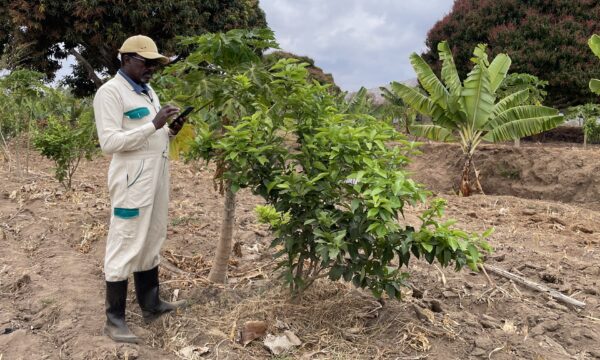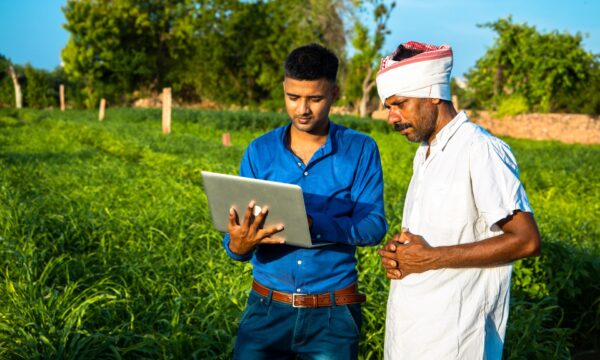

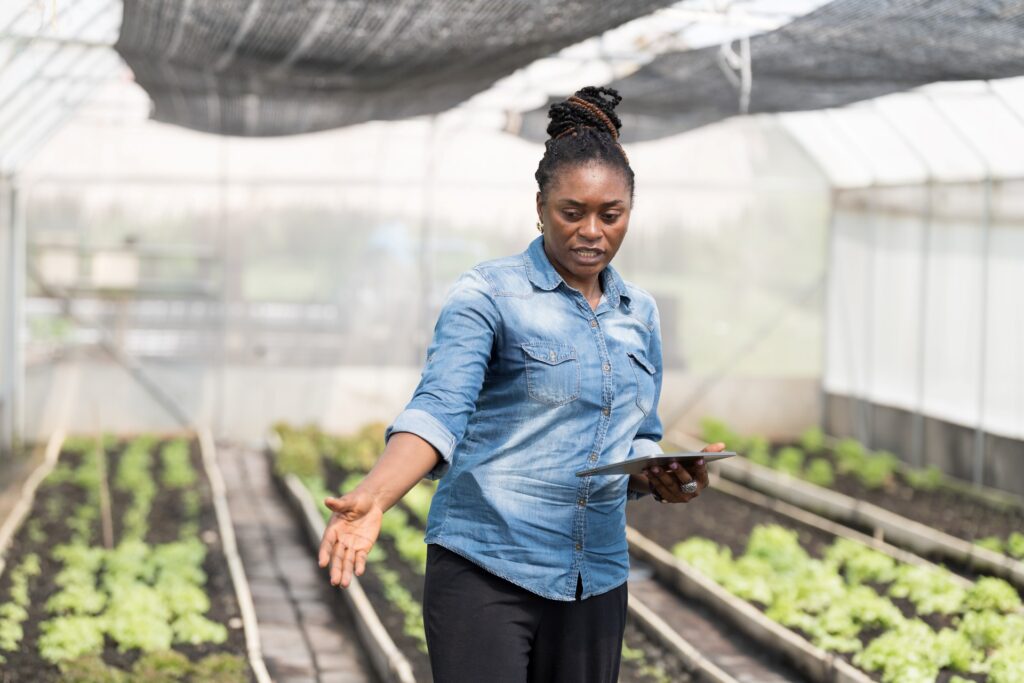
Farmers and their advisors often lack access to reliable information and advisory services. This data is essential for reducing crop losses, improving productivity and making agriculture more resilient. How agricultural data is structured, governed and shared can determine whether it adds value or remains unused.
CABI’s work on FAIR (Findable, Accessible, Interoperable, and Reusable) and responsible data is helping to address this. With renewed support from Gates Foundation, the ‘Enabling FAIR data sharing and responsible data use’ project will continue to build the capacity of program officers, grantees and national systems to get the most value from agricultural data.
Ms Chipo Cosford, Senior Project Manager, said: “We greatly value the sustained commitment of one of our key partners and funders. From the very beginning, the project focused on ensuring that effective data management support is practical and usable. It also developed tools integrated into grant-making processes and grounded in real-world contexts.”
As digital agriculture evolves, well-governed data is also becoming essential for emerging technologies such as artificial intelligence (AI). These technologies depend on structured and reusable datasets.
Why FAIR data in agriculture is important
The FAIR principles offer a widely recognized way to make agricultural data more usable, shareable and impactful across systems and investments.
The FAIR Process Framework translates these principles into a practical six-step process. Teams can integrate this process into grant-making and project delivery. Each step helps grant makers and their grantees set realistic data goals and identify risks early. It also ensures that teams build FAIR principles into project design rather than adding them at the end.
Sustainable and people-centred
Partners have already applied this approach within Norwegian Agency for Development Cooperation (NORAD) investments in the Malawi Digital Plant Health Service. Partner engagement helped identify opportunities and challenges in data sharing. Better data access strengthened collaboration by demonstrating that long-term impact depends as much on people and practices as on technical systems. This work is helping develop a digital service expected to benefit over 100,000 farmers.
Elsewhere in Africa, working with ISRIC, partners have used the Soil Information Systems (SIS) toolkit to incorporate key elements of CABI’s data access approach. This helps embed FAIR principles and supports smarter decisions in farming, sustainability and policy. Zambia is advancing national SIS efforts by closing data-sharing gaps. Ghana has committed to a national SIS based on CABI’s model, and five other countries have developed roadmaps for soil information management.
Tools such as the FAIR Potential Assessment and the Data Management and Access Plan (DMAP) are also helping Gates Foundation program officers and grantees define clear data objectives at an early stage.
Mr Arun Jadhav, Senior Data Architect, explained: “By using these tools early in the investment lifecycle, teams can set clear and realistic data goals. They also strengthen data practices throughout an investment. The insights generated feed directly into the DMAP, a living document that evolves as teams clarify data needs, risks and priorities.”
CABI plans to pilot these approaches and resources across a range of CGIAR projects, including CGIAR Fairgrounds. It will also explore internal applications to further strengthen organizational data practices. Further, it will reinforce the message that although FAIR is a good step to making data AI‑ready, it’s not always enough. CABI also helps partners adopt extra structures and licensing needed for machine AI use.
AI and model content licensing
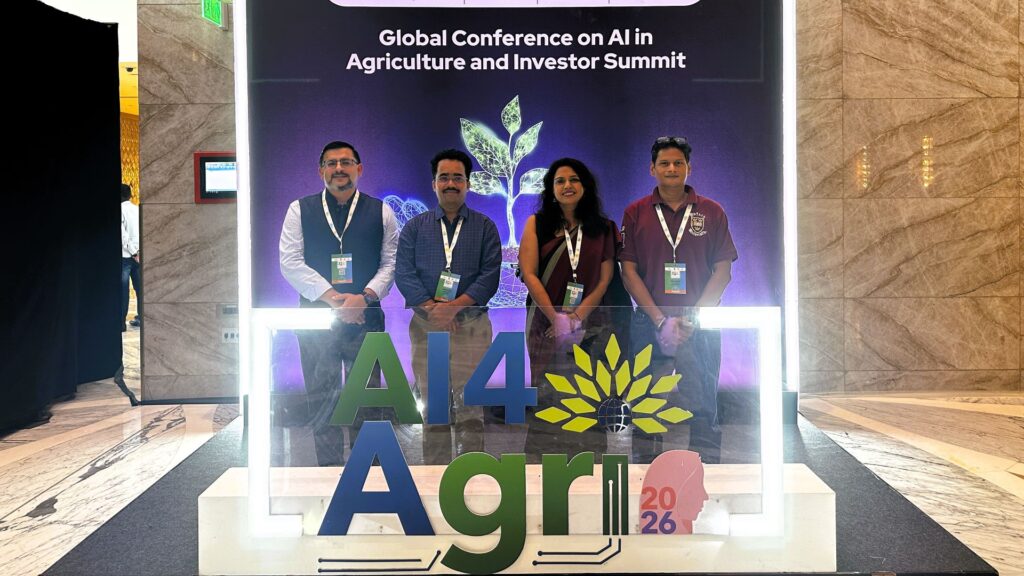
Generative AI creates additional possibilities for data usage in agriculture. However, the open-access data these systems rely on can lack regional relevance and create legal grey zones for developers. Addressing this gap is increasingly important as AI becomes embedded in agricultural research and application development.
This is where content licensing holds value. Through the Generative AI for Agriculture Advisory (GAIA) project, CABI is developing a model content license that agri-tech AI developers can adapt to specific contexts. By working with partners such as Creative Commons, the team hopes to refine these approaches and take them to scale.
“AI is not a silver bullet, and challenges such as hallucinations and biased outputs remain. Addressing these issues depends on access to high-quality, responsibly sourced, machine-readable data – FAIR cannot be achieved without data that systems can interpret and reuse – and that needs to be underpinned by standardized and legally robust content licensing,” said Mr Ameen Jauhar, Data Governance Lead at CABI.
“By providing clear and practical licensing frameworks, we can support innovation while respecting the rights of content creators and, through strong partnerships, enable the development of more reliable and trustworthy AI applications in agriculture.”
Digital agriculture roadmaps
As part of its broader work on digital agriculture, CABI supported the Ethiopian government in developing its digital agriculture strategy. It also conducted in-country consultations and reviewed existing policies. This work produced recommendations that now form part of Ethiopia’s Digital Agriculture Roadmap.
Dr Negussie Efa, Senior Scientist, said: “CABI’s collaboration with the Ethiopian government has helped establish us as a trusted partner in shaping national digital agriculture initiatives. Building on this experience, we are now engaging with several other African countries to explore how the Digital Agriculture Roadmap approach can be adapted to different national contexts.”
“This work not only allows us to share lessons learned but also supports governments in designing strategies that make agriculture more data-driven, effective, and sustainable across the region.”
Structured and good quality data
Looking ahead, CABI is leveraging its expertise in data governance, FAIR implementation and digital agriculture to support AI applications. This includes work that combines weather observations, crop performance information, field-level measurements and earth observation. This data help better measure and understand agricultural outcomes, particularly in data-sparse settings.
Dr Martin Parr, Director, Data Policy and Practice, said: “As CABI’s work in data governance, digital agriculture and AI expand, we are increasingly recognized as a reliable partner in the sector. Our projects demonstrate how structured, high-quality data underpins responsible AI use and how strong partnerships can ensure these technologies deliver practical value across agriculture.”
By ensuring these diverse data sources are well-governed, interoperable and fit for purpose, CABI helps lay the foundations for AI tools that provide reliable, context-specific insights for farmers, advisors and policymakers.
More information
Feature image credit: iStock.
News and blogs
Related News & Blogs
AI, copyright, and content licensing in digital agriculture
This blog explores how content licensing in agriculture is evolving with the rise of AI, and what these changes mean for copyright, data governance, and digital innovation.
2 February 2026