


As shoppers in the United Kingdom prepared for Christmas celebrations in December 2025, a new fruit from Kenya quietly made history. The country shipped its first‑ever consignment of Kenya’s Apple Mango variety to the UK. This landmark achievement demonstrated Kenya’s ability to meet the UK’s stringent market requirements and also highlighted the wider economic opportunities such market access can unlock, particularly for smallholder farmers who supply the bulk of Kenya’s mango production.
How CABI’s SPS support enabled market access
Kenya’s success is part of a much bigger story. Across the world, CABI works with its Member Countries to strengthen Sanitary and Phytosanitary (SPS) systems, tackle bottlenecks, and help producers regain access to high‑value export markets. From diagnostics and surveillance to certification and compliance, CABI’s technical support helps countries demonstrate that their agricultural products meet international standards.
This shipment was no different. The pilot consignment was facilitated under the UK‑funded Regional Economic Development and Trade Investment Programme, implemented by TradeMark Africa in partnership with the Government of Kenya, the Fresh Produce Exporters Association of Kenya (FPEAK), the Fresh Produce Consortium of Kenya (FPC Kenya), and CABI.
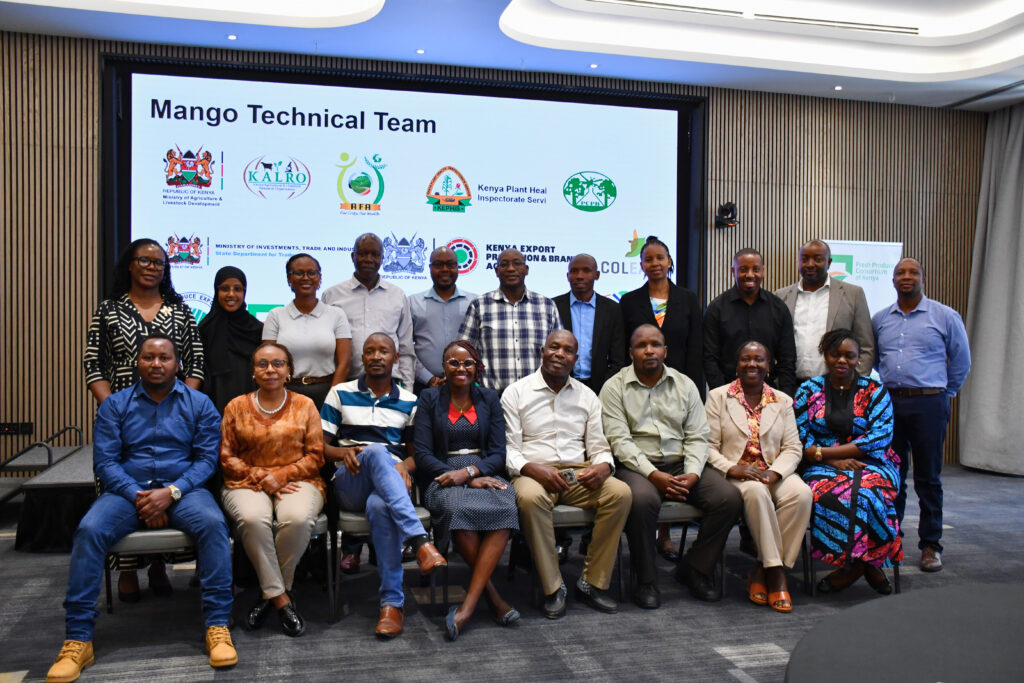
As part of the project, a Mango technical working group has been established. The group brings together experts from across Kenya’s mango value chain, including COLEAD, FPC Kenya, FPEAK, Kenya Agricultural and Livestock Research Organization (KALRO), Kenya Plant Health Inspectorate Service (KEPHIS), Horticultural Crops Directorate (HCD), and other government agencies. Recent engagements include meetings with mango exporters to present findings from the pilot shipment of Kenya’s Apple mango and to discuss the key challenges identified. This was followed by a mango technical working group workshop and subsequently a mango export guide validation workshop.
“As demand for safe, high‑quality food rises, supporting value chain actors including farmers meet SPS requirements is essential. By sharing practical knowledge and technologies, we empower producers to protect their crops from pests and diseases, improve compliance, and participate confidently in local and international markets, “said Dr MaryLucy Oronje CABI’S Senior Scientist, SPS
Economic potential of Kenya’s Apple Mango Sector
According to the Ministry of Agriculture, Kenya’s mango subsector holds significant potential for both county‑level development and national agricultural growth, particularly through expanded exports to high‑value markets. In 2022, mango was Kenya’s third most exported fruit, with 10,400 MT valued at KES 1.4 billion, clearly reflecting its growing contribution to export earnings.
Moreover, Kenya’s favourable climate, underutilized land, high yield potential, and off‑season production advantage position the country to competitively supply the UK market with Kenya’s Apple Mango. Consequently, expanding exports could enhance smallholder incomes, create rural employment, and stimulate agro‑industrial development at the county level, while simultaneously supporting national foreign exchange earnings.
What the UK market access means for Kenya’s Apple Mango Sector
Stakeholders across Kenya’s mango value chain expressed strong optimism following the successful UK market access for Kenya’s Apple Mango, emphasizing the milestone’s significance for compliance, competitiveness, and farmer livelihoods.
Mr Patrick Musyoki, Standards and Compliance Officer at FPEAK, noted that the UK breakthrough aligns with the association’s broader mission. According to Mr Musyoki, “Exporting Kenyan mangoes to the UK aligns with FPEAK’s mandate to expand market access while strengthening compliance and competitiveness across the value chain.” He added that the ongoing development of a mango export guide will equip farmers with improved agricultural practices and help ensure consistent delivery of high‑quality fruit to the UK.
Echoing this, Mr Peter Ngoga of COLEAD highlighted the UK as a strategic high‑value destination. He emphasized that collaboration among stakeholders and development partners is crucial, stating that the UK is “a high‑value, year‑round import market for fresh mangoes.” Ngoga explained that coordinated action can help Micro Small and Medium Enterprises meet market standards, reduce post‑harvest losses, and, where possible, shift from costly air freight to lower‑carbon sea freight. “The development of the mango export guide… is the result of one such fruitful collaboration,” he added.
Transforming livelihoods across the value chain and further
From a research perspective, Dr David Thuranira of KALRO underscored how transformative this market access could be for farmers who have long faced challenges. He observed that “for years, Apple mango farmers have struggled to access lucrative markets, specifically leading to significant fruit wastage during peak seasons.” Dr. Thuranira expressed optimism that the new opportunities will strengthen livelihoods across the value chain.
Mr Raphael Wafula of FPC Kenya described the UK approval as a validation of Kenya’s ability to meet strict international standards. “The opening of the UK market for Kenyan Apple mangoes is a major milestone. It demonstrates that Kenya can meet stringent UK and EU market standards. This high‑value market will diversify export destinations while creating better income opportunities for farmers and supporting wider economic growth,” he said.
KEPHIS, which played a central role in certification and phytosanitary oversight, emphasized the national and county‑level benefits of the achievement. The agency noted that the UK market access represents “a major milestone with strong growth potential at both county and national levels,” enabling better prices, market diversification, and reduced reliance on traditional export routes. KEPHIS further highlighted that its certification and pest management programmes were critical in ensuring strict compliance, efforts that ultimately “strengthen Kenya’s reputation as a reliable supplier of high‑quality horticultural produce.”
Next steps: Mango export guide and capacity building
Looking ahead, the Mango technical Working Group plans to develop a comprehensive Mango Export Guide that will be used by extension officers, plant health inspectors, farmers, aggregators, and exporters. The guide aims to strengthen compliance with market quality standards as well as sanitary and phytosanitary requirements.
Before its rollout, mango stakeholders from both the public and private sectors, under the leadership of Kenya’s Ministry of Agriculture and the National Horticulture Standing Committee (NHSC) will be hosting a validation workshop for the guide. This will take place before the rollout of capacity-building activities for value chain actors.
Additional information:
Main image: Stakeholders gather at the airport to flag off the pilot consignment of Kenya’s Apple mango shipped to the UK, marking a major export milestone. Credit: Trademark Africa
Published articles about the shipment:
- Kenya ships its most popular mango to the UK ahead of the festive season
- Boost for farmers as Kenya flags off first consignment of apple mangoes to UK
- Kenya ships first Apple Mango consignment to UK, opening premium export market
- Kenya ships first-ever consignment of its Apple mango to the UK ahead of the festive season
- UK receives its first ever Kenyan apple mangoes
CABI’s work in trade and value chains:
- Working with partners, CABI improved Ghana’s food safety systems, enabling vegetable exports worth US$15 million a year to resume following an EU-wide ban
- Project to improve Uganda’s Sanitary and Phytosanitary measures aims to unlock up to $150 million in revenue
- CABI signs collaboration agreement with African Union InterAfrican Bureau for Animal Resources
- Strengthening phytosanitary research programming and collaboration: from European to global phytosanitary research coordination
1 Comment
Leave a Reply
Related News & Blogs
AIRCA members stress value of partnership for global food systems transformation
As global development financing tightens and Official Development Assistance declines, leaders of six major international agricultural research organizations convened under the AIRCA platform to chart a more coordinated and ambitious path – one that st…
10 February 2026

It’s quite a nice approach by CABI for supporting mango farmers meet the oversees market standards and expectations. Thanks CABI for the knowledge and skills needed to produce quality mangoes you have impacted farmers and SPs.