

Forestry and farming can deliver food security, says new report
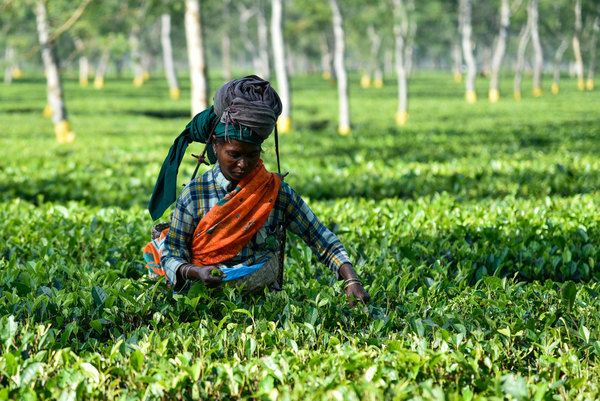
A report published earlier this week by the United Nations Food and Agriculture Organisation (FAO) suggests that improving co-operation between the forestry and agricultural sectors could help to improve food security as well as reducing deforestation, highlighting the successful efforts of Chile, Costa Rica, Georgia, Ghana, Vietnam, Tunisia and the Gambia. According to the FAO,…
Workshop on “Food Security: Infectious Diseases in Farm Animals”- Invited Lectures, Day 2
St. Catherine’s College, Manor Road, Oxford, UK, 4-7th April 2016 Attended by M Djuric, CAB International, Wallingford, UK, on 5th April 2016 (Day 2) This workshop meeting was jointly organised by the Pirbright Institute, Woking, UK and Cairo University, Egypt and was sponsored by the British Council Research Links Programme. The aims of the workshop…
Farming tropical insects to feed the world in 2050
Farming edible insects to provide protein for people and in animal feed is seen as a way to meet food demands of the world’s population in 2050. Dr Sarah Beynon, an entomologist, was a guest on BBC radio 4 programme Midweek[18th November 2015] & fellow guests were invited to try cricket flour cookies and mealworm burgers. She is on a mission to both educate the UK public on the importance of insects (including wasps and spiders) and to provide sustainable food by farming tropical insects. CABI’s role in ProteINSECT, the EU project trialling insect protein in animal feed, is highlighted.
Global food and poverty issues on the table
Awareness on global food and poverty issues was raised last weekend as the World Food Day was observed on the 16th of October followed by the International Day for the Eradication of Poverty on the 17th. Both days were highly topical since eradicating poverty and improving food security were the first two goals listed in…
New report highlights link between forests, farms and food security
With the global population estimated to reach 9 billion by 2050, there has been much debate around the issues of nutrition and food security. Amid these concerns, a report published on May 6 by the International Union of Forest Research Organizations (IUFRO), calls for greater consideration of the use of forests as a food source as…
New study produces biofuel and animal feed from the same crop
‘First generation’ bioethanol is produced directly from food crops such as corn and sugarcane. Global production of bioethanol has been increasing in recent years due to policies in many countries that consider biofuel as a renewable alternative to fossil fuels. While it is widely recognised as means to improve future energy security, the rapid expansion…
“Land Belongs to the Future, Let’s Climate Proof It” – World Day to Combat Desertification 2014
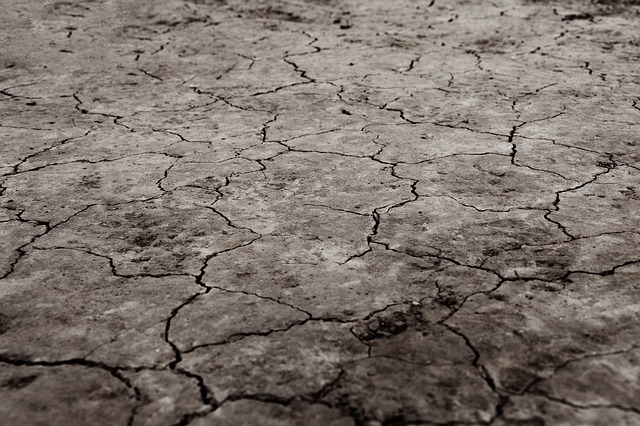
June 17 has been designated by the United Nations as World Day to Combat Desertification and Drought (WDCD). The slogan of this year’s WDCD is ‘Land Belongs to the Future, Let’s Climate Proof It’, which aims to ‘highlight the benefits of mainstreaming sustainable land management policies and practices into our collective response to climate change’. The…
Reducing hunger and undernutrition – how are we doing?
Hunger and undernutrition are amongst the most persistent global development challenges. Part of Millennium Development Goal 1 is to ‘Halve, between 1990 and 2015, the proportion of people who suffer from hunger’ (UN, 2012). With global numbers of undernourished people static at 870 million for the past 5 years and undernutrition contributing to the deaths…
Recent developments in the world of biofuels
Opinions on the use of crops for biofuel and bioenergy continue to be polarized – are they a ‘good thing’ or not? When are they a ‘good thing’? Who benefits? How do you measure the impacts and their interactions at a local, national and international level on food security, land resources, water, greenhouse gas emissions,…
Global research efforts tackle food security.
On January 28, Dave Simpson wrote on Hand picked (‘Redesigning the global food system’) about the recent release of the Foresight report, The Future of Food and Farming, which argues for fundamental change to the global food system if a rapidly expanding global population is to be fed over the next 40 years. On 10…