

The betterment of supply chains for condiments including spices is a key aim for some stakeholders
Dr Umair Safdar, Development Communications Executive at CABI in Rawalpindi, Pakistan, looks at ‘stakeholder interaction’ for better business strategy and integration in Pakistan through the cluster-based Agricultural Transformation (CDBAT) Project…
Stakeholders strongly influence a project’s success, particularly for complex projects with heterogeneous stakeholders. Therefore, understanding their influence is essential for project management and implementation.
The cluster-based Agricultural Transformation (CDBAT) Project is a road map in Pakistan to help companies integrate social and business related issues. CABI in Pakistan conducted a joint meeting at Karachi with different stakeholders dealing with Spices e.g. Shan Foods, Mehran Foods, Zaiqa Foods and National Foods alongside with officials from AMD-USAID who are working in the same domain for betterment of supply chain especially for condiments.
The main contribution of this meeting was providing a novel method to reveal how stakeholders influence the success of complex projects like CDBAT. The meeting also aimed to inform the design of a multi-user communication interface for different agriculture commodities management i.e. onion, chilies, tomatoes, banana, ginger, Garlic and other spices by identifying functional stakeholder groups against those commodities.
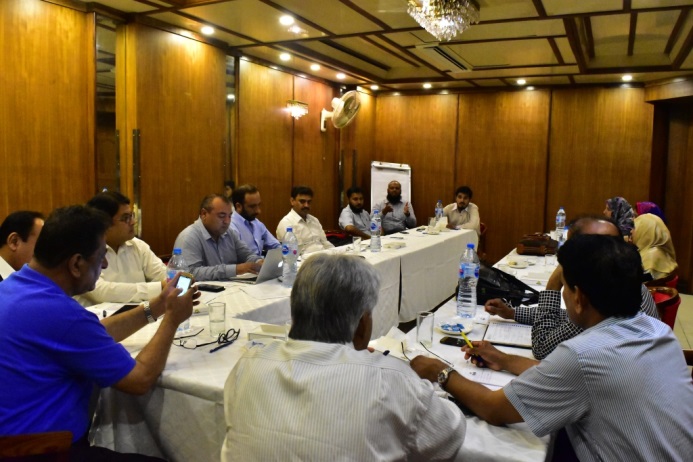
The objective of the CDBAT and its approach is explained by Dr Aslam Gill, who is a commodity specialist for spices and medicinal plants, “Commodity specialists from CABI urge that companies today should be considered ‘networks’ – ones which create value not solely through individual effort, but rather through the interactions of network members.
“Different questions were asked by the commodity specialists and an already developed questionnaire was distributed among all the stakeholders to get answers about constraints and challenges faced by the industry in Pakistan.
“The stakeholders from different companies highlighted that there is lack of up-to-date varieties for almost all the commodities which really meet the requirements for export to other developed countries.
“They further emphasized that research departments should be established for each commodities that sit in the domain of the CDBAT project and coordination amongst extension and research teams should be strengthened. In addition, good agriculture practices should be devised for each commodity and for the promotion of these practices among farmer communities. Government should also provide umbrella services.
“Lastly, the stakeholders appreciated the efforts of CABI to take the initiative on cluster-based agriculture transformation in the country and ensured their full support for the development of the clusters for different commodities.”
Related News & Blogs
Helping Pakistan strengthen livestock production and access to safer crop protection solutions
Pakistan is working to strengthen livestock production and crop protection through better feed knowledge and science-based biopesticide regulation. A new CABI-led initiative will build technical capacity, support regulatory systems and help farmers improve animal health, productivity and access to sustainable crop-protection solutions.
29 October 2026