
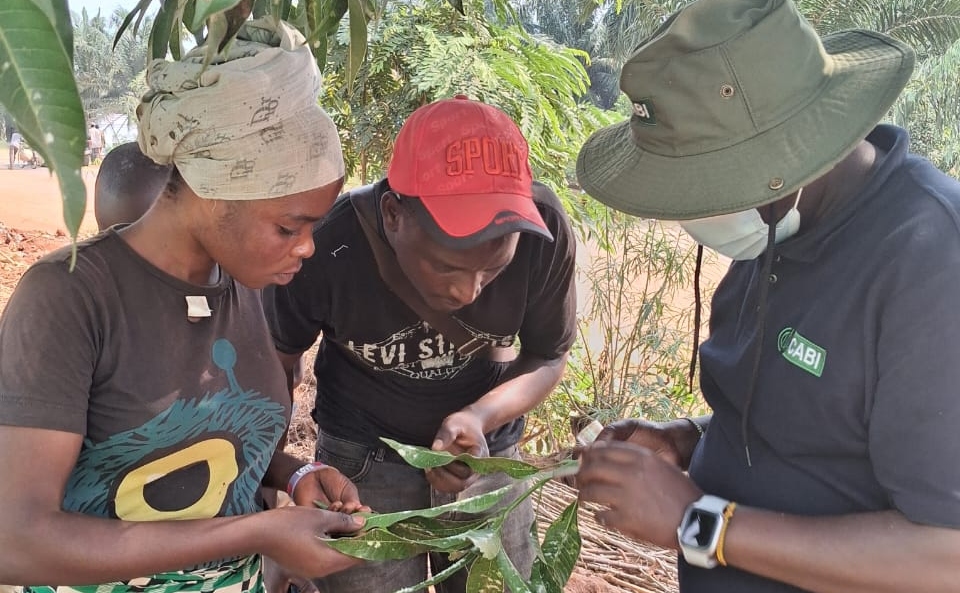
Monitoring of mango orchards in Burundi has found that the parasitoids being released against the invasive mango mealybug are successfully establishing in the field and helping suppress pest populations, marking an important milestone for sustainable pest management.
CABI scientists and Burundi plant health specialists conducting field assessments in June 2026 found evidence that the mass releases of the two parasitoids, Gyranusoidea tebygi and Anagyrus mangicola, against mango mealybug (Rastrococcus invadens) are surviving, reproducing and continuing to attack the pest in farmers’ orchards. The findings also show that the earlier releases at some locations done by a collaboration between FAO and IITA have also proven effective.
Field monitoring reveals encouraging results
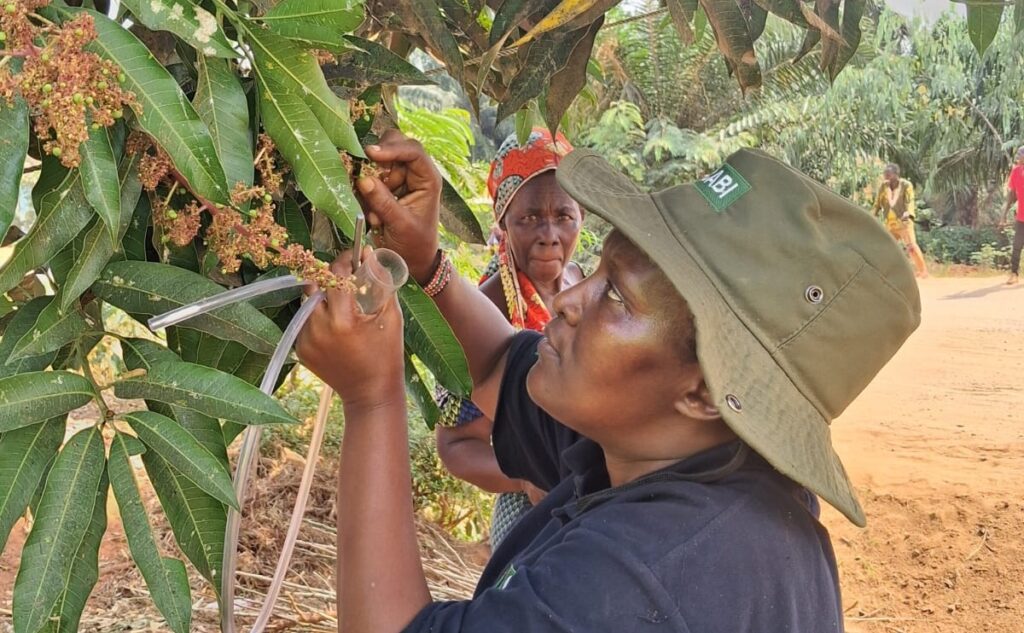
In several locations previously affected by mango mealybug, monitoring visits found no signs of infestation. In orchards where the pest persisted, researchers recorded high numbers of parasitoid mummies and adult parasitoids, evidence that biological control is actively suppressing populations.
“Farms where mango mealybugs still persisted showed abundant parasitoid mummies and adult parasitoids. These observations confirm the successful establishment, survival and the benefits of the scale out of the parasitoids through mass releases.”
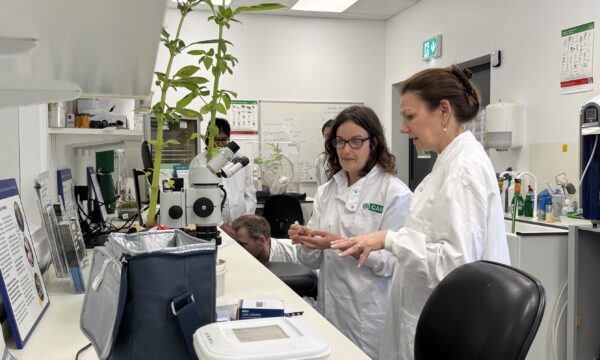
To assess their impact, infested plant samples were collected and taken to the ISABU-CABI laboratory to establish parasitoid emergence and field parasitism rates. “Laboratory monitoring consistently showed that Gyranusoidea tebygi was more abundant than Anagyrus mangicola across most locations”, said Dickson Munyasi, CABI’s Lab Technician.
The findings emerged from a technical support mission implemented under PlantwisePlus in collaboration with Burundi’s plant health and research institutions. The team monitored approximately 15 previous release sites while also conducting additional parasitoid releases in infested orchards.
Farmers report healthier trees and improved harvests
For farmers, the impact may already be becoming visible.
During field visits in Kirundo Province, one farmer expressed appreciation for the initiative and said his mango trees were performing better following the introduction of the beneficial insects.
“You can see the trees are doing well now compared to the time you introduced those beneficial insects. I had a good harvest during the season which has just ended”, he told the visiting team.
Scientists are now conducting further assessments on samples collected from monitored orchards to quantify parasitoid emergence and measure parasitism levels. Early observations indicate that Gyranusoidea tebygi was consistently more abundant than Anagyrus mangicola across most monitored locations.
A milestone for sustainable pest management
Dr Ivan Rwomushana, Director for Pest Prevention and Response at CABI said this initial feedback represents an important milestone for biological control efforts because successful establishment and spread means the beneficial insects can continue suppressing pest populations naturally after release. Indeed, the initial cultures of the two parasitoids that were mass reared were recovered from spots where a previous initiative by FAO and IITA undertook releases.
“Unlike chemical pesticides, which require repeated application, established parasitoid populations can provide long-term pest management while preserving beneficial insects and other native biodiversity“, he said.
He added the Burundi results add to growing evidence from East Africa that biological control efforts can offer an effective and sustainable response to invasive crop pests.
About the mango mealybug
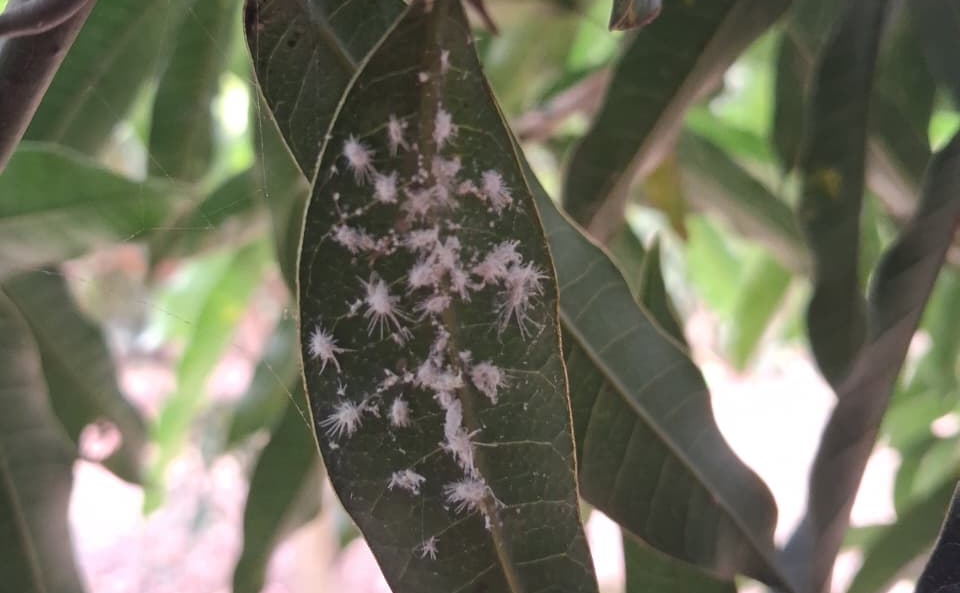
Mango mealybugs are one of the most important insect pests affecting mango production across tropical and subtropical regions in Africa and Asia. Several species fall under the broad category of “mango mealybugs,” each with variations in characteristics and distribution.
The invasive R. invadens, or the fruit tree mealybug, is more damaging than the other species. It’s found throughout Central and Western Africa, including in Ghana, Nigeria, and Uganda, as well as in numerous Asian countries such as India, Thailand, Vietnam, and China. In addition to mango, this pest also affects breadfruit, banana, citrus, fig, and frangipani.
Effective control requires a combination of Integrated management strategies such as regular monitoring, biological control, and other agroecological practices. Although the invasive pest has not been detected in some countries such as Kenya, the risk of its introduction remains high due to the cross-border movement of plant materials. If established, mango mealybug could affect mango production and trade, making prevention and early detection critical.
In Kenya, CABI, National Museums of Kenya (NMK), Kenya Agricultural & Livestock Research Organisation (KALRO), and Kenya Plant Health Inspectorate Service (KEPHIS) are working together to reduce the risk of its establishment in Kenya.
Additional information
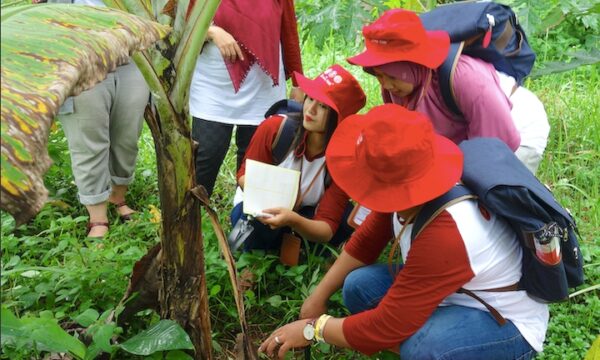
Main image: Smallholder farmers and CABI specialists examine a mango shoot together in Burundi (credit: CABI)
Relevant stories
How Kenya is preventing mango mealybug through early detection
Related News & Blogs
Food security is within our reach – if we innovate today, we can feed more people tomorrow
Food security is within our reach. Discover four ways innovation is helping to build more resilient agrifood systems, from bioprotection products and digital advisory tools to pesticide risk reduction and empowering women farmers.
15 October 2026