

Invasive species continue to drive biodiversity loss, threatening ecosystems, economies, and livelihoods. Globally, their impact is huge. A 2023 assessment by the Intergovernmental Science-Policy Platform on Biodiversity and Ecosystem Services (IPBES) put the cost at more than USD 423 billion each year and rising.
Closer to home, the UK is already feeling these effects. A CABI-led study estimates that invasive non-native species cost the British economy around £1.9 billion each year and that’s only part of the story. Beyond the toll on economies, these species put native wildlife and ecosystems under pressure and can even affect human health. They also show up in everyday ways: clogging waterways, increasing flood risks, and affecting the outdoor spaces many of us value.
Creating awareness of the urgent threat of invasive species
This year, Invasive Species Week, which is being marked from 22 to 28 June, serves as an important reminder of the risks posed by these species and the role everyone can play in preventing their spread. The annual campaign brings together organisations, policymakers, scientists, and the public to raise awareness and promote practical action. Organised by the Non-Native Species Secretariat (NNSS) and partners, the invasive species week focuses on the threats posed by invasive plant and animal species. A series of webinars hosted by the Animal and Plant Health Agency (APHA) and NNSS will take place throughout the week.
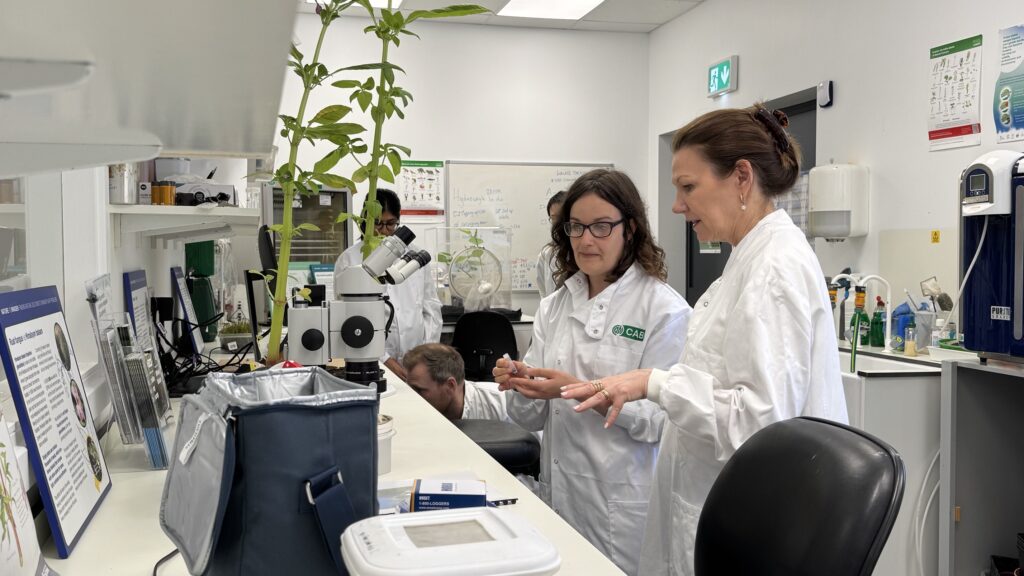
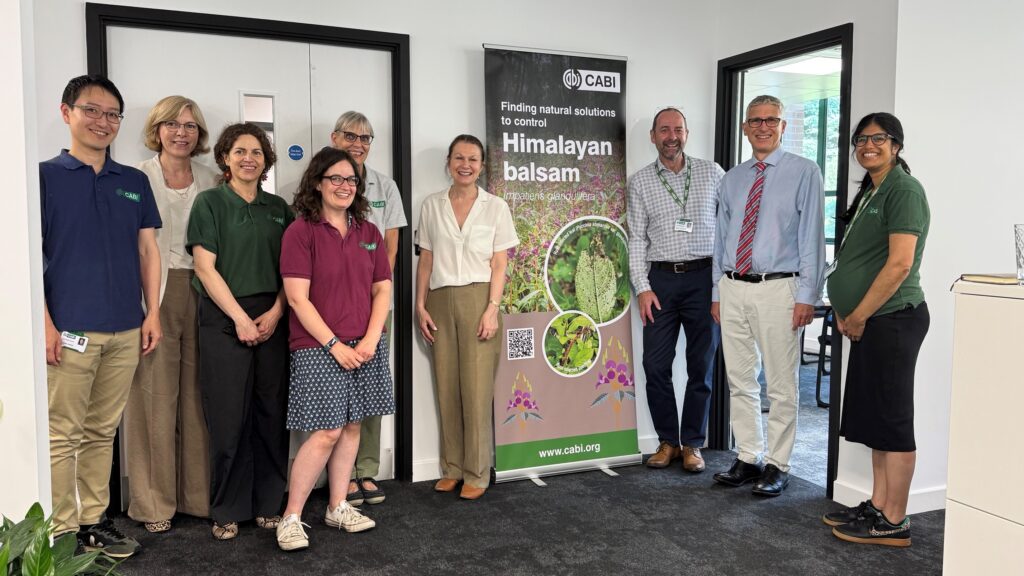
CABI marked the week by welcoming Baroness Sue Hayman, Parliamentary Under-Secretary of State in the Department for Environment, Food and Rural Affairs, to its facilities at Imperial College London’s Silwood Park Campus in Ascot, where CABI’s UK research facilities and staff are based.
Biosecurity Minister Baroness Hayman said: “Invasive non-native species are a leading driver of biodiversity loss and cost the British economy more than £1.9 billion per year.”
She added: “Alongside existing funding and support available to landowners to manage invasive species, Defra supports CABI’s world-leading science and funds its innovative biocontrol programme to help find long-term solutions to protect agriculture, biodiversity and the natural environment.”
Partnerships expand efforts to manage multiple invasive species
Since April 2011, Department for Environment, Food and Rural Affairs (Defra) and other stakeholders have funded CABI scientists to develop safe nature-based solutions for invasive non-native plants threatening the UK’s land and waterways. CABI’s work focuses on the research, breeding, and release of natural predators or parasites that control invasive plant species and agricultural pests without the use of chemical pesticides.
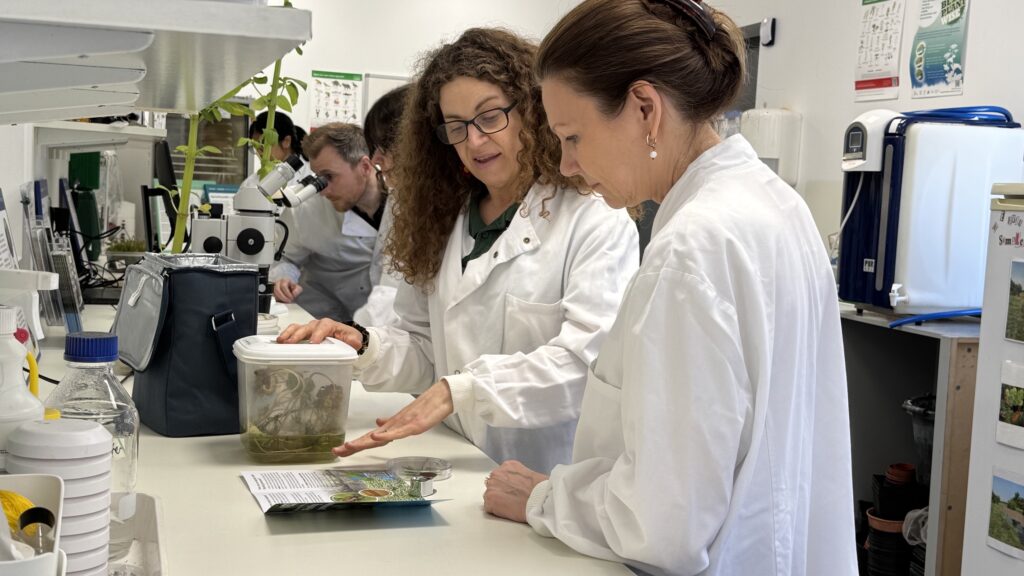
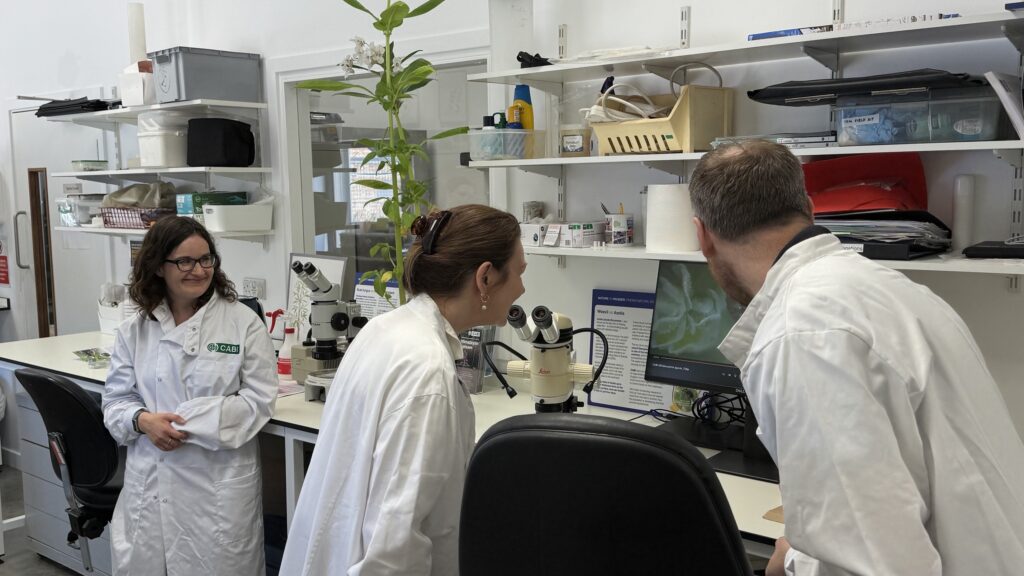
At Silwood Park, Baroness Hayman met the scientists who are turning research into practical solutions for managing invasive species in the UK and around the world.
Nature based solutions for invasive non-native plants threatening UK land and waterways
Floating pennywort
During the visit, CABI showcased its work tackling floating pennywort (Hydrocotyle ranunculoides), using the floating pennywort weevil (Listronotus elongatus) as a targeted biological control agent to manage this highly invasive aquatic plant. Approved in England in 2021, it has been released at 22 sites and has successfully established at many locations. In 2024, CABI scientists found that at 12 sites, weevils were continuing to reduce the growth of the plant and to disperse beyond their original release areas. Biological control offers an effective and long-term solution for floating pennywort and can complement conventional approaches to help deliver a coordinated national management strategy.
Introduced to the UK from the Americas through the aquatic trade in the 1980s, floating pennywort has since spread widely across North-western Europe. With funding from Defra, research into sustainable management options began in 2011. CABI’s invasive species research scientists carried out exploratory surveys in Argentina to identify natural enemies with the greatest potential for biological control. Following years of successful research and testing, teams conducted releases of the weevil across the UK. In 2025, building on this success, CABI supported the first-ever biocontrol releases of these agents in the Netherlands.
Himalayan Balsam
The scientists also demonstrated the control of Himalayan balsam using the rust fungus Puccinia komarovii var. glanduliferae. The release of this natural enemy was approved in 2014 to control the plant and, in collaboration with local action groups, the fungus has been released widely across England, Wales, and Scotland. It has established at numerous sites, with successful overwintering and good levels of leaf infection during the growing seasons. The results are encouraging, spurring ongoing releases. Himalayan balsam (Impatiens glandulifera) was first introduced into the UK in 1839 as an ornamental plant during the same era as other invasive plants including giant hogweed (Heracleum mantegazzianum) and Japanese knotweed (Fallopia japonica).
Japanese knotweed, Australian swamp stonecrop and Azolla
The visit also highlighted broader efforts to manage other invasive species, including Japanese knotweed (Fallopia japonica), Australian swamp stonecrop (Crassula helmsii) and water fern (Azolla filiculoides).
By targeting Azolla outbreaks in a timely manner, it is possible to limit impacts and preserve the biodiversity of freshwater ecosystems. As a result, Azolla is being successfully managed by the introduction of its natural enemy, a small weevil that only feeds on Azolla. A CABI-led study revealed that the tiny weevil (Stenopelmus rufinasus) brings huge benefits in saving Great Britain up to £16.8 million in annual management costs of the invasive aquatic fern, Azolla. 2024 saw a new record for the number of weevils shipped to control Azolla outbreaks, with over 100,000 weevils hand-collected and distributed to customers across Great Britain.
In addition, the visit highlighted CABI’s quarantine research and biosecurity projects, including work managing the pathogens threatening St Helena’s biodiversity and food security. CABI also showcased research on parrot’s feather (Myriophyllum aquaticum).
Science, collaboration and innovation at the heart of the response
Commenting on the importance of this work, Dr Daniel Elger, CEO of CABI, said:
“Invasive species are a complex challenge in the UK and around the world and need coordinated action across borders. Once established, they can be extremely difficult and expensive to control. If left unmanaged, they can have significant economic and environmental impacts.”
“CABI delivers science-based, sustainable solutions that address existing invasions while helping to prevent future ones. In partnership with governments and stakeholders, we have developed natural, cost-effective approaches successfully applied in the UK and its territories, including St Helena, as well as in European countries such as the Netherlands. Continued support from Defra is helping to drive this work forward.”
Dr Richard (Dick) Shaw, Executive Director Europe & Americas, CABI, added: “What the Minister has seen today is the result of years of research and collaboration. Biocontrol reduces reliance on chemicals. It also lowers costs and restores healthier waterbodies for people and biodiversity.”
Additional information
Main image: Baroness Hayman (Biosecurity Minister, DEFRA) finds out more about the management of Himalayan balsam through CABI’s work, in our propagation laboratory at Silwood Park (credit: CABI)
Relevant links
- Find out more about CABI’s biocontrol work on five invasive species in the UK.
- Biological fight against Himalayan balsam stepped up at sites near River Stort in Hertfordshire, UK
- CABI supports weevil release to help control floating pennywort in the Cam Washes
- Floating pennywort weevil: feasting to control one of the UK’s most invasive aquatic plants
- Azolla weevil: 100 years of Azolla biocontrol in the UK
- Azolla control – how to purchase weevils
- “Mitey” progress of Crassula biocontrol at RSPB Conwy, North Wales
- Crassula – the potent invasive plant being challenged by a microscopic mite
- Ruffling parrot’s feathers: the biological control of Myriophyllum aquaticum
- Science-led biocontrol is helping to restore Europe’s waterbodies
1 Comment
Leave a Reply
Related News & Blogs
How ASEAN countries work together to strengthen plant health and protect agriculture
Regional collaboration across Southeast Asia is vital to manage biosecurity risks. Discover how networks like ASEANET and ARDN help countries strengthen plant health, share diagnostic expertise, and protect agricultural trade.
14 September 2026

Excellent work on long-term invasive species management.