


For years, Zambia’s maize seed moved quietly, reliably and almost routinely across the border into South Africa. Then came 2020. Ten trucks sat in a silent row at the frontier, engines off, drivers waiting for a signal that never came. Inside each truck were maize seed destined for markets hundreds of kilometres away. But the gates stayed shut.
South African authorities had discovered that a Zambian inspector failed to declare the presence of a virus. A decision was made to reject and return all ten truckloads. The financial loss ran into millions, but money was only part of the story. For Zambia, the incident threatened to undo years of progress in positioning the country as a dependable source of high‑quality seed in the region.
Dr Kajarayekha Kenneth Msiska, Director of the Plant Quarantine and Phytosanitary Service (PQPS), recalls the uncertainty vividly: “As the National Plant Protection Organization (NPPO) for Zambia, we were not certain about the status. Fortunately, we have had a longstanding cordial relationship with CABI and requested CABI to provide technical expertise.”
CABI’s rapid response to Zambia’s maize seed loss
CABI worked closely with PQPS to collect samples and ship them to the UK for detailed analysis, through bioscience services offered to Member Countries globally. This service includes support in the identification of agriculturally and horticulturally important bacteria and fungi, helping countries verify plant health risks and strengthen their phytosanitary systems.
The results gave Zambia the evidence it needed to respond with confidence to South Africa. Within a year, trade resumed.
“The analysis gave us solid evidence to address the issue and get back on our feet,” said Dr Msiska.
He added:“In phytosanitary matters, response time is everything. Without that intervention, the consequences would have been dire. This experience showed us that CABI is more than a partner: they stepped in as if the crisis were their own.”
Beyond resolving the immediate challenge, CABI also connected PQPS, local seed companies, and the UK’s FERA Science, creating a foundation for ongoing research and stronger phytosanitary systems.
Preparing for emerging threats
Today, Dr Msiska and his team are focused on emerging threats such as the False Codling Moth (FCM), which poses risks to Zambia’s avocado, fresh vegetables, and passion fruit exports to the EU. Surveillance data and pest risk analysis (PRA) will be critical to address this challenge.
“CABI’s team is hands-on. The PRA support has helped us review our phytosanitary requirements and strengthen our NPPO capacity where and when it matters most.”
“We know from experience that with CABI by our side, we can face these challenges head-on. Together, we protect our farmers, our markets, and our future,” said Dr Msiska.
Dr Natasha Mwila, CABI’s Regional Director for Southern Africa, emphasized that the success story extends beyond restoring trade: “Together we strengthened Zambia’s plant health system with science-based evidence, restored confidence, protected markets, and supported livelihoods and economies. We are proud of our ongoing partnership with the Ministry of Agriculture and the Government of Zambia to build resilience in the country’s value chains and ensure sustainable access to regional and international markets.”
Ms Phyllis Engefu Ombonyo, CABI’s Chief Member Countries & Partnerships Officer added: “When trade stalls, the impact is immediate, farmers lose income, exporters lose markets, and economies are affected. At CABI, we see it as our duty to respond quickly and work hand in hand with our member countries to turn these crises into opportunities for stronger systems.”
Unlocking trade across Africa and beyond
Zambia’s experience is just one chapter in a much wider regional story. Across Africa, CABI has supported Member Countries to overcome phytosanitary challenges and regain access to lucrative export markets.
In Ghana, CABI’s technical expertise contributed to the lifting of a European Union ban on fresh produce, restoring exports worth US$15 million. In Uganda, CABI’s support helped reduce interceptions of horticultural products from 36 to zero over five years, rebuilding confidence in the country’s exports.
Today in Uganda, a new partnership is taking this further by strengthening the capacity of Ugandan authorities and private sector organizations to comply with Sanitary and Phytosanitary (SPS) measures. The initiative has the potential to unlock up to US$150 million in revenue otherwise lost to pests and diseases. Funded by the European Union Commission, the project brings together CABI, the Ministry of Agriculture, Animal Industry and Fisheries (MAAIF), HortiFresh, and COLEAD to improve SPS compliance for horticultural produce, including fruits and vegetables, opening new doors for trade and farmer prosperity.
In Ethiopia, False Codling Moth (FCM) remains a serious threat to the country’s growing horticulture industry, particularly roses, which face zero tolerance in EU and UK markets. The pest increases production costs, reduces margins, and risks access to key export destinations. To address this, CABI is strengthening the capacity of the Ethiopian Horticulture Producer Exporters Association (EHPEA), the Ethiopian Agricultural Authority (EAA), and member farms to identify and manage FCM, ensuring compliance with international market requirements.
“By helping farmers and institutions improve the quality and safety of agricultural products, CABI breaks down trade barriers and expands opportunities for smallholder farmers in domestic, regional, and international markets,” said Dr Benoit Gnonlonfin, CABI’s Sanitary and Phytosanitary (SPS), Global Program Lead.
He concluded, “By working together with NPPOs and sharing knowledge, we will overcome the challenges and seize the opportunities that lie ahead.”
Additional information
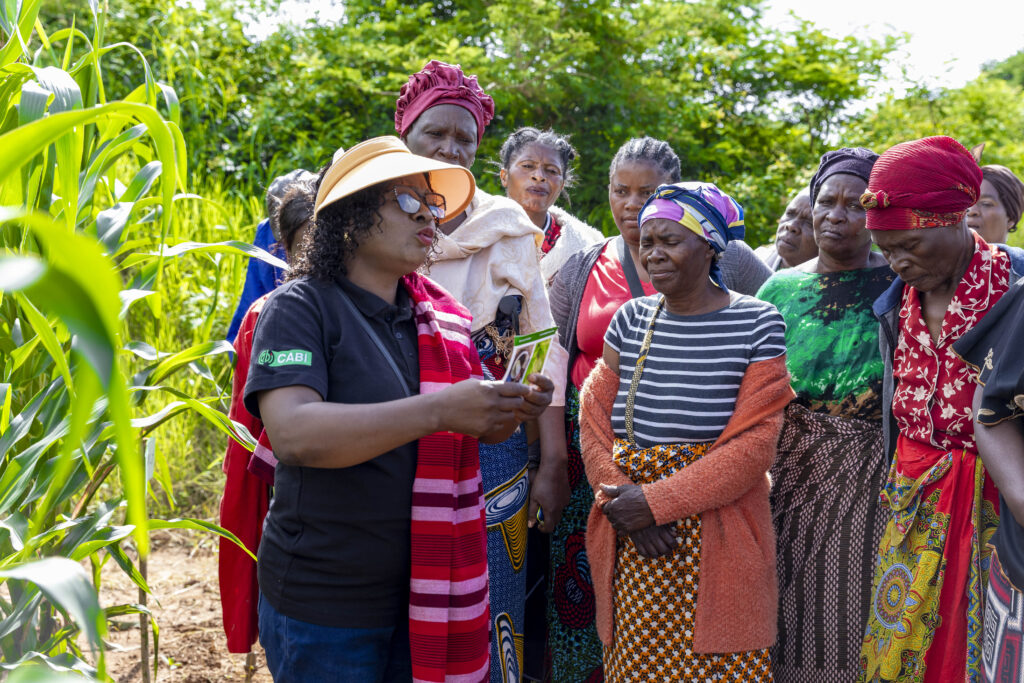
Main image caption : Maize crop growing on a farm.
Relevant stories
- Project to improve Uganda’s Sanitary and Phytosanitary measures aims to unlock up to $150 million in revenue
- CABI signs collaboration agreement with African Union InterAfrican Bureau for Animal Resources
- Strengthening phytosanitary research programming and collaboration: from European to global phytosanitary research coordination
- Strengthening food safety systems: Zambia hosts Codex training for national stakeholders
1 Comment
Leave a Reply
Related News & Blogs
The next chapter for Africa’s food systems isn’t inventing solutions. It’s scaling them
Across Africa, many of the solutions needed to strengthen food security, resilience and livelihoods exist. Yet knowledge only creates impact when it reaches the people and institutions who can use it. The priority now is scaling proven solutions so they can deliver impact where it is needed most. This was the consistent message from the Africa Food Systems Forum 2026.
23 September 2026
This is a good story for Zambia. I had no idea such a thing happened in my country. But I’m glad CABI made a remarkable contribution to help Zambia regain its reputation as a supplier of clean seed. Now we can trade again with confidence. Thanks CABI for your presence in Zambia. Lessons? Strong systems through trustworthy partnerships matter. Invest in plant health, and work together to keep markets open.