
Women in agrifood systems are essential. They constitute over 50% of the agricultural workforce (FAO, 2023), with roles throughout the food value chain supporting the production of over half of the world’s food.
However, studies show that they produce 20-30% less than men. As a marginalized group, they face unequal control of and access to resources.
If male-female differences in access and yields were overcome, the number of undernourished and hungry people worldwide would fall by 100–150 million.
Breaking down barriers for women in agrifood systems
Unfortunately, these gender gaps remain. Women farmers, particularly rural women, continually experience challenges that stop them from becoming a part of a sustainable agrifood system. For example, they cannot access land and credit, agricultural knowledge and information or inputs easily, nor do they have as many market opportunities as men do.
By giving women opportunities, access to the same resources, and power in decision making, we break down barriers. As a result, significant societal benefits, including well-being, community involvement, nutrition and health, and employment opportunities, would be achieved.
Empowering women to transform lives
As part of CABI’s Strategy, CABI is helping to deliver change by making gender a central feature of our development projects. We use our expertise and knowledge to redress inequalities in wealth and nutrition to help change lives.
To celebrate International Women’s Day and the International Year of the Woman Farmer, we look at some case studies of the women in agrifood systems who have flourished, and whose work we have been proud to support.
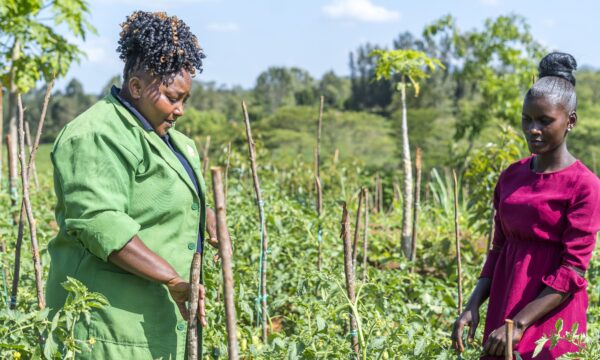
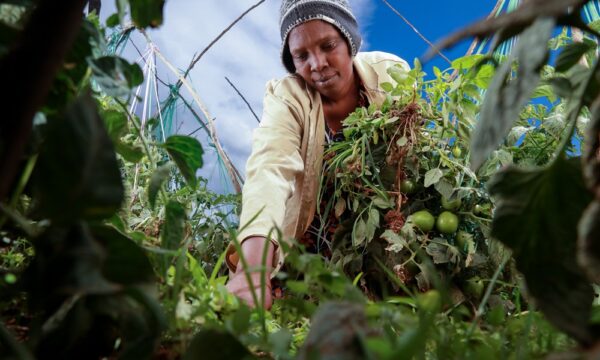
Meet Wanza Simon – a trained plant doctor now training others
After being trained as a plant doctor by CABI’s PlantwisePlus programme in September 2023, Wanza Simon from Kenya experienced a major turning point in her career.

The training enablied her to transition from uncertain internships into a career that supports farmers in regenerative agriculture, fruit tree management, agribusiness skills and recordkeeping. As her confidence and expertise grew, she built a reliable farmer database and improved other farmers’ access to quality inputs, contributing to better productivity in her community.
She was selected to train youth mentees in agribusiness modelling across two counties in Kenya which extended her impact further. She also attended an international exhibition in India in January 2026. This strengthened her business vision, allowing her to bring new processing, value addition and market linkage insights back to Kenyan youth and farmers, amplifying her role within local agrifood innovation.
Wanza’s experience not only provided her with employment, but it also enabled her to travel, train youth and improve her life and those within her community. She said “Opportunities exist but we need to be consistent, prepared and visible in the little things we do. We also need to speak up, the more we are silent, the more opportunities pass by.”
Meet Hira Manan – an agricultural officer transferring empowerment to other women in agrifood systems
Hira Manan is an Agricultural Officer from Hyderabad, Pakistan. She participated in CABI’s Gender Training of Trainers (TOT) which focused on gender-inclusive advisory services bridging the gap between communities and agricultural extension services. Hira found that she consequently experienced a complete shift in confidence and professional identity.

The training empowered her to see herself a woman but also as an equal professional. This transformation translated directly into her work under the Sindh Agriculture Growth Project, where she began leading field visits, market surveys, and women-focused sessions with renewed confidence. Her presence enabled women farmers – who were previously hesitant to engage with male staff – to speak openly and participate. These women, in turn, became local change agents, spreading knowledge and supporting others in their villages.
After the training, Hira remarked, “Empowerment is not a one-time effort, it is a continuous process of building confidence, capacity, and community. I take pride in being part of this change. My journey, and the journey of other women, is a testament to the fact that when women are supported, they don’t just participate, they lead.”
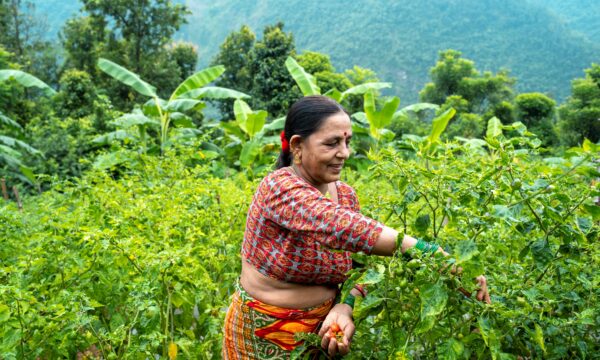
Meet Razia Sultana – a farmer from Rangpur, Bangladesh, who is rebuilding her livelihood and others through women-led agribusiness
Razia Sultana’s journey reflects a transformation from a rural homemaker to an influential agribusiness entrepreneur.
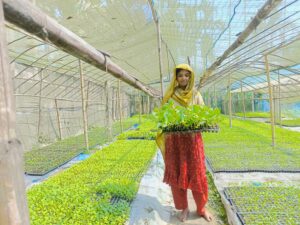
After her family’s sapling business collapsed, the family were left in financial debt. Razia decided to step beyond her traditional role and embrace technical training and business guidance from CABI’s PlantwisePlus Farmer Advisory pathway. She learnt about modern nursery management and marketing and received practical supplies such as seedling trays and quality seeds. Equipped with new skills and support, she expanded her nursery, going from 100 to 800 trays. She tripled her monthly income and began repaying long‑standing debt.
Beyond this, Razia’s growth has reshaped her role within her household and community.
She now makes business decisions, mentors other women through an entrepreneur network, and has created locaFl employment opportunities. Her success inspired women to pursue their own income‑generating ventures, demonstrating how training and confidence can create change.
Razia says, “My story shows how targeted support, determination and innovation can transform financial crisis into opportunities and empowerment.”
Looking ahead
We see through these stories that empowered women in agrifood systems are transforming their lives – strengthening food security and inspiring others to lead with confidence. Their stories show that when women are equipped with resources, training and decision making power, systems become more resilient, inclusive and capable of meeting global challenges.
In 2025, CABI enabled access to agricultural and environmental advice, technologies and inputs to 2.85 million women and youth, reinforcing our commitment to reducing inequalities.
Additional information
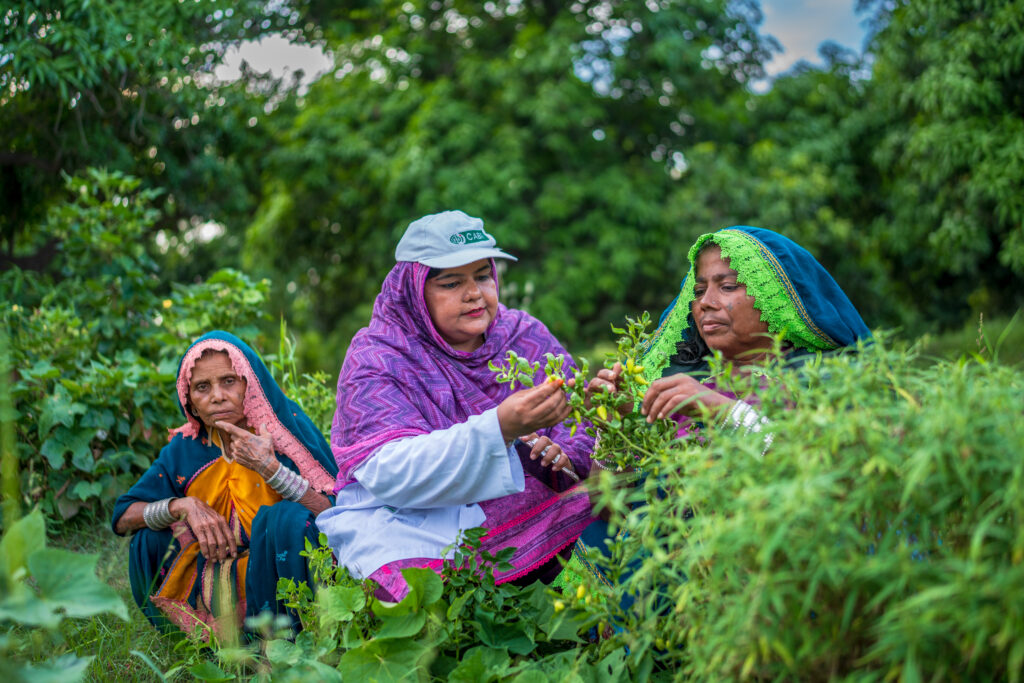
Main image: Women farmers learning from an Extension Officer in a field in Pakistan. Credit: CABI
Further reading
Related News & Blogs
CABI and CRRI explore gender gap of crop loss impact at Odisha, India workshop
Why do men, women and youth experience crop loss differently? That question took centre stage at a stakeholder workshop in India, organized by the Central Rice Research Institute (CRRI) and CABI’s Global Burden of Crop Loss. Crop loss remains a pressin…
6 October 2025