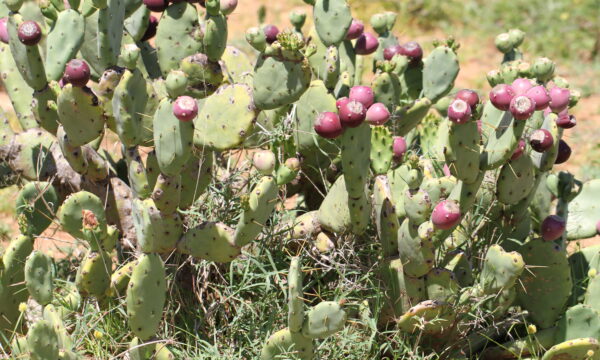

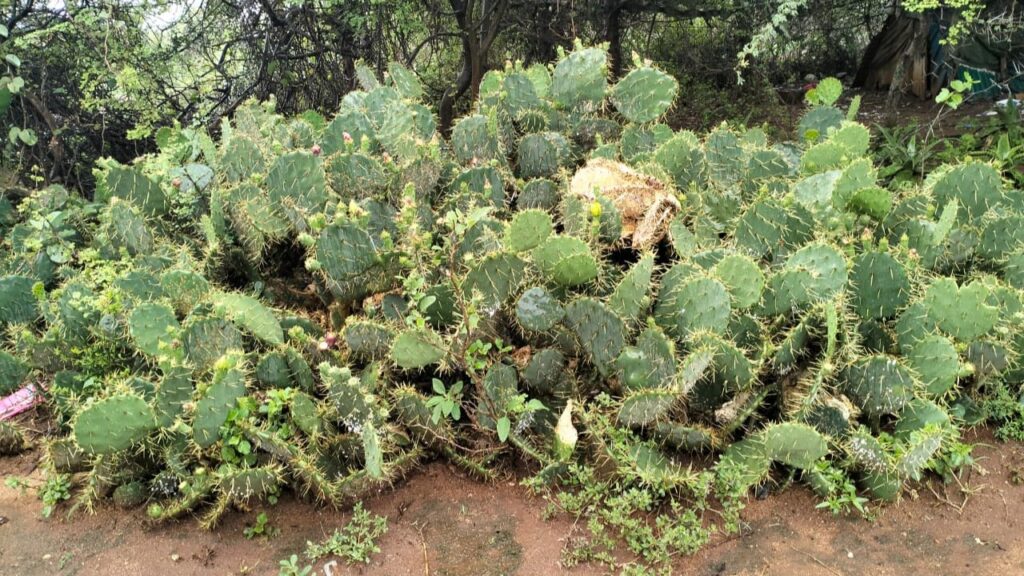
Just a few years ago, discussions in Naibunga Community Conservancy focused on one question: how to stop the spread of the invasive cactus, Opuntia engelmannii (cactus apple).
O. engelmannii has spread across grazing land. It reduces pasture, restricts livestock movement, limits access to water and injures animals with its sharp spines. For pastoral communities that depend on healthy rangelands, it threatens both livelihoods and biodiversity.
Today, the conversation has shifted. “When we started, the focus was simply on controlling the cactus,” says Harrison Rware, Monitoring and Evaluation Officer for CABI. “What we’re seeing now is that communities are thinking beyond the immediate problem and planning how the restored land freed from cactus can be used to support livelihoods, conservation and future restoration activities.”
Hands-on biological control
The project introduced Dactylopius opuntiae (prickly pear cochineal) which feeds specifically on Opuntia species and weakens the plant over time. This biological control option offered the community a low-cost, sustainable and environmentally friendly alternative to intensive manual removal.
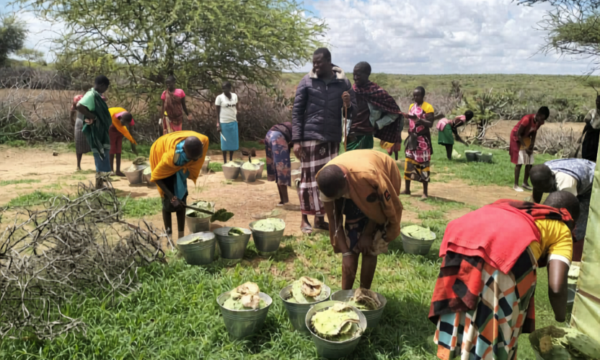
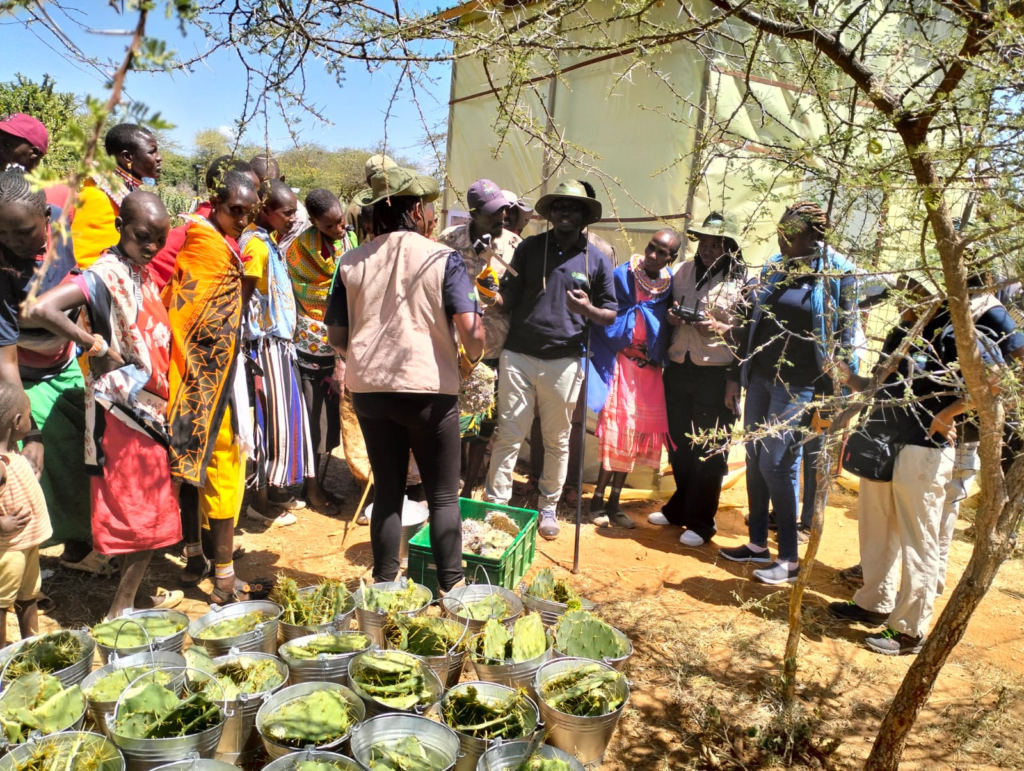
Through seven cochineal rearing houses, local people have become directly involved in rearing, monitoring, and releasing cochineal-infested cactus pads. As a result, they are gaining a better understanding of how ecosystems function, how invasive species affect biodiversity and livelihoods, and how collective action can help restore degraded rangelands.
Restoration creates new livelihood opportunities
As communities participate in biological control efforts, their thinking is extending beyond addressing the immediate problem. Recent consultations revealed a growing interest in what comes next: how communities can restore the land once the cactus is brought under control, and how this recovery can create opportunities for local livelihoods.
Discussions with local leaders, women, youth representatives, religious leaders and conservancy officials highlighted opportunities to link cactus management with wider restoration efforts. These included indigenous seed collection, tree nurseries, seedling production, native grass establishment and sustainable forage management.
These activities could help women and young people develop practical skills and restore their landscapes. Where viable markets and support systems exist, they could also create small income-generating enterprises.
As one woman community representative observed:
“We have been concerned about the cactus because it takes over our grazing land. But as we work towards controlling it, we also need to think about what we want to see growing there again. Women can play an important role in collecting indigenous seeds, raising seedlings and restoring our land. These activities can also create opportunities for our households.”
Young people also saw restoration as an opportunity to develop practical skills and explore alternative livelihood activities.
“Controlling the cactus is important, but we should also think about what happens afterwards. Young people can be involved in collecting seeds, raising seedlings and establishing indigenous grasses. This can give us skills and opportunities to earn a living while contributing to the restoration of our community land.”
For pastoral communities, restoring native grasses and other locally adapted vegetation is particularly important for improving forage availability and strengthening the natural resource base that supports livestock production.
The emerging message is that controlling invasive cactus is only the beginning. Communities want to see degraded areas recover, native vegetation return and restoration efforts contribute to healthier landscapes and more resilient livelihoods.
Inspiring the next generation
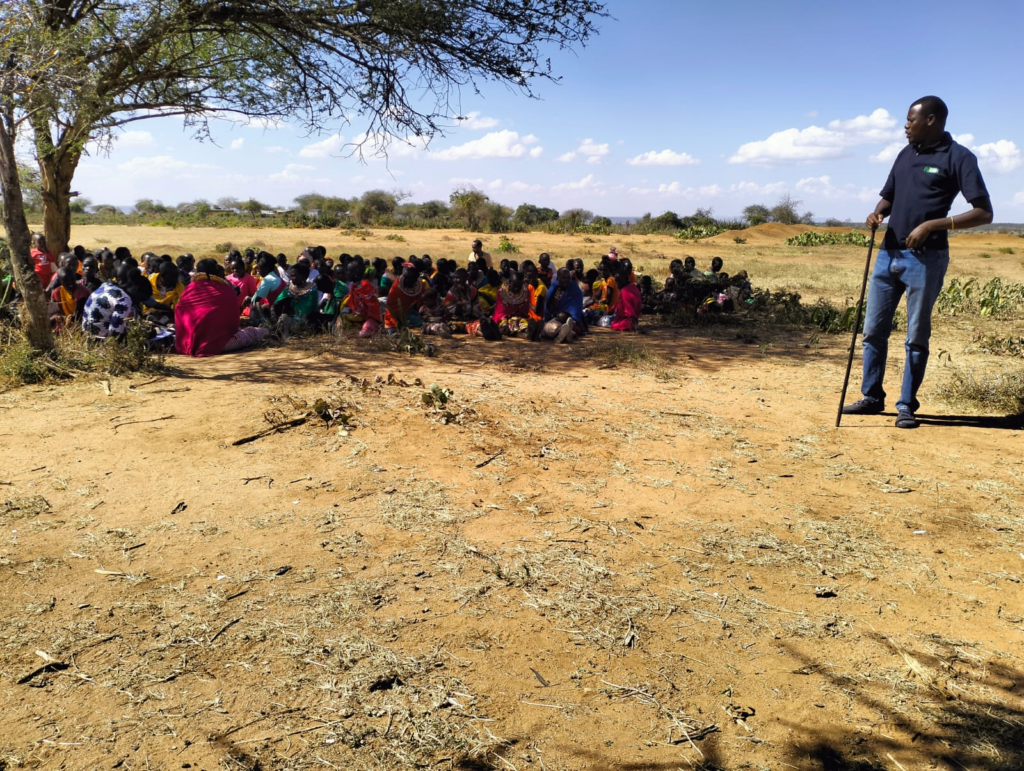
As communities begin looking beyond cactus control towards the longer-term restoration of their landscapes, they also recognize the importance of involving the next generation. Communities increasingly recognize schools as valuable partners in extending knowledge and commitment to landscape restoration beyond current project activities.
Through environmental and 4K clubs (youth agricultural and life-skills programme operated in schools by the Ministry of Agriculture and Livestock Development), schools offer opportunities to establish indigenous tree nurseries, collect and multiply native seeds, demonstrate restoration techniques and promote the importance of protecting indigenous trees, grasses and other natural resources.
A teacher participating in the discussions highlighted the role of schools in shaping future environmental stewardship:
“The efforts to control invasive cactus provide an important opportunity to teach children about the environment. We want learners to understand not only why invasive plants are a problem, but also the importance of indigenous trees and grasses and how they can contribute to restoring the land.”
Students also recognized that they have a role to play in protecting their environment:
“We are learning that protecting the environment is not just the responsibility of adults. We can also collect seeds, plant indigenous trees and take care of them. What we learn at school can help us protect our environment at home and in our community.”
Young people can play an active role in restoring and protecting their local environment. Their involvement can help ensure today’s cactus control efforts support a long-term culture of landscape stewardship.
Expanding community participation
While caretakers play an essential role in managing cochineal rearing houses, community members expressed a strong interest in participating more actively in cochineal release activities. They recognized that these activities not only help control O. engelmannii but also build practical restoration skills and strengthen community ownership of the programme.
Community members and project partners agreed on a new approach. Caretakers will continue leading technical releases from the rearing houses, while larger community release exercises will provide opportunities for wider participation.
But perhaps the most significant change is how communities now view conservation itself.
Rather than seeing invasive species management, livestock production, wildlife conservation, and livelihoods as separate challenges, local leaders increasingly recognize how closely they are connected. Healthy landscapes support productive grazing, thriving wildlife and stronger local economies.
As the Naibunga Community Conservancy Chairman explained during a community engagement session:
“We must control the cactus, but at the same time ensure that domestic animals, wildlife, and people all continue to benefit from the landscape.”
His statement reflects the emergence of a mixed-model conservation approach that balances ecological restoration with livelihood needs.
From invasive cactus control to landscape restoration
The next phase of the programme will focus on coordinated cochineal releases. This will include strengthening caretaker accountability, repairing rearing houses, supplying protective equipment and supporting the development of restoration enterprises.
“Biological control remains at the heart of this work,” says Harrison. “But the conversations we’re having with communities now are very different from those we had at the start. Alongside controlling invasive cactus, we’re seeing growing local interest in restoring grazing land, strengthening community participation and exploring practical ways restoration can support local livelihoods.”
The programme’s success will be measured not only by reductions in O. engelmannii, but also by the extent to which communities sustain restoration efforts and manage restored landscapes effectively.
More information
Main image: Opuntia engelmannii (cactus apple). Credit: CABI
Related articles
Related News & Blogs
Crop loss: What do maize losses really mean for women farmers?
Crop loss can have devastating impacts on rural communities. The Global Burden of Crop Loss recently published a study on maize crop losses in Kenya to explore their age- and gender-differentiated impacts on maize farming communities across different agroecological zones.
22 September 2026