

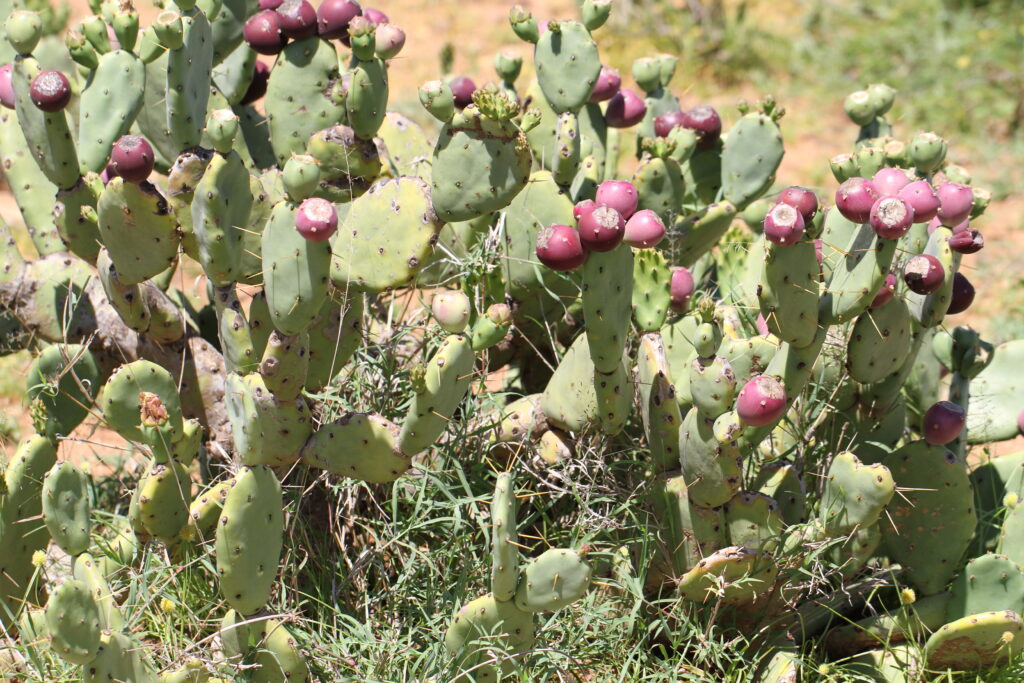
Opuntia stricta, an invasive cactus, threatens the livelihoods of thousands of people living in rural communities across Africa. The plant spreads rapidly, taking over huge swathes of land, negatively impacting rural life.
Among some of the communities hardest hit are pastoralists who are unable to use the land for livestock grazing. Working with local partners, CABI has released a biocontrol agent, a sap-sucking bug commonly known as cochineal, which is helping to control the plant, reducing its impact. A new CABI study has found that local communities perceive the biocontrol to be a success.
Efforts to control Opuntia stricta in Kenya
Native to Central America, Opuntia stricta is a spiny succulent cactus shrub, which has become invasive in several African countries, including Kenya. It is now the country’s most problematic and widespread cactus species. Dense infestations have grown in parts of Laikipia County and Tsavo East National Park. The plant blocks access to grazing land and water sources. Consumption of the fruit by livestock can lead to illness and death, and its sharp spines can injure animals. In one region, a severe invasion forced 1,200 farmers to abandon their land and move elsewhere.
Biocontrol is the most cost-effective, environmentally friendly, and sustainable way to manage invasive species compared to chemical or physical interventions. In this particular case, a previous study in Kenya showed that the cochineal contributed to a significant decline in cactus abundance. Numbers of cladodes, flowers, and fruits declined significantly in areas where the agent had established in Laikipia County.
However, the benefit of Opuntia stricta biocontrol for rural communities remains poorly documented. Published in Biological Invasions, the CABI study aimed to address this knowledge gap.
Assessing community views on Opuntia stricta biocontrol
In Laikipia County, where the cochineal is now abundant and widespread on Opuntia stricta, the insect has caused the plants to die back significantly, reducing their flowering and fruiting. In late 2023, researchers interviewed 155 people living in and around Il Polei. This small rural village is home to many pastoralists who depend on livestock for their livelihoods. Their animals provide meat and milk and can be sold to generate income.
Survey highlights success of Opuntia stricta biocontrol efforts
Interviewees talked highly of the cochineal releases. Nearly 80% of respondents believed it to be more effective than chemical or physical control methods. Moreover, most respondents (88%) said the cochineal was cheaper than chemical or physical control methods. Almost all respondents (94%) said they had never seen the cochineal on any other plant species. This helps to provide further evidence that the cochineal is safe, posing no threat to native species or crop plants.
More than 80% of those interviewed said they had helped spread the cochineal or encouraged others to do so. Anecdotal evidence suggested that some individuals took the time to move infected cladodes into uninfested areas. Subsequently, an NGO, Northern Rangelands Trust, later established rearing facilities and trained several local individuals to mass-produce and release the cochineal.
Around 80% of respondents believed the cactus density had decreased over the past five years as a result of biocontrol. Most (85%) respondents said that individual plant size had decreased, together with a reduction in flowering (97% of respondents) and fruits (97%). This had resulted in an improvement in grazing according to 94% of those interviewed, with an associated increase in livestock health (96%), livelihoods (90%), and land prices (84%).
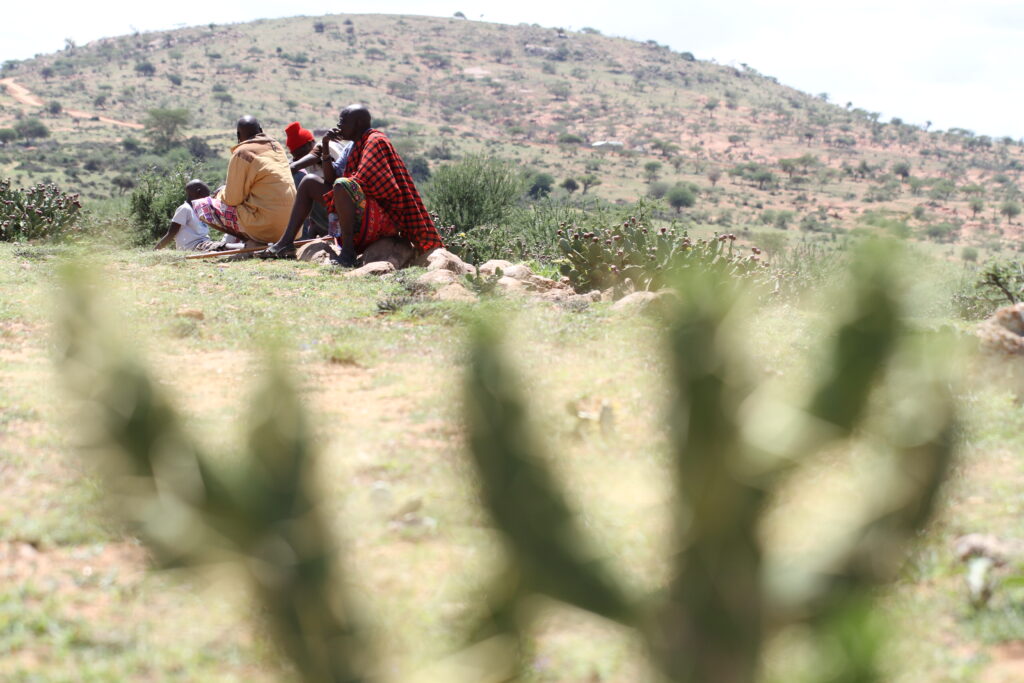
Positive perceptions of Opuntia stricta biocontrol efforts
The biological control of Opuntia stricta offers both environmental and economic benefits, addressing a serious threat to the livelihoods of people living in Kenya. In 2017, the plant was estimated to have caused mean annual income losses of KSH 10,000-500,000 (US $110-$5,528) per household. In 2026, a study found the cactus reduced access to forage in Laikipia valued at US 8.4 million. The value for Kenya was US 127.4 million. Biocontrol can play an important role in reducing the costs associated with managing invasive species. The new study indicates that people perceive biocontrol as worth pursuing since it is seen as cheaper and more effective than other means.
The introduction of the cochineal into a rural area where people are highly dependent on natural resources has been seen largely as successful. It has encouraged local communities in Laikipia to take action to control the plants’ spread. Moreover, it is now considered not only beneficial but also safe. Residents actively take part in control efforts. Overall, local communities see the intervention as positive. The study provides insights into positive perceptions of biocontrol of Opuntia stricta – a natural and sustainable means to controlling this highly invasive plant.
Additional information
Main image: Opuntia stricta, the invasive cactus. Credit: CABI
Related reading
1 Comment
Leave a Reply
Related News & Blogs
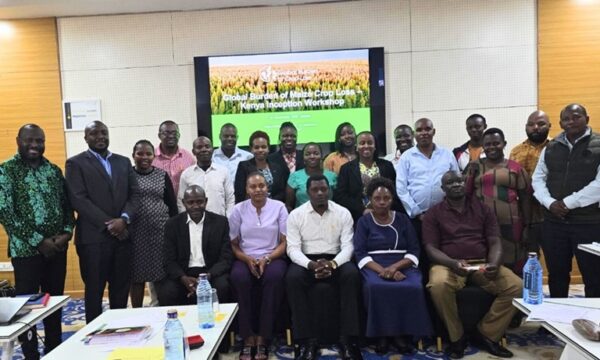
Crop loss: What do maize losses really mean for women farmers?
Crop loss can have devastating impacts on rural communities. The Global Burden of Crop Loss recently published a study on maize crop losses in Kenya to explore their age- and gender-differentiated impacts on maize farming communities across different agroecological zones.
22 September 2026
A true environmental success story, thanks!