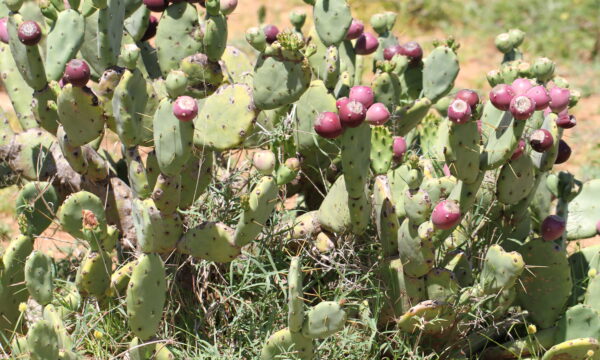

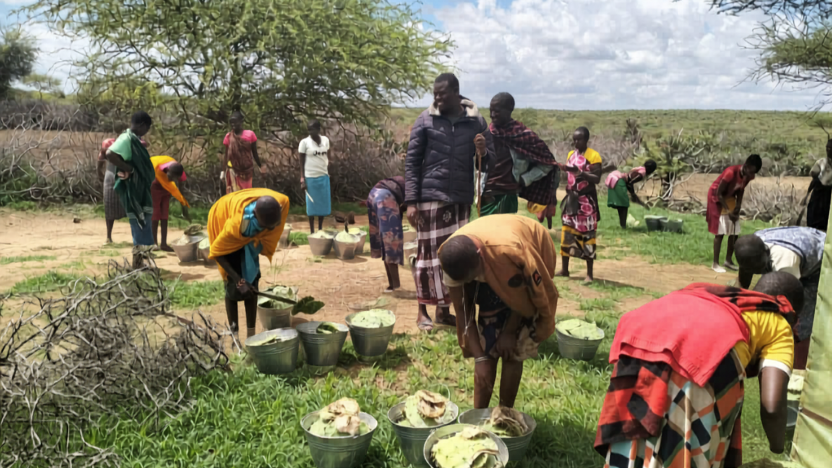
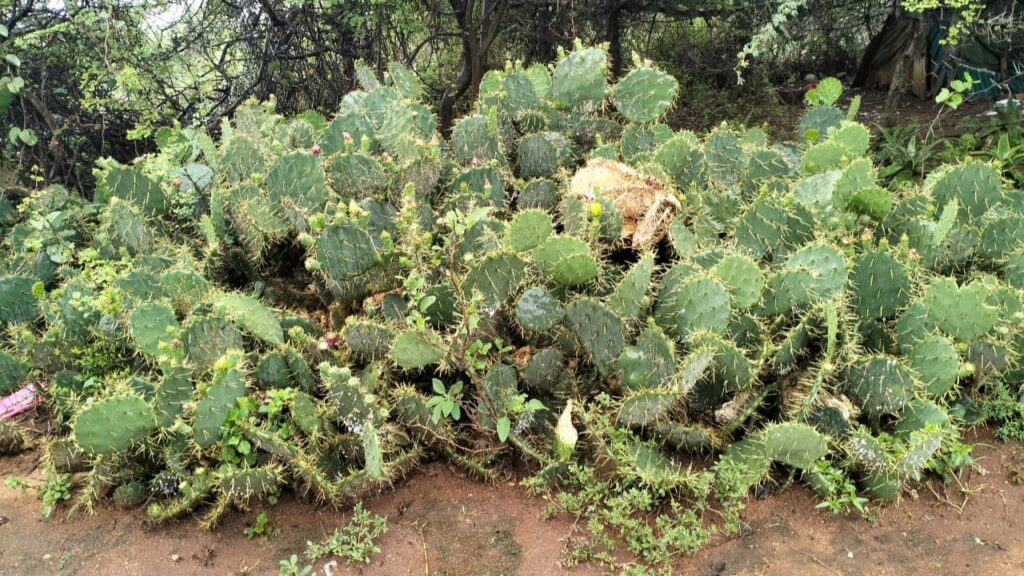
In the dry rangelands of Koija in Laikipia County, Kenya, the invasive cactus Opuntia engelmannii (cactus apple) has spread widely in recent years. The plant reduces access to grazing, injures livestock, and limits access to water and pasture. This poses challenges for pastoral livelihoods whose livelihoods depend on healthy rangelands.
Communities are now increasingly leading efforts to manage the cactus.
Strengthening community ownership
In March 2026, community members, the Community Land Management Committee, local leaders and partners gathered in Koija to review progress of their community action group and to discuss next steps. A key outcome was a shared recognition of the importance of community ownership in sustaining control of the invasive.
While earlier interventions relied on external support, community members recognized that lasting change would require locally coordinated action.
This approach reflects the principles of Integrated Landscape Management (ILM) bringing communities, institutions, and ecosystems together to co-manage land in a way that balances livelihoods, conservation, and long-term resilience.
Biological control in practice
A central component of these efforts to manage invasive cactus is use of is biological control. A nature-based solution that is using introduced Dactylopius opuntiae (prickly pear cochineal) which feed specifically on Opuntia species and weaken the plant over time. This offers a low-cost and more sustainable and environmentally friendly alternative to intensive manual removal.
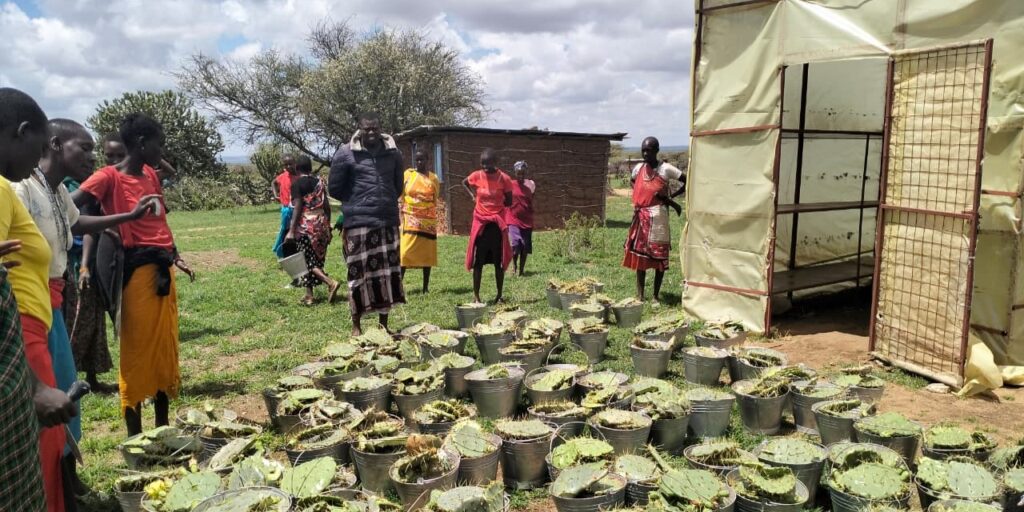
Since 2023, seven community-managed rearing structures have been established to multiply and distribute these insects. Their effectiveness depends not only on the technology, but also on coordination, commitment, and consistent management at the community level.
Expanding community roles
The Community Land Management Committee and other members of the community are taking a more active role in this implementation. Caretakers are leading the distribution of prickly pear cochineal–infested cactus pads across affected grazing areas, while herders are supporting the spread of the biological control agent during routine livestock movements in areas where Opuntia engelmanii has occupied.
Communities are also establishing their own monitoring approaches to track progress of the establishment of the biological agents. This is alongside organizing monthly action days to restore degraded areas and maintain insect rearing structures.
These actions indicate a transition from externally driven interventions to more locally embedded management.
Combining control methods
Communities are also combining biological control with targeted manual removal. While cochineal insects provide long-term, landscape-scale control, communities are using manual clearing in specific locations such as homesteads, water points, and grazing corridors.
This combined approach is helping to accelerate results and reflects a practical application of ILM, where multiple interventions are used in a complementary way. As one villager commented: “In our village, we remove cactus manually, and we are already seeing it die faster when combined with the cochineal because the cut cactus is already strained on water access. This is also seen as faster way of eventually opening the grass for grazing”
Linking to land-use planning
Invasive species management is being integrated into the Koija Community Land Use Planning process. This helps ensure that cactus control aligns with broader land management priorities and is supported by local governance structures.
It also creates opportunities for improved coordination between communities and alignment with county-level development priorities. Furthermore, it means there is scope for sustainable action beyond project timelines
As one member of the local leadership emphasized: “We have many partners, but we must bring them together to address this problem.”
Looking ahead
Although Opuntia engelmannii remains widespread, the approach in Koija to control the spiky cactus is evolving from a technical intervention to a more integrated, community-led process such as the running/management of the rearing houses.
Biological control is a long-term process, and significant landscape-level impacts are not expected immediately. At this stage, the full results are not yet visible across the affected rangelands. However, early signs of progress are beginning to emerge, particularly through the reduced flowering and fruiting of the cactus in some areas where the biological control agents have established. This is an important indicator because it may gradually reduce the spread and regeneration of Opuntia engelmannii over time.
For pastoralist communities, the intervention has started to strengthen awareness and collective responsibility around invasive species management and rangeland restoration. The approach is encouraging greater local participation in land management discussions and activities, especially through the operation of the rearing houses and community engagement processes.
While widespread improvements in grazing conditions and rangeland recovery may still take time to materialize, the long-term expectation is that successful suppression of the cactus will contribute to improved pasture availability, healthier rangelands, reduced livestock injuries, and better food security and livelihood resilience for pastoral households.
Some challenges nevertheless remain unresolved, including the continued spread of the cactus in heavily infested areas and climate-related pressures on rangelands. Continued progress will therefore depend on long-term community engagement, effective institutional support, and sustained investment in biological control and rangeland management efforts.
Additional information
Featured image: Community members in Koija preparing Opuntia cladodes for mass rearing of cochineal biological control agents (credit: CABI).
Related news and blogs:
CABI Landscapes Initiative reports major progress across Eastern Africa
Related News & Blogs
Crop loss: What do maize losses really mean for women farmers?
Crop loss can have devastating impacts on rural communities. The Global Burden of Crop Loss recently published a study on maize crop losses in Kenya to explore their age- and gender-differentiated impacts on maize farming communities across different agroecological zones.
22 September 2026