
Kenya has repeatedly put agriculture at the heart of its future. It did so in Kenya Vision 2030, again in the Agricultural Sector Transformation and Growth Strategy (ASTGS), and once more in the Bottom-Up Economic Transformation Agenda (BETA). This year also saw the launch of the National Agri-food Systems Investment Plan (NASIP) 2026-2030, the second phase of the ASTGS. Each of these commitments has pushed the thinking a little further, from growing more food to building resilient food systems that serve the people who grow the food, the people who buy it, and the wider economy that rests on both.
It is little wonder. Agriculture remains the backbone of Kenya’s economy, central to national growth, employment and food security. The sector contributes approximately 22 percent of Gross Domestic Product, directly and through its linkages with other sectors, while employing more than 40 percent of the country’s workforce and over 70 percent of the rural population. With so much riding on the sector, investment keeps flowing from governments, donors and development organizations. Yet one question remains: Which innovations and policy contributions have CGIAR and its partners introduced in Kenya over the past 20 years?
Twenty years of CGIAR research in Kenya: What lasted, what scaled and why
CABI is leading a stocktaking exercise, in partnership with the Kenya Agricultural and Livestock Research Organization (KALRO), the University of Nairobi and LEAD Analytics on behalf of the CGIAR Standing Panel on Impact Assessment (SPIA) to answer that question. CGIAR (the Consultative Group for International Agricultural Research) is the world’s largest global agricultural innovation network.
Between 2025 and 2026, the team reviewed two decades of CGIAR activities in Kenya, tracing how researchers and partners promoted, adapted and scaled innovations in crop genetic improvement, natural resource management, livestock development, digital tools and policy, and how farmers and other stakeholders adopted and integrated them into the country’s agricultural and food systems.
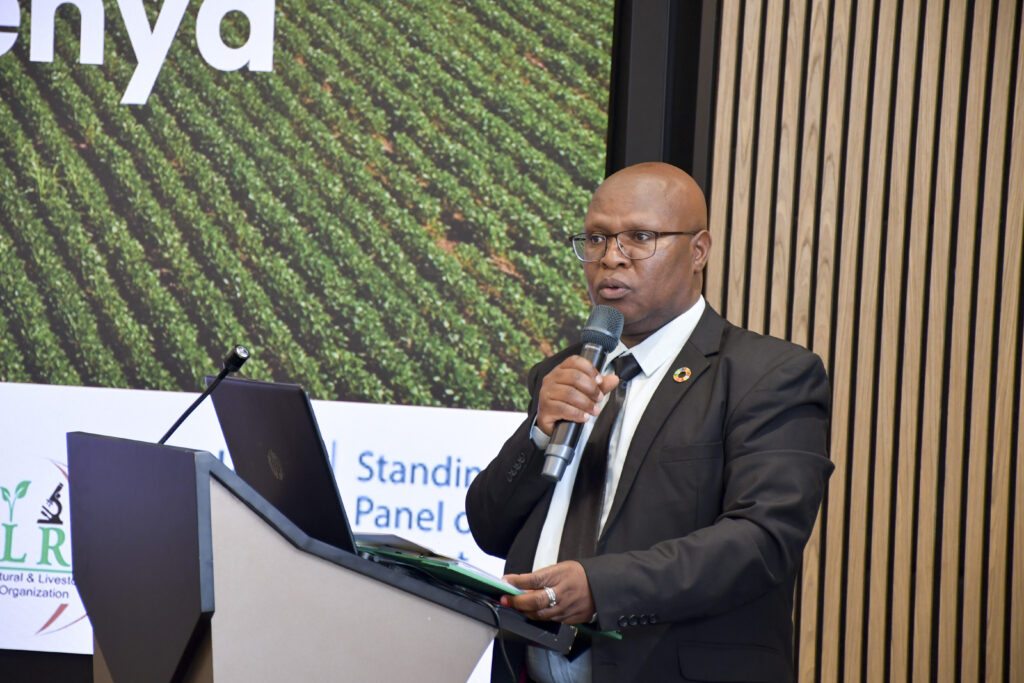
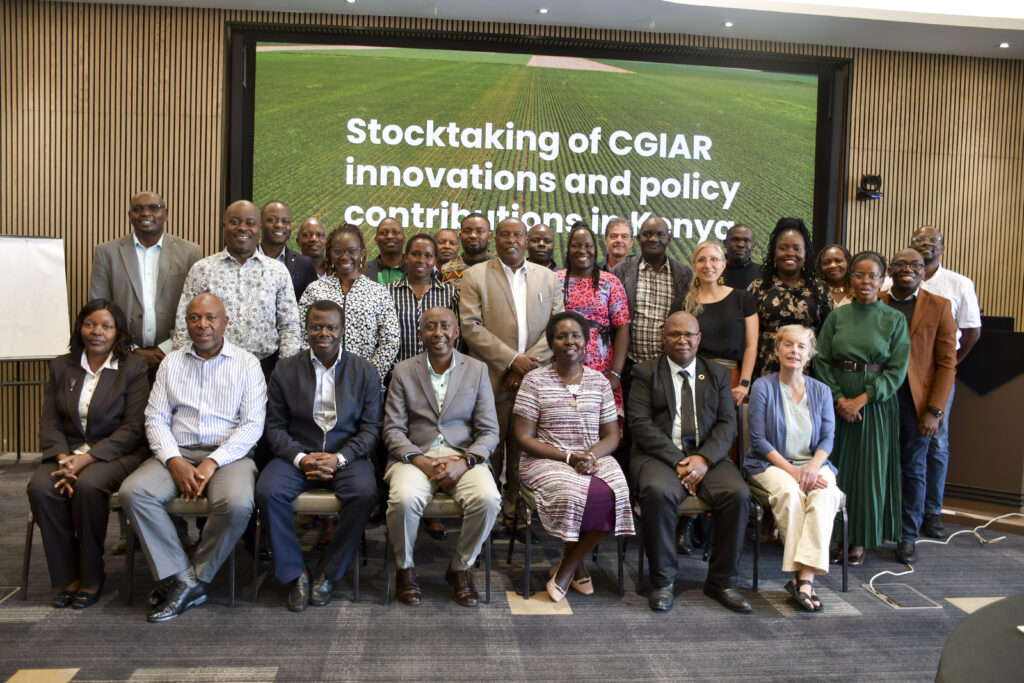
During a two-day validation workshop in Nairobi in August 2026, researchers, policymakers and development partners reviewed the findings, challenged the evidence and helped sharpen it. While opening the workshop, CABI’s Regional Director, Dr Daniel Karanja told the participants that validation is “not simply about reviewing research findings.” It is a chance to make sure the recommendations are practical and useful to the people who will act on them, from policymakers to farming communities. He added that the exercise is also a reminder of why partnership matters. CGIAR-related innovations are co-developed and delivered with Kenyan partners, and as Dr Karanja put it, “The complex challenges facing agriculture today cannot be solved by any single institution.”
Why take stock of agricultural innovations?
For Eileen Bureza of the Ministry of Agriculture and Livestock Development, the stocktaking results speak to a gap she sees every day. In her view, one of the biggest challenges is bridging the gap between agricultural innovations developed through research and those that ultimately reach and benefit farmers.
Some innovations, she noted, were developed many years ago. Who knows about them, and are they known only within research organisations? Set against the size of the Kenyan population, the number of people who have taken them up “looks like a drop in the ocean.” She added that the findings are especially relevant as Kenya pursues climate-smart agriculture that will feed the nation and build its exports.
Turning agricultural research into impact for farmers
For Dr Godwin Macharia, Assistant Director of Crop Production and Seed Systems at KALRO, reflecting on agricultural innovations is an opportunity to assess the impact of long-standing partnerships between national research institutions and CGIAR centres, and identify ways to strengthen them. “We work closely with CGIAR centres and this exercise allows us to objectively assess their contribution to the impact we are seeing in agriculture,” he says. “We need to consider what we can enhance and scale to achieve our shared mandate of creating impact on farmers’ fields and increasing agricultural productivity.”
Dr Macharia points to the collaboration between KALRO and CIMMYT as an example of what these partnerships can achieve. Working together to address wheat rust disease, the institutions have released high-yielding, rust-resistant wheat varieties, which also offer desirable grain-processing qualities. Another example is the collaboration with CIAT on biofortified beans, including the Nyota variety, which is gaining adoption across Kenya. While these innovations are at different stages of adoption, Dr Macharia says they demonstrate the value of collaborative agricultural research in developing practical solutions that improve farmers’ livelihoods and create opportunities across the agricultural sector.
What does successful agricultural innovation look like?
Representatives from farmer organizations and NGOs attending the second day of the workshop identified farmer engagement, market readiness and sustained support as key factors influencing the successful adoption and scaling of CGIAR-related innovations. Additionally, participants called for an end-to-end approach that looks beyond production to aggregation, processing, marketing, consumer preferences and profitability.
“One example of an innovation’s impact is a pigeon pea variety (ICEAP 01552 from ICRISAT) that farmers themselves named ‘Mpesa’ because of the income it generated. The innovators talked directly to farmers and allowed them to see and articulate the variety’s value,” said Anthony Kioko, Chief Executive Officer of the Cereal Growers Association (CGA) of Kenya.
Participants’ feedback will help refine the findings and finalise the list of innovations in the stocktake data, including their potential to scale, measurability and relevance to national development priorities. The CGIAR Standing Panel on Impact Assessment (SPIA) will publish the final stocktake data for public access
Additional information
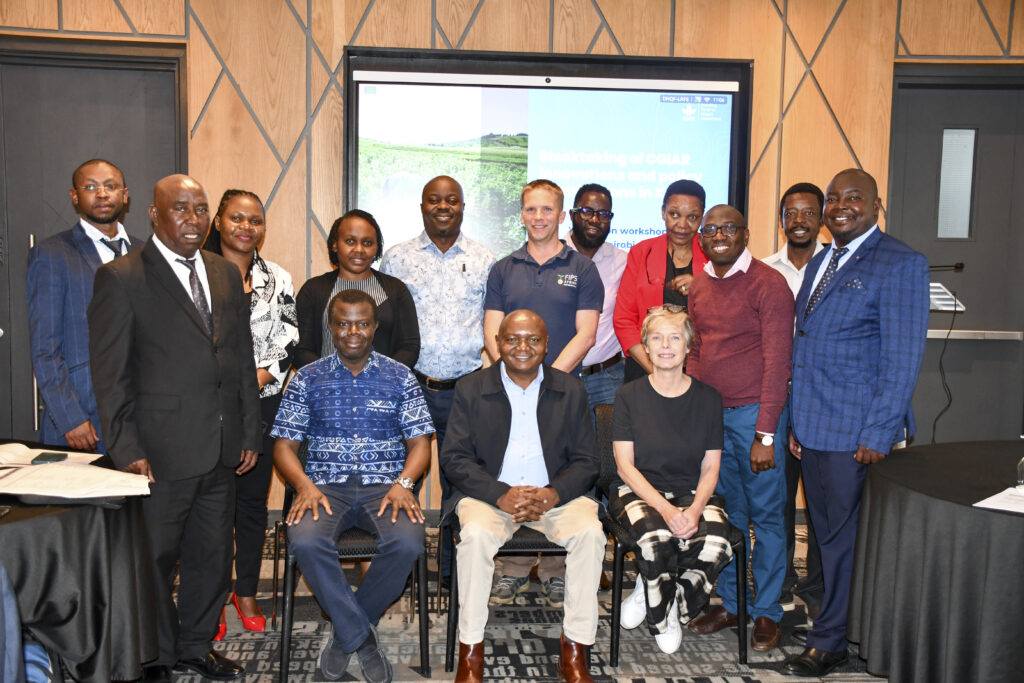
Photo caption: Researchers, policymakers and academics gathered on the first day of the workshop to reflect on 20 years of CGIAR contributions and explore innovations that are scaling across Kenya’s agri-food sector.
Relevant links
SPIA Country Studies: https://iaes.cgiar.org/spia/country-studies
Related News & Blogs
Adaptive agriculture “information factories” to help farmers and value chains navigate climate and market change
For millions of smallholder farmers, uncertainty has become part of everyday life. Will this crop hold its value when harvest comes? What price will buyers be willing to pay? Will the rain be as erratic as it was last year? Is this the year that pests…
22 October 2026