
For millions of smallholder farmers, uncertainty has become part of everyday life. Will this crop hold its value when harvest comes? What price will buyers be willing to pay? Will the rain be as erratic as it was last year? Is this the year that pests and diseases decimate my crop?
As climate change reshapes weather patterns around the world, these questions are becoming harder to answer. Erratic rainfall, droughts, floods, pest outbreaks, and extreme weather events threaten agricultural productivity and livelihoods. Yet, while these challenges are increasing, so too is the amount of information available to help address them. Every day, satellites collect vast amounts of Earth Observation (EO) data. Climate scientists generate increasingly sophisticated forecasts and risk analyses. Agricultural organisations monitor crop health, pests, diseases and market trends.
So, why do some farmers and other agricultural value chain actors still lack the insights they need to navigate an ever-changing environment? The challenge is not a lack of information. Many services exist however service providers often operate independently and do not fully integrate multiple data sources. Therefore, advice can be generic, and farmers often fail to receive the full picture before making crucial decisions.
Turning climate and EO data into agricultural decisions
The Adaptive Agricultural Information Factory (ADAPTA-IF) project aims to bridge that gap. Funded by the European Space Agency and delivered through a consortium including CABI, Assimila, Geosystems Hellas and CottonConnect, the project is developing a new approach to climate-smart agricultural decision making.
Rather than creating new datasets, ADAPTA-IF brings together information that already exists, combining EO data, climate intelligence and advisory services to generate actionable insights for different agricultural users. At the heart of the project is what the consortium calls “information factories”.
As Pascale Bodevin, CABI Project Manager for ADAPTA-IF, explains:“The “information factories” are databases which consider a range of data streams before providing accessible, practical, and timely advice to key agricultural actors for different crops, at multiple locations around the world.”
“We are not creating new data. It is about producing new insights. The information exists and we aim to bring it together in a way that is accessible to farmers and agricultural stakeholders.”
ADAPTA-IF outputs will not only consider a vast range of data, but they will also offer economically viable solutions, allowing users to see the full picture before making decisions. The project is currently exploring three pilot “use cases” across different ecosystems in India, Kenya and Greece. A key feature of ADAPTA-IF is its commitment to co-design. Across the three pilot countries, CABI and project partners have been engaging directly with advisory providers, researchers, value-chain actors and policymakers to understand the challenges they face and the information they need. These engagements are helping shape both the technical design of the services and the business models needed to sustain them beyond the life of the project.
Building climate resilience in India’s cotton supply chains
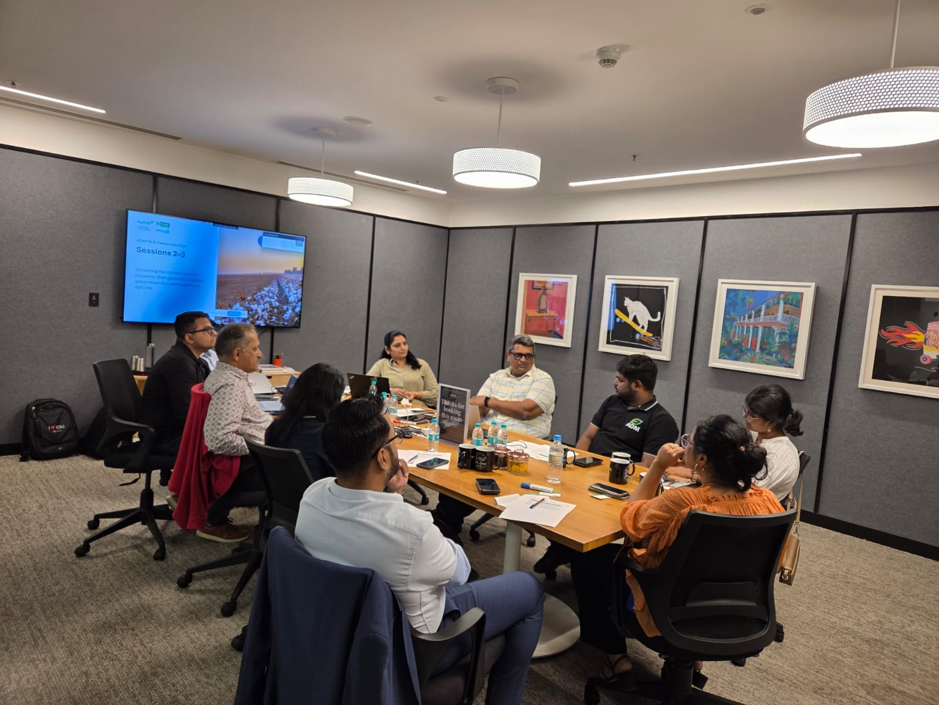
In India, ADAPTA-IF is focusing on cotton and the value chain that supports its production. Through consultations with service providers, agribusinesses and supply-chain stakeholders, the project is evaluating services including yield prediction, climate – informed pest risk, early warning systems, and integrated risk intelligence that combines crop, climate and pest data to support sourcing and logistics decisions.
Highlighting the value of these consultations, Madhu Manjari, Agri-Digital Tools Coordinator, CABI,said: “The workshops are helping us understand the gaps between data, services and user needs across the three value chains. The insights will guide the development of sustainable, scalable solutions that create value for all stakeholders while keeping smallholder farmers at the heart of ADAPTA-IF.”
She added: “The workshop in India reinforced that effective climate services must work for the entire cotton ecosystem. The services being evaluated were shaped directly by the needs and priorities identified by stakeholders.”
Supporting Kenya’s maize farmers make informed decisions on crops, pests, weather and markets
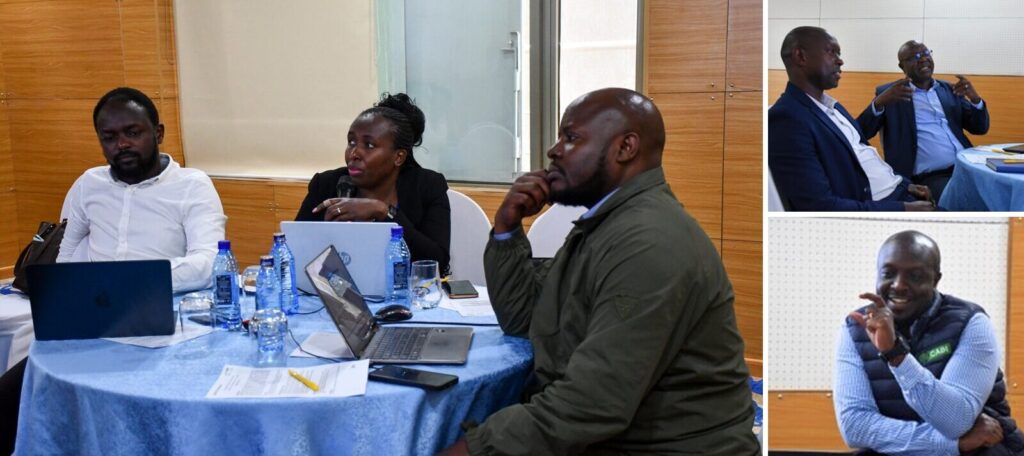
In Kenya, ADAPTA-IF is working with stakeholders to strengthen advisory services for maize production.
“The Nairobi ADAPTA-IF workshop with the Kenya Agricultural and Livestock Research Organization (KALRO) and other ecosystem stakeholders identified opportunities to strengthen data-driven advisory services for smallholder maize farmers,” said CABI’s Digital Development, Manager, Henry Mibei. “Building on KALRO’s digital innovation work, discussions focused on how better service integration and more localised data can deliver tailored, farmer-specific advice.”
Based on these insights, ADAPTA-IF is exploring four services to further strengthen and support Kenya’s maize sector: a digital crop calendar for climate-responsive planning, a maize variety selection advisor to recommend suitable varieties, maize mapping and monitoring and a market intelligence advisory service to help farmers make more informed production and investment decisions.
Supporting Greek olive growers manage pests and climate risks
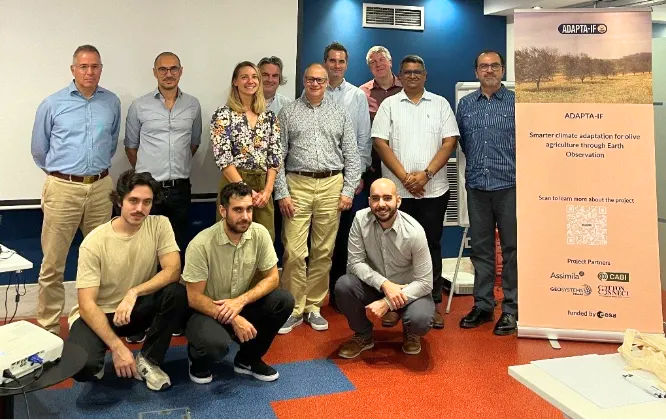
In Greece, olive growers identified pest pressure and increasing drought & heat stress as key concerns. In response, ADAPTA-IF is exploring decision-support services for olive fruit fly management and Strengthen climate resilience, helping growers make more informed and timely management decisions.
“As one key lesson from the workshop highlighted, successful climate services must start with the decisions users need to make and then identify the most valuable data and delivery methods to support them, “ said CABI’s Sustainability Manager, Charlotte Day who conducted the workshop together with Alvaro Valverde, CABI’s Policy and Engagement Advisor.
Additional information
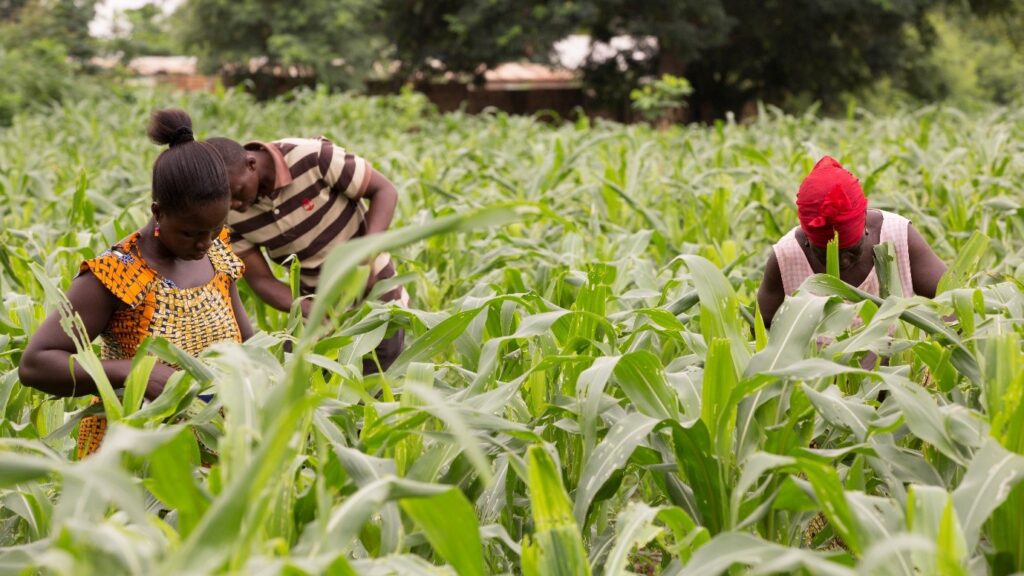
Main picture: Maize farmers tackling fall armyworm. Erratic rainfall, droughts, floods, pest outbreaks, and extreme weather events threaten agricultural productivity and livelihoods
Relevant links
Read more about the project: Developing sustainable business models using Earth Observation for climate adaptation
Related News & Blogs
Food security is within our reach – if we innovate today, we can feed more people tomorrow
Food security is within our reach. Discover four ways innovation is helping to build more resilient agrifood systems, from bioprotection products and digital advisory tools to pesticide risk reduction and empowering women farmers.
15 October 2026