
Every year, crop-feeding pests destroy roughly a fifth of the world’s food crops. New research published this year is warning that climate change could make matters worse by impacting the insects that keep those pests in check.
From wheat fields in the UK to rice paddies in Vietnam, a hidden struggle plays out in every crop field. Pests attack the plants destined for our dinner tables. Natural enemies, in turn, attack the pests. For decades, this natural safety net of biodiversity has quietly protected the world’s harvests. A new study in Global Change Biology, co-authored by CABI scientists, shows climate change is tipping the balance in favour of pests.
Nature’s hidden allies against crop pests
Natural enemies and biocontrol agents currently secure around a quarter of the world’s crop yields. They act as a first line of protection, long before any farmers reach for a pesticide. Where these natural enemies thrive, they can suppress pest populations by as much as 73%.
This same protection underpins classical biological control, where natural enemies are intentionally introduced by scientists to new regions to control invasive pests. It is widely regarded as offering excellent value for money. Historically, every $1 invested has returned somewhere between $5 and more than $1,000 in food security and societal benefits.
A changing climate tips the balance in pests’ favour
The new study modelled 14 major crop pests worldwide, including the cassava mealybug, papaya mealybug, cotton aphid, fall armyworm, and diamondback moth. Researchers projected how climate change might disrupt each pest’s relationship with its natural enemies, out to the 2060s-2080s. The results are stark. As many as 57% to 100% of these pests are projected to lose pest enemy species as ranges shift. Under future climate scenarios, just 43% of pests keep their full complement of parasitoids, and none keep their full range of predators.
Some losses stand out. The cassava mealybug is a serious threat to food security across parts of Africa. It could see a 27% decline in the parasitoids that keep it under control. Even widespread pests of cereal and horticultural crops face notable declines, of 6% and 7%, in predator pressure.
Not every relationship weakens. The study found that pest interactions with ants shift in both directions. Some pests gain protection; others lose it. The pattern looks most worrying for staple crops such as maize, cassava, beans, and rice. That is especially true across food-deficit, equatorial parts of the Global South. There, pests are expanding their range and losing parasitoids at the same time, even as ant pressure often climbs.
Biodiversity loss and pesticides compound the risk
The study also argues that other factors besides climate change are contributing to the problem. Agricultural biodiversity has declined sharply in recent decades, weakening nature’s own capacity to regulate pests. Meanwhile, pesticide use has more than doubled since 1990 and keeps rising across most regions. This increase is killing natural pest enemies as well as the pests themselves. Increasing pesticide use could prove to be a false economy, with growing evidence suggesting these often hazardous chemicals offer no clear advantage over free, natural pest regulation, once effective natural enemies are present.
Together, these environmental stressors are weakening a free line of defence which farmers across the world rely on.
CABI’s own work in the field
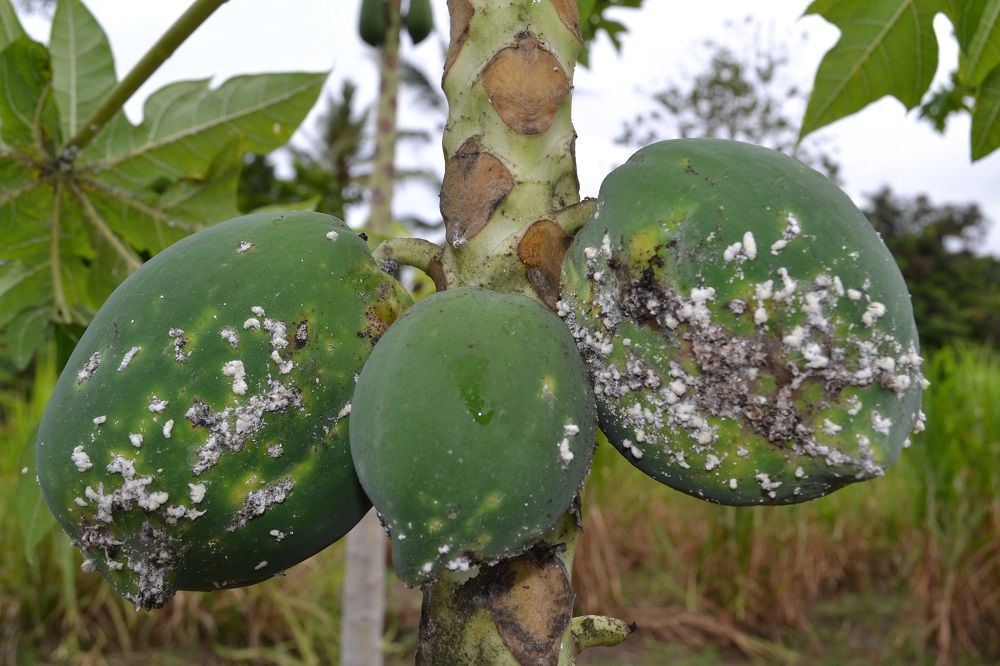
One of the 14 pests in the study is the papaya mealybug which, left unchecked, can wipe out more than half a papaya crop. CABI is already working with partners in Kenya, Uganda, and South Sudan to tackle it using the biocontrol agent Acerophagus papaya. By releasing this parasitoid wasp, papaya mealybug numbers can be driven down enough to restore papaya crop yields in affected areas. Elizabeth Finch, a CABI scientist who mapped the parasitoid’s potential range across Africa, is also a co-author of the new global study. It is a reminder that strengthening these natural defences on the ground will be an important safeguard against climate-related pest impacts.
Investing in nature-based solutions
The study’s authors stress that more research is needed. We still don’t fully understand how these shifts will affect crop yields, food security, and wider economies. However, their message is clear. Protecting biodiversity, cutting greenhouse gas emissions, and investing in agroecology must become priorities, not afterthoughts.
Safeguarding the natural enemies that farmers already depend on could be one of the most cost-effective ways to protect food security.
Further reading
Read the paper: Wyckhuys, K.A.G., Pozsgai, G., Finch, E.A., Seehausen, M.L., Zhang, W. and Gc, Y.D. (2026). Climate Change Can Generate Enemy-Free Space for Crop-Feeding Herbivores. Global Change Biology, 32(3). https://doi.org/10.1111/gcb.70775
CABI project: Biocontrol of papaya mealybug in East Africa.
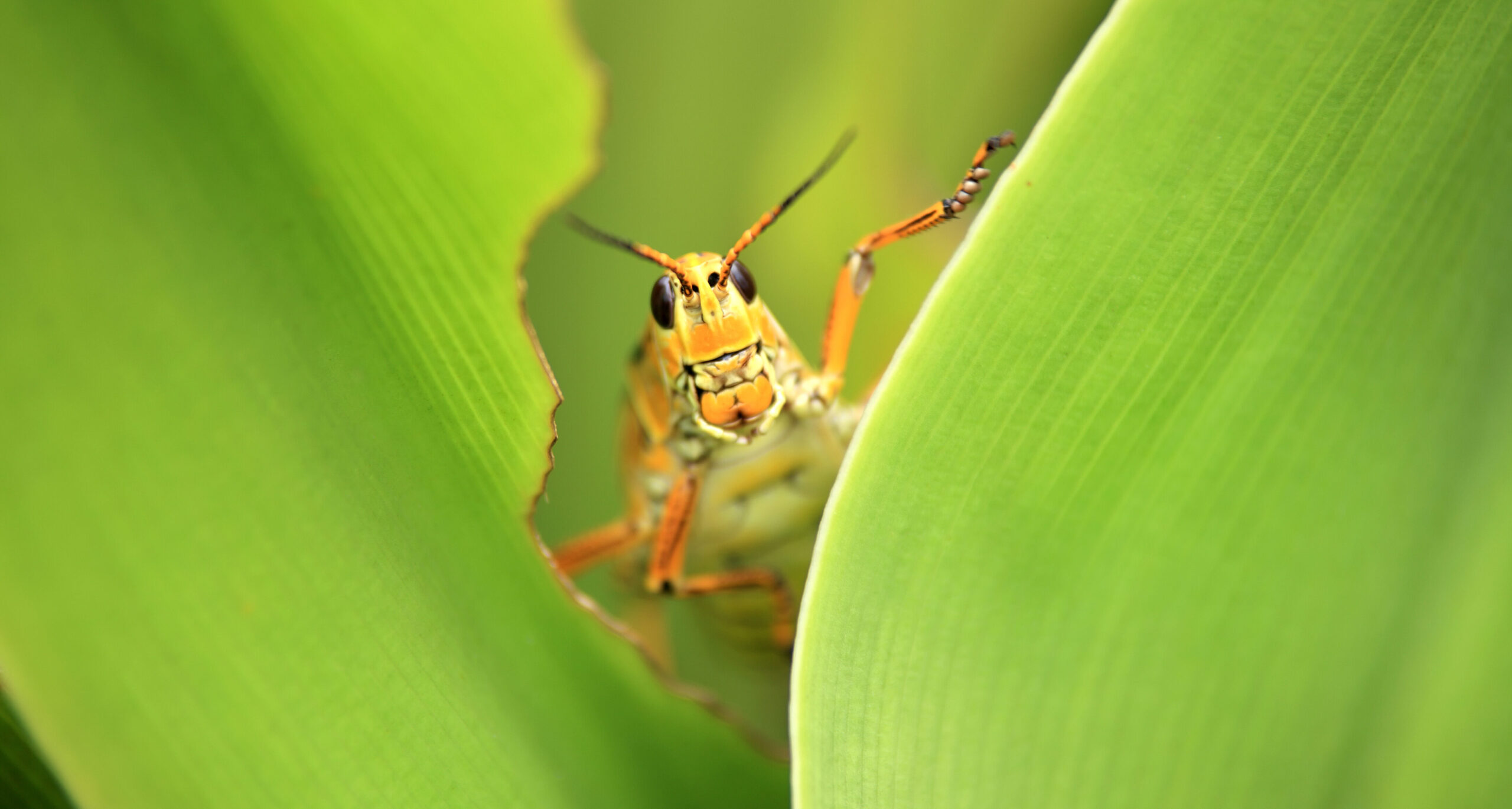
Main image: Close-up shot of orange grasshoppers on a green leaf. Credit: iStock
Related News & Blogs
How ASEAN countries work together to strengthen plant health and protect agriculture
Regional collaboration across Southeast Asia is vital to manage biosecurity risks. Discover how networks like ASEANET and ARDN help countries strengthen plant health, share diagnostic expertise, and protect agricultural trade.
14 September 2026