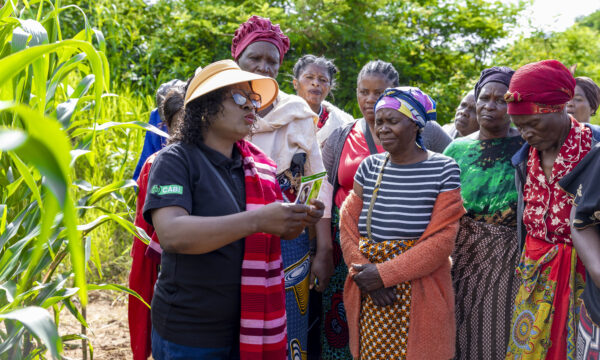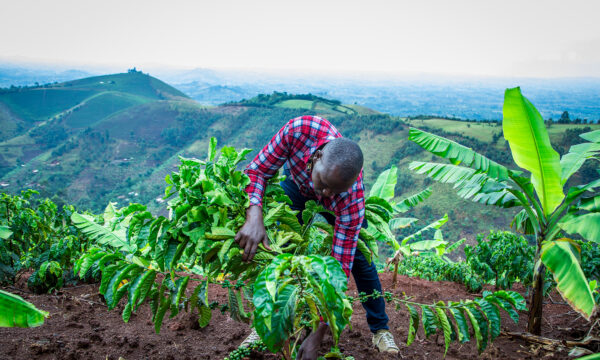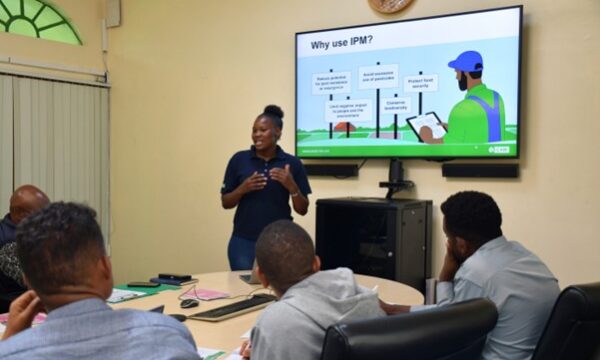


CABI’s Dr MaryLucy Oronje has shared her expertise in sanitary and phytosanitary (SPS) measures pertaining to crop pest management in Africa as part of an event organised by the Royal Society of Biology.
Dr Oronje, who is based at CABI’s regional centre for Africa in Nairobi, Kenya, was keynote speaker at the event which was attended by more than 60 plant health professionals and funded by the UK Department for Environment, Food and Rural Affairs (Defra).
The event was chaired by Dr Geraint Parry, executive officer of the Association of Applied Biologists, who introduced Dr Oronje before she drew upon her 10 years’ experience specialising in crop protection and integrated pest management to examine the challenges and solutions for pest control.
She discussed a number of selected pests of concern to Africa, from the Papaya mealybug (Paracoccus marginatus) to water hyacinths (Eichhornia crassipes), and outlined the challenges of the prevention of pests crossing borders.
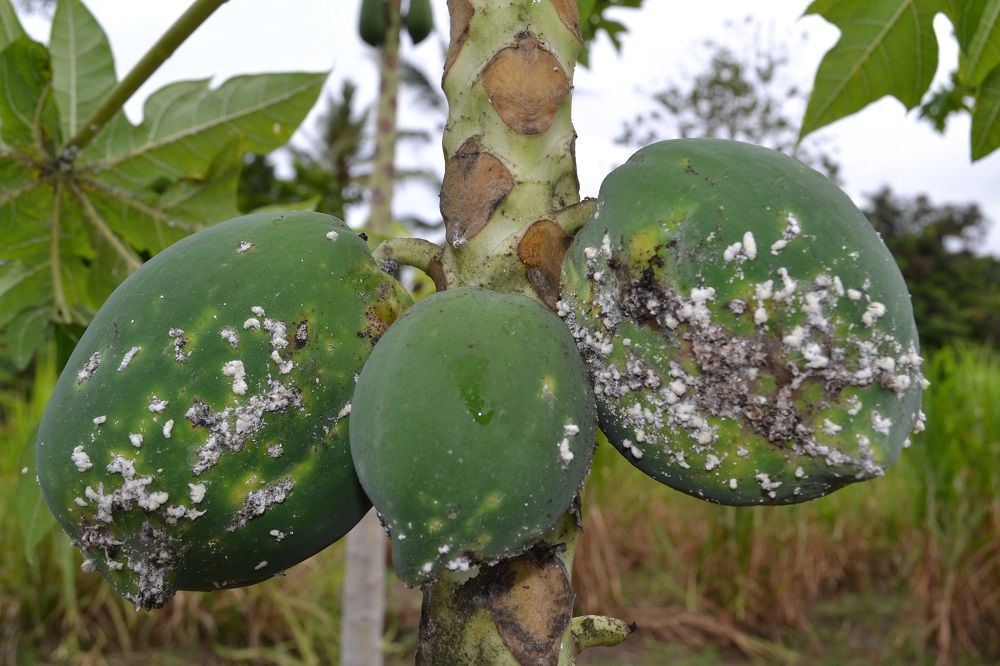
Dr Oronje noted that weak border biosecurity and an inadequate infrastructure to limit invasions are some of the main issues society needs to tackle.
She went on to propose opportunities to minimise the spread of pests in Africa, including the necessities of pest risk analysis, pest modelling, and surveillance.
Dr Oronje touched upon some of the projects CABI is involved to help limit the spread of these pests, including strengthening the horticulture sector in Ghana to enhance exports to the EU and using drones as a means of surveillance in tracking desert locust (Schistocerca gregaria) populations.
The event ended with an audience Q&A and discussion, chaired by Dr Parry, which brought about insightful comments from Dr Oronje on the issues she raised in her talk.
Previous events in the plant health series include a summer conference discussing cutting-edge research and a keynote address by UK chief plant health officer Professor Nicola Spence CBE FRSB on plant biosecurity.
Additional information
Main image: Dr MaryLucy Oronje (Credit: CABI).
Related News & Blogs
The next chapter for Africa’s food systems isn’t inventing solutions. It’s scaling them
Across Africa, many of the solutions needed to strengthen food security, resilience and livelihoods exist. Yet knowledge only creates impact when it reaches the people and institutions who can use it. The priority now is scaling proven solutions so they can deliver impact where it is needed most. This was the consistent message from the Africa Food Systems Forum 2026.
23 September 2026