
Zoonotic diseases pose a significant threat to global health. Spreading between animals and humans, they can cause widespread illness and death, disrupt economies, and place substantial stress on public health services. COVID-19, the most recent global pandemic, reminded us of just how devastating the impact of zoonotic diseases can be and spillover events (when microorganisms pass from animals to humans with the potential to cause disease) can quickly develop into an international crisis with profound consequences for all.
Preventing zoonotic disease outbreaks is imperative. To address them, we must look beyond human health alone. Outbreaks stem from complex interactions between people, animals, and the environments they share, and can be transmitted in many different ways, with multiple drivers contributing to their emergence and transmission. A One Health approach is essential for effectively addressing zoonotic disease risks; it is now widely accepted as essential for preventing zoonotic disease, improving food security, and strengthening resilience to global health threats.
In September 2026, CABI published a major output on zoonotic diseases and One Health. Among other things, the evidence note considers the causes or drivers of zoonotic diseases and how their future impact can be minimized. As we mark One Health Day on 3 November, this blog, the first in a series on the subject, explores why a unified approach is necessary, as well as four areas where stronger coordination, evidence, and investment can help to turn One Health ambitions into sustained action.
What is a One Health approach, and how does it address zoonotic threats?
One Health is an integrated unifying approach that recognises that the health of humans, domestic and wild animals, plants, and the wider environment (including ecosystems) are closely linked and inter‑dependent and must be addressed together. This is what makes a One Health approach an effective solution for preventing the spread of zoonotic diseases – it unifies responses.
In 2024, CABI launched the One Health Hub, a project funded by UK international development from the UK government. The initiative’s evidence, knowledge, and learning promote a cross-sectoral agenda that encompasses the various facets of health. It identifies gaps in knowledge, analyses evidence, and helps to inform policies for a more interconnected approach.
The challenge now is to translate this growing recognition of the value of a One Health approach into action. Although international collaboration and governance have gained momentum, important questions remain about which interventions are most effective and how resources should be prioritized. Building a stronger evidence base – and communicating that evidence to the right stakeholders – is essential for answering these questions and maintaining political and financial commitment.
Early-stage efforts must now build momentum and strengthen the evidence base
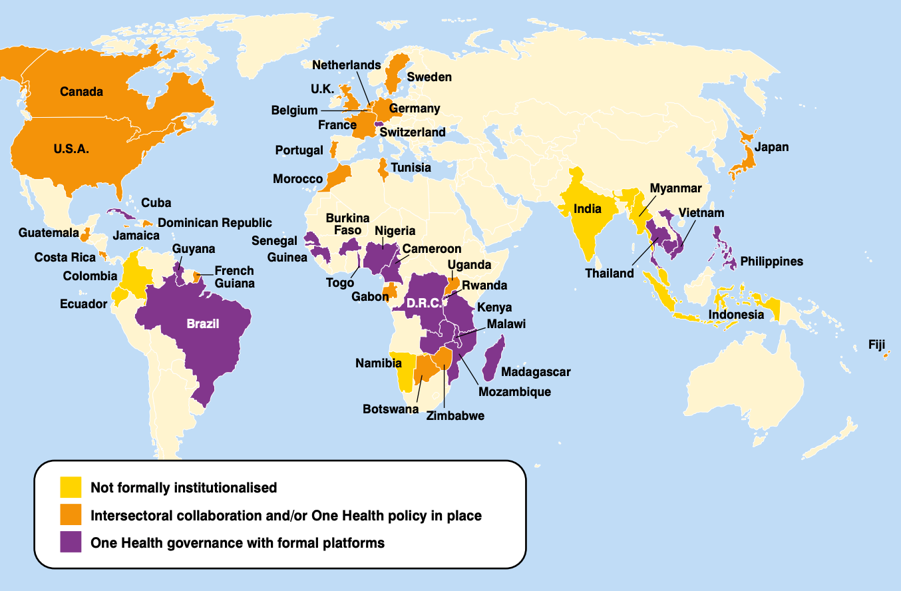
Recent years have seen unprecedented progress for international One Health governance. In 2021, the constitution of the One Health High-Level Expert Panel (OHHLEP) led to the development of a global definition of One Health. In 2022, a Quadripartite of organizations, including the FAO, UNEP, WHO, and the World Organization for Animal Health (WOAH), developed a comprehensive One Health Joint Plan of Action to guide countries on how to implement a One Health approach.
However, while One Health is well established as a concept, the extent to which it is implemented varies considerably between countries and sectors and more robust evidence is urgently needed to ensure sustained political commitment. Without it, support will wane. Continued collaboration depends on strong proof of the benefit of a One Health approach. Does it offer good value for money, and can it provide practical proof of impact? To maintain momentum, concrete action is needed.
Four priority actions for a One Health approach to zoonotic disease prevention
A One Health approach is now widely accepted as an effective means of preventing the emergence and spread of zoonotic diseases. Four priority actions can support this approach.
Prioritize prevention and cross-sector collaboration
The experience of COVID-19 reinforced the importance of preventing zoonotic diseases. Far more sustainable than crisis response, prevention and early detection save money and lives. Integrated surveillance that links human, animal, and environmental monitoring enables faster cross-sector responses. Identifying and limiting the causes of zoonotic spillover can help to reduce the emergence of diseases. For example, monitoring changes in land use, trade, and consumption of wild animals can help to mitigate the health, economic, and social impacts of zoonotic outbreaks.
Align methods, priorities, and strategies
Balancing and optimizing the health of humans, animals, and the environment is ambitious and complex. Different sectors and stakeholders have varied, and sometimes competing, priorities. Identifying these inconsistencies is essential, and certain methods could be beneficial for locating them. For example, social-ecological systems models can help us to understand complex interactions. Game theory can deliver insights into how people make decisions and, therefore, offer strategies for discovering mutually beneficial, evidence-based approaches. Any concrete results that come from these interactions help to build further trust and momentum for a One Health approach.
Harness AI, digitalization, and genomics
We have many tools at our disposal that can help to build and expand upon a One Health approach. These include AI, digital, and genomic tools to transform zoonotic disease monitoring. AI is critical for analysing complex data and patterns and improving the detection of disease transmission across species. Digitalization can harness the untapped potential of monitoring patient and animal care to better understand zoonotic disease outbreaks. Whole genome sequencing can trace pathogens across ecosystems and species. However, the use of these tools relies on strategic investment and attention to technical, political, and privacy challenges.
Build competence, institutions, and legal frameworks
To successfully limit the spread of zoonotic diseases, a One Health approach must become the default. It needs to be embedded into capacity and training, institutions, and legal frameworks, and become an integral part of governance, including:
• Data-sharing legislation
• Global agreements
• Integrated research centres
• National platforms
• Workforce development
Sustained political will, and the agreements and legislation that support it, are essential for making One Health an integrated part of national and international systems. Once embedded, the approach then becomes the rule rather than the exception, with zoonotic disease prevention baked into a unified response.
The call to action
Zoonotic diseases are among the biggest challenges we face on a global scale. The lessons of COVID-19 are being learnt, and while momentum has been built for a One Health approach, we cannot afford to let it slow down. On One Health Day, we must draw attention to the drivers of zoonotic diseases and the concrete actions we can take to manage them. Above all, we must work in a unified approach. One Health holds solutions. Now we must embed it into our national and international systems to reap its benefits.
Further information
• Read the full Evidence Note
• Learn more on the One Health Hub
• Coming soon: Umbrella review on One Health and zoonotic diseases
• Sign up to our newsletter and bookmark this page to read the next in our series of blogs
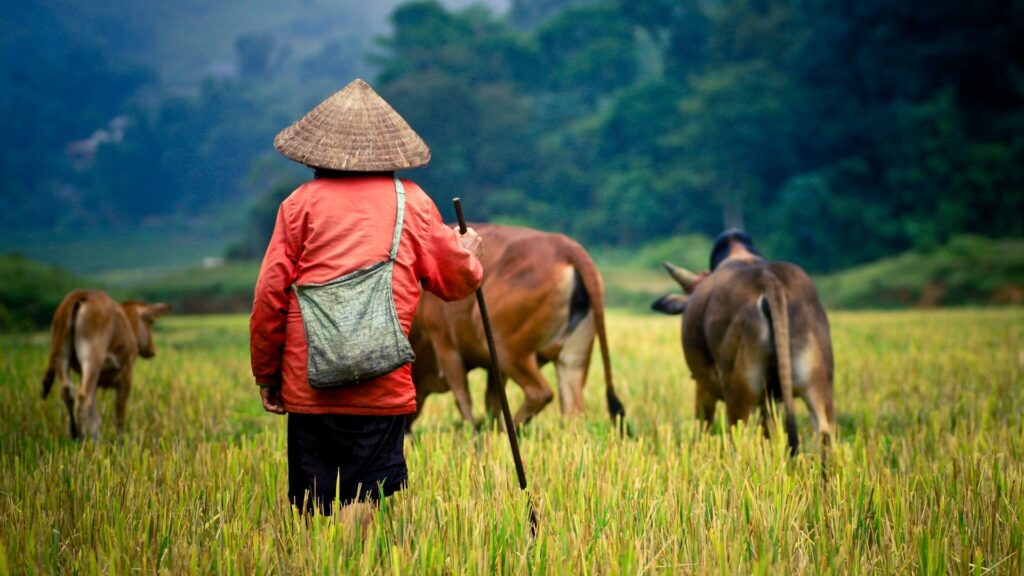
Featured image: Buffalo shepherd on the rice field. © iStock / pirjek
Map image full reference: Zhang, Y., Wang, J., Wang, L., Miao, L., Sun, Y., Yang, X. et al. (2025) ‘An integrated machine learning framework to understand zoonotic spillover emergence across anthropogenically modified landscapes’, Environmental Health Perspectives. doi: 10.1289/EHP15937
The One Health Hub is managed by CABI with funding from UK International Development from the UK government. The views expressed do not necessarily reflect the UK government’s official policies.
Related News & Blogs
How crop-livestock clinics help strengthen One Health partnerships in Uganda
Joint crop-livestock clinics in Uganda are bringing agricultural, veterinary and other specialists together to improve farmer support, strengthen cross-sector partnerships and promote a practical One Health approach.
29 September 2026