
Pest management in Ecuador is causing serious problems. Overreliance on pesticides is one of the main challenges. Chemical pesticides play an important role in protecting crops and maintaining yields. However, overuse can pose significant risks to people, animals, biodiversity, and the wider environment. It can also reinforce a cycle of pesticide dependence, making it harder to introduce and adopt nature-based alternatives.
In April 2026, a CABI-led study published in Advances in Agriculture examined farmers’ knowledge of sustainable pest management in Ecuador. In this blog, we look at the study’s key findings, including the barriers preventing farmers from adopting lower-risk solutions such as biocontrol and biopesticides.
Studying pesticide knowledge – what do farmers know?
Studies have shown that pest control in Ecuador remains heavily dependent on chemical pesticides. Farmers often use mixtures of different products and, in some cases, apply them at higher rates than recommended. Some also harvest crops before the recommended interval after pesticide application has passed, increasing the risk of pesticide residues remaining on produce.
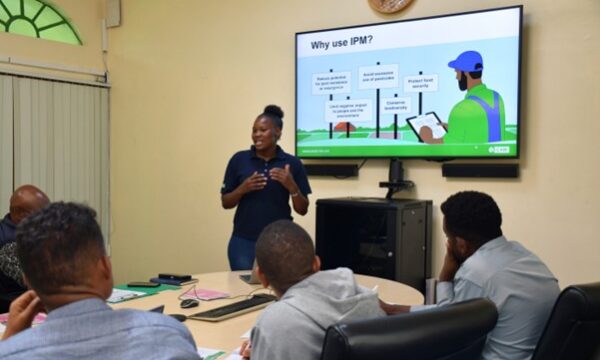
Lower-risk approaches can help reduce these threats, including Integrated Pest Management (IPM). This approach combines different methods to manage pests while supporting beneficial organisms. Biological control is an important part of IPM. It uses specific natural enemies of pests, such as insects and pathogens, to reduce pest populations and limit crop damage.
Yet despite the potential for these approaches to reduce reliance on chemicals, farmers are not necessarily making the shift. The study sought to understand why. It examined farmers’ perceptions of pesticides, awareness of their risks, knowledge of sustainable pest management, and use of IPM and biocontrol across three contrasting food production systems within the same geographical region.
Specifically, the research surveyed 162 farmers in three food production systems in Tungurahua Province:
• Indigenous family farming in Salasaka
• Horticulture in Izamba
• Fruit production in Patate
Researchers examined pesticide use and farmers’ perceptions of pesticide benefits and risks, as well as their knowledge and use of IPM and biocontrol.
Pesticides are the ‘go-to’ solution, even when farmers understand the risks
The research uncovered several key findings. Most farmers recognized the health and environmental risks associated with pesticide use, and many reported symptoms consistent with pesticide exposure. Despite this awareness, pesticides remained their ‘go-to’ method for managing pests.
A key factor influencing adoption was farmers’ strong reliance on conventional pesticides, which were widely regarded as the most effective and dependable option for crop protection and yield preservation. As many producers had only limited exposure to biological control products, concerns regarding their performance, reliability, and practical application persisted. Consequently, a lack of familiarity and confidence in these alternatives presented a significant barrier to their uptake.
Nonetheless, the study found that farmers who were aware of lower-risk alternatives were more likely to adopt them. For example, farmers in Izamba had the highest awareness of pesticide risks and were also the most likely of the three groups to adopt IPM. By contrast, fruit growers in Patate had less awareness of alternatives and continued to rely heavily on chemical pesticides. Indigenous family farmers in Salasaka also had less awareness and, apart from homemade botanical extracts, made limited use of alternatives.
Access to agricultural extension services was also closely linked to the adoption of sustainable pest management. Practical advice and training on pesticide alternatives can be difficult to access, with many farmers relying primarily on agrochemical retailers rather than independent advisory services for information.
However, awareness and access to advice are not the only barriers. Some farmers have limited access to biocontrol products and other sustainable inputs even when they know about them. These products can be difficult to access in rural areas. Their adoption is often constrained by farmers’ perception that they are costlier than conventional pesticides. This is partly due to limited awareness about the broader benefits they can provide.
Breaking the pesticide cycle
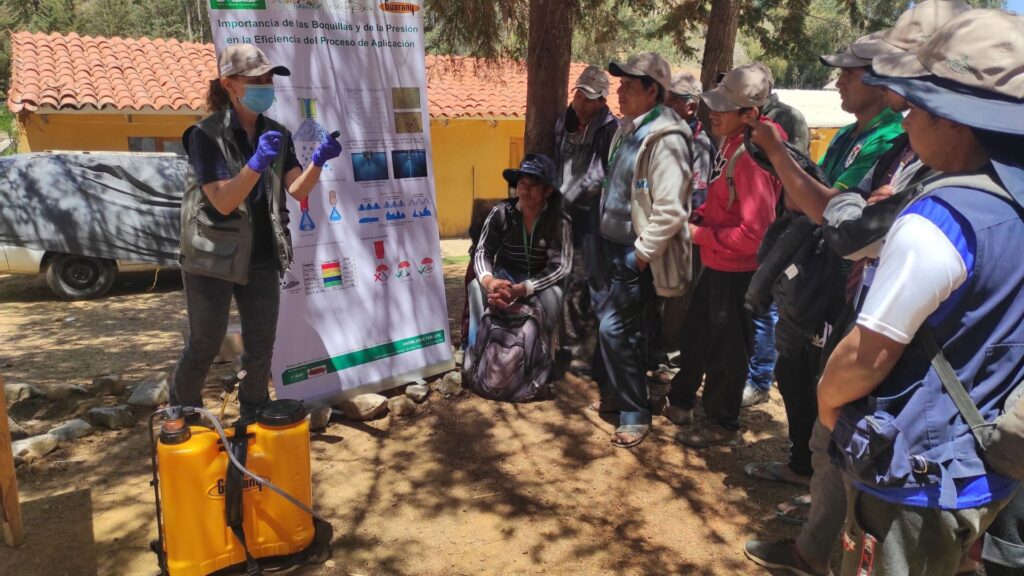
Sustainable pest management needs to be understood, accessible, and practical if it is to reduce reliance on chemical pesticides. Simply encouraging farmers to spray less is unlikely to be enough. Farmers need reliable, field-based training alongside affordable and accessible biocontrol products and other alternatives.
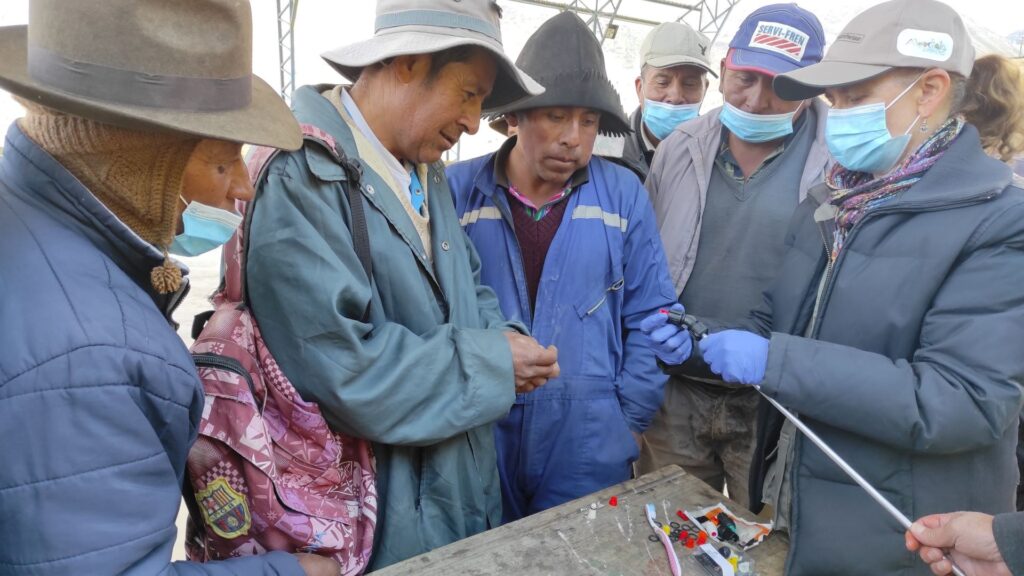
Programmes such as PlantwisePlus can help close this gap through advisory services and training, including farmer field schools and demonstration plots. Ongoing technical support is also critical. Plant clinics can provide this, particularly where conventional extension services struggle to reach remote communities.
Farmers also need affordable access to resources such as personal protective equipment (PPE). Knowing that PPE is necessary does not help if farmers cannot afford it.
Adapting to local contexts
No single approach can make pest management sustainable. Usually, a mix of approaches are needed, and they must also reflect local farming knowledge, systems, and constraints. In Salasaka, for example, culturally appropriate training could build on traditional knowledge. At the same time, access to protective equipment and technical advice could be strengthened. In Patate, efforts could focus on IPM for orchards as well as better pest monitoring and sanitation. The use of botanical and microbial products would also be helpful. In Izamba, where adoption is already relatively high, strengthening the use existing use of biocontrol using advanced training and improved product use would be beneficial.
Scaling up sustainable pest management
A combination of actions is needed to support wider adoption of sustainable pest management. Expanding plant clinics, farmer field schools and demonstration plots, alongside training-of-trainers programmes, can help spread practical knowledge and support behaviour change. Extension approaches also need to be inclusive and gender responsive. Strengthening partnerships between government, universities, and other organizations could improve extension services, while increasing the availability and affordability of quality bio-inputs and PPE would help farmers put what they learn into practice.
The study’s gives a clear message: farmers understand many of the risks associated with pesticides, but awareness on its own is not enough to deliver change. Breaking the pesticide cycle is more than simply using fewer chemical pesticides. It calls for combining knowledge with practical support and trusted plant health advice. It is essential to ensure that farmers can access affordable alternatives and solutions adapted to local farming systems. Together, these measures can help farmers adopt safer, more resilient approaches to pest management.
Further information
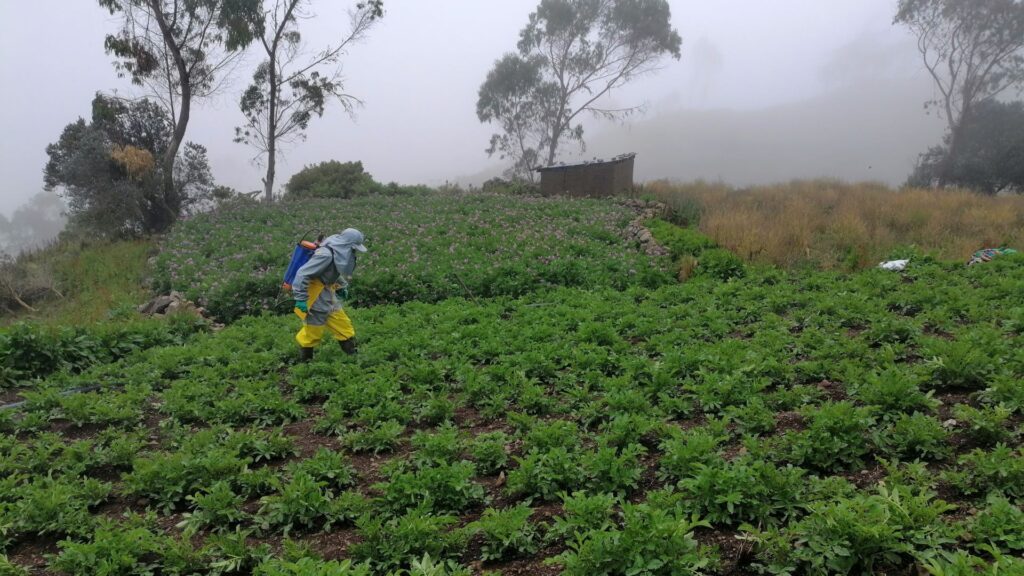
Feature image credit: A farmer in Ecuador spraying pesticides with full PPE (credit: CABI)
Full research article
Related news/blogs
Advancing bioinputs through knowledge and partnerships in Latin America
Related News & Blogs
Advancing bioinputs through knowledge and partnerships in Latin America
Colombia is strengthening the use of bioinputs through research, policy support and regional collaboration. From biological control of coffee berry borer to improving access to reliable information, the country offers valuable lessons for advancing sustainable agriculture across Latin America.
10 September 2026