
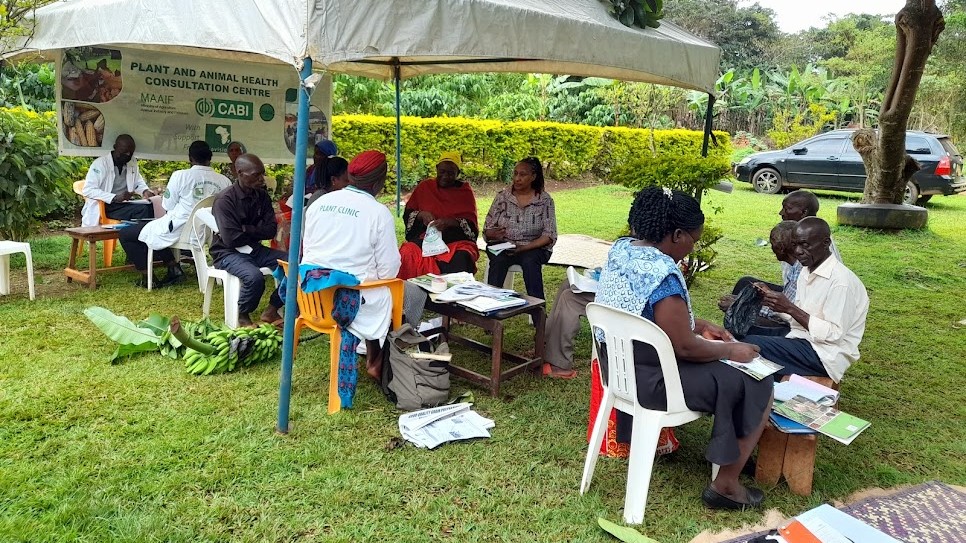
Across Uganda, many smallholder farmers grow crops and rear livestock on the same farm. Yet agricultural and veterinary services have traditionally operated separately, making it difficult for farmers to access timely advice in response to challenges. To address this gap, a CABI-led project introduced joint crop-livestock clinics, bringing agricultural (plant doctors) and veterinary officers together to provide integrated support to farmers.
What started as a pilot with four clinics across the districts of Buikwe, Mukono, Kayunga, and Luwero grew to 102 clinics by the end of the second phase in June 2025, reaching 13,560 smallholder farmers. The experience has demonstrated how simple data recording can do much more than help answer farmers’ queries: it can strengthen partnerships, improve advisory services, and promote a One Health approach that connects human, animal, plant and ecosystem health.
An innovative model
The project was built on the success of plant clinics, where trained agricultural officers advise farmers on crop issues. The new model expanded this concept to include livestock, recognizing that most farmers face both crop and animal health and production challenges.
Introducing this integrated approach required some adaptation. Working with veterinary officers helped to refine the model to reflect the practical realities of livestock services. They highlighted that the term “clinic” typically referred to an indoor treatment centre and identified biosafety considerations around bringing live animals to consultation sessions. The project therefore used photo sheets and visual guides rather than live animals.
Learning the value of data
When attending clinics farmers reported queries, but tracking cases proved challenging. While agricultural officers were already accustomed to documenting queries during plant clinic sessions, veterinary officers typically visited farmers in their homes, offering direct advice or treatment without capturing detailed records. The project introduced simple data collection forms for both crop and livestock consultations.
The records provided an easy way to track recurring issues, follow up with farmers, and demonstrate the reach of extension services. Analysis of consultation data generated clear evidence of farmer engagement and service delivery, helping staff prepare reports for district management meetings. By demonstrating how many farmers they had reached, the problems addressed and the results achieved, extension teams gained greater recognition and generated interest from other sub-counties in establishing similar services.
Mentorship and cross-sector collaboration
Growing demand for joint clinics was addressed through practical mentorship. Starting in a single sub-county per district, experienced teams trained colleagues, established new clinics and supported expansion into additional sub-counties. With district budget support, joint crop-livestock clinics were eventually operating across all sub-counties in the participating districts.
As the clinics expanded, professionals from different disciplines were recruited, increasing the size and expertise of clinic teams. In some clinics, teams of up to ten officers were able to serve as many as 80 farmers.
Meanwhile, one of the most important outcomes of the clinics was their encouragement of cross-sector collaboration. Community development officers helped mobilize farmers, while fisheries officers, environmental officers, entomologists, and community health assistants also joined relevant sessions.
Staff who normally worked independently began sharing transport, clinic kits and expertise. By working together, teams could reach more people while using resources more efficiently.
Making One Health visible
The clinics also revealed important connections between human, crop, livestock, and ecosystem health issues. This prompted district staff to prioritize One Health challenges that farmers faced, from aflatoxins to pesticide misuse and rabies.
In one case, a farmer sought advice for chickens with growth and egg-laying deficiencies. The clinic staff discovered found that the problem stemmed from poor feeding practices, including the use of mouldy grain. Subsequently, aflatoxin awareness campaigns were carried out in all six districts.
In another example, a veterinary officer investigated blindness in a cow. Discussions with the plant doctor revealed that a spray pump previously containing herbicides had been used to apply animal medicine, resulting in contamination. This case further highlights the need for cross-disciplinary collaboration.
Supporting community health
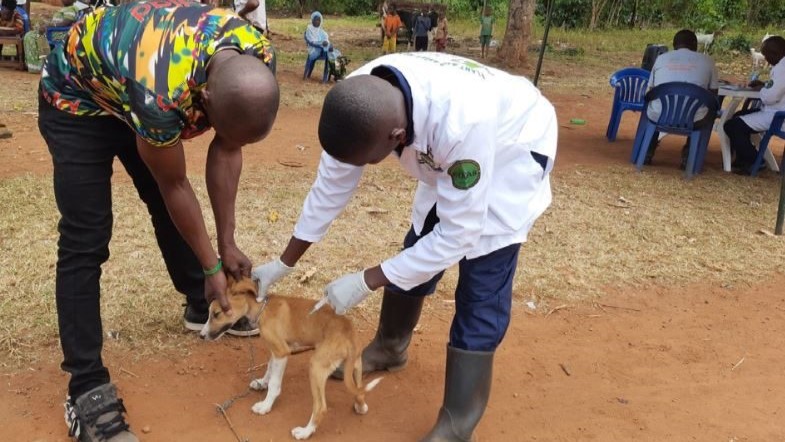
The clinics increasingly became platforms for broader community health activities such as vaccination points for rabies and livestock disease prevention programmes. These sessions improved the distribution and uptake of government agricultural inputs and services.
Staff used insights from farmer records to organize training sessions on common challenges affecting communities. Radio talk shows were used to raise awareness among larger audiences, extending the clinics’ impact far beyond those who attended in person. Topics such as pesticide misuse, food safety, aflatoxin contamination, animal diseases, and environmental health quickly became regular subjects of discussion.
Farmers recognized the benefits of multidisciplinary clinics. By bringing different specialists together in one place, the clinics helped farmers identify previously overlooked risks and access advice on multiple aspects of their farming systems through a single service.
A model for the future
What started as a small pilot project became a model for collaborative extension service delivery. The success of the joint crop-livestock clinics shows how simple farmer records and evidence-based reporting can drive institutional change, strengthen partnerships, and improve services.
Most importantly, the initiative demonstrates how local-level collaboration can support the broader One Health agenda. Bringing together agricultural, veterinary, environmental, and community health actors, the clinics provide a practical way to address interconnected challenges affecting people, animals, crops, and our shared ecosystem.
As Uganda and other countries continue to promote One Health approaches, joint clinics offer a practical example of how data, collaboration, and farmer-centred services can improve both agricultural productivity and community wellbeing.
Further information
Feature image: Joint crop-livestock clinic in action in Uganda (credit: CABI)
Related blog
Heads or tails? The global funding patterns steering One Health research
Story of impact
Joint plant-livestock clinics reap One Health benefits for farmers in Kenya and Uganda
Recognition
Joint crop-livestock clinics have been recognized by FAO as a good practice and innovation in One Health in agrifood systems. CABI and partners received a certificate of recognition at the FAO Global Conference for Action on One Health in Agrifood Systems in Rome in September 2026.
Related News & Blogs
Heads or tails? The global funding patterns steering One Health research
Who funds One Health research and what do they prioritize? A CABI-led study uncovers the major funders shaping the field and highlights the action tracks that remain consistently under-supported.
7 September 2026