

CABI supports workshop on efficacy and residue data extrapolation and crop grouping guidelines

CABI has joined forces with the Pest Control Products Board (PCPB) and aak-GROW to deliver a five-day workshop aimed at demystifying the Kenyan efficacy and residue data extrapolation and crop grouping guidelines.
CABI works with partners to develop simplified manual of KS 1758: Horticulture Code of Practice for Kenya

CABI has worked in partnership to help develop a simplified manual outlining with illustrations the details of the KS 1758: Horticulture Code of Practice for Kenya which is aimed at enabling more farmers to produce safe food.
CABI empowers youth to transform agriculture and contribute to greater food security in Kenya and Uganda

Meet smallholder farmer James Muliasi, a resident of Kanye It Village in Njoro Sub County, Kenya, who has emerged as a champion for agricultural development in his community thanks to training received by CABI together with a range of partners.
CABI study brief explores effectiveness of farmer groups in promoting safe food production standards

A new CABI study brief has been published which delves into important aspects regarding the effectiveness of farmer groups in advocating for and adopting safe food production standards using experiences from Ghana and Kenya. The study brief, written by CABI scientists Maureen Njenga, Walter Hevi, Suzanne Neave, Lucy Karanja, Dr Naphis Bitange and Dr Monica…
Study highlights how joint clinics can help Kenyan farmers address ‘One Health’ issues
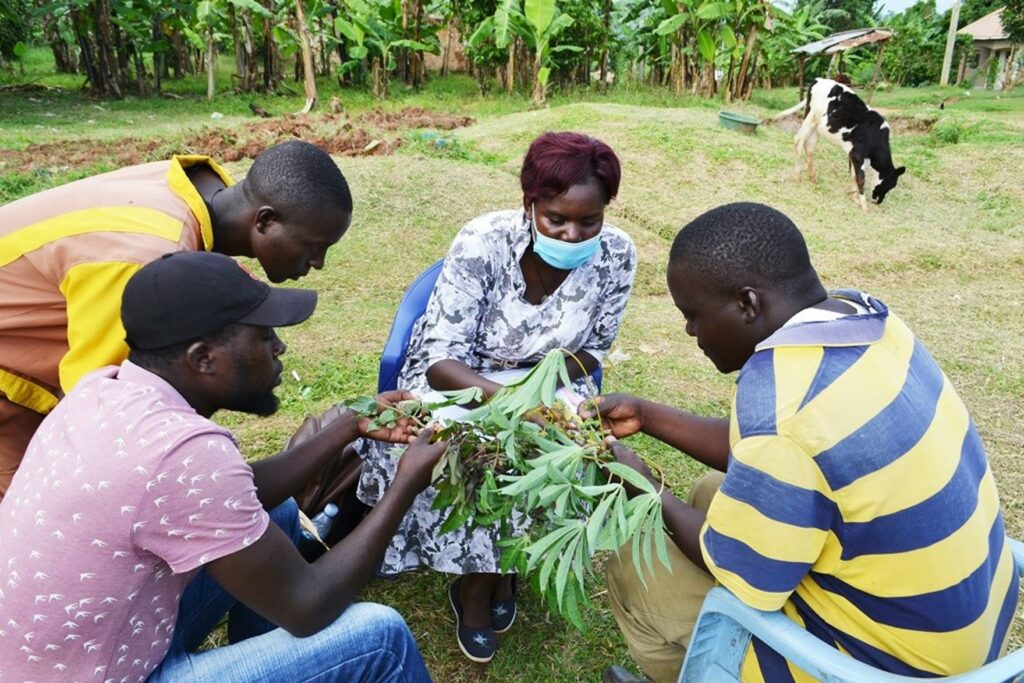
In sub-Saharan Africa, economic growth from agriculture is 11 times more effective at reducing extreme poverty compared with any other sector. In Kenya, 71% of the rural population work in the agriculture sector, accounting for nearly 70% of export earnings.
Antibiotics use in Kenyan livestock studied
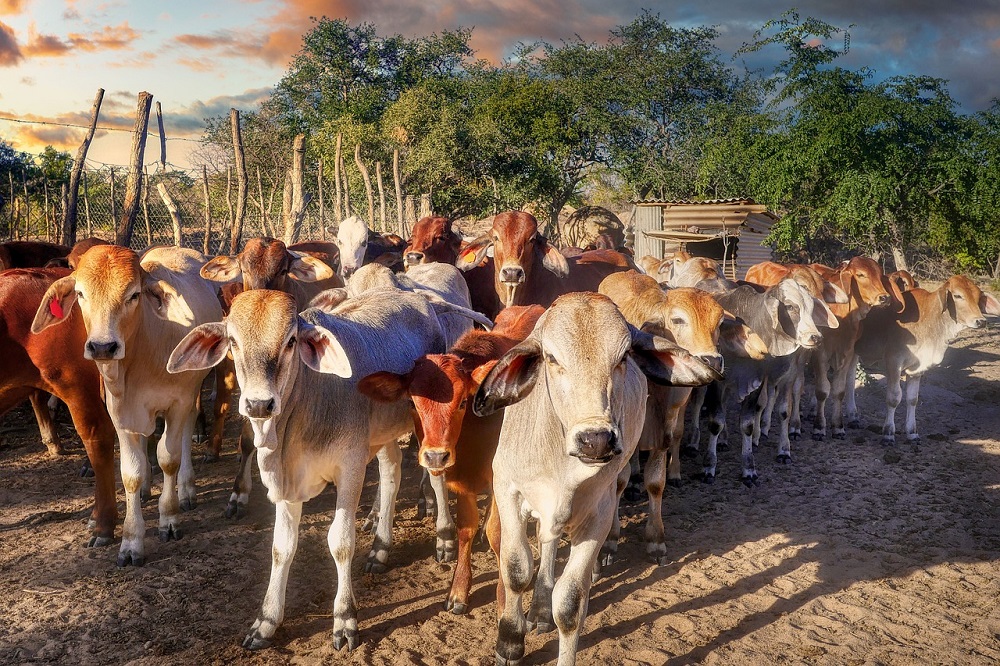
The use of antibiotics for livestock has formed part of a study in Kenya aimed at investigating technological challenges in development and food security.
Perceptions of genetically modified crops under the microscope in Kenyan study
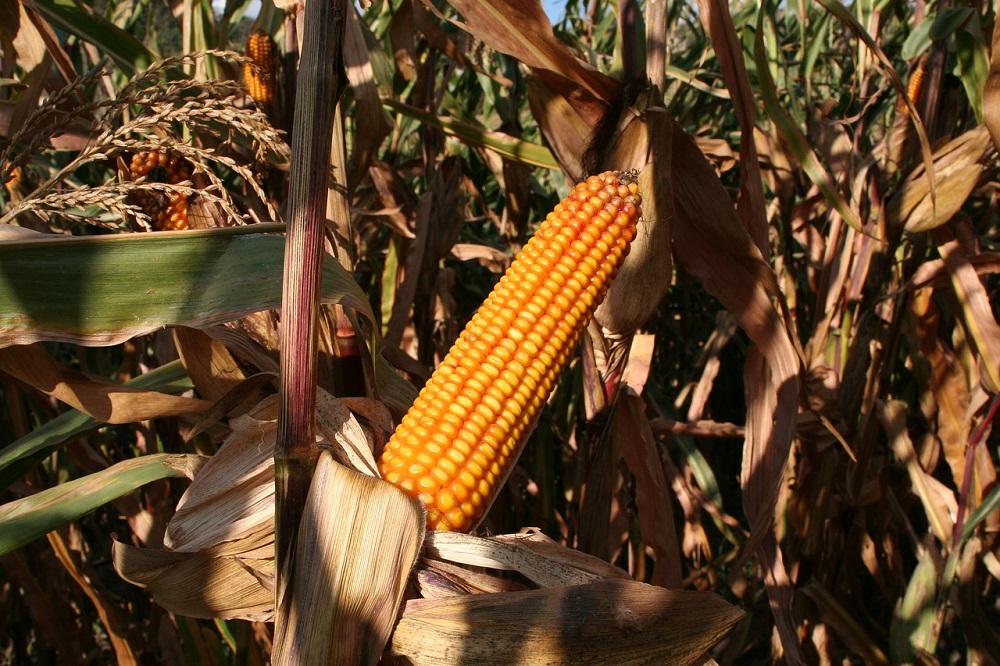
The perceptions of Genetically Modified (GM) crops has come under the microscope as part of a study in Kenya aimed at investigating technological challenges in development and food security.
Woody weeds are harming biodiversity, but we can stop them – here’s how
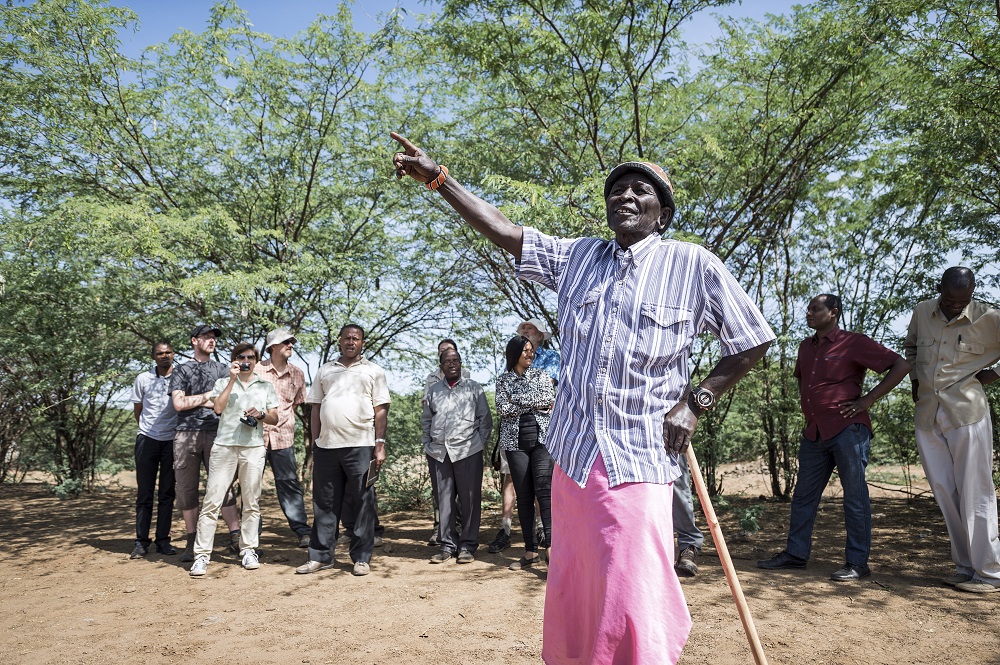
On 22nd May, we mark the International Day for Biological Diversity. Biodiversity is critical for life on Earth. We cannot live in isolation of our environment. But human activity is damaging essential habitats. In this article, CABI’s Global Director for Invasive Species Dr Hariet Hinz looks at how invasive woody weeds are harming biodiversity in…
Carbon sequestration in Africa at the expense of livelihoods and biodiversity
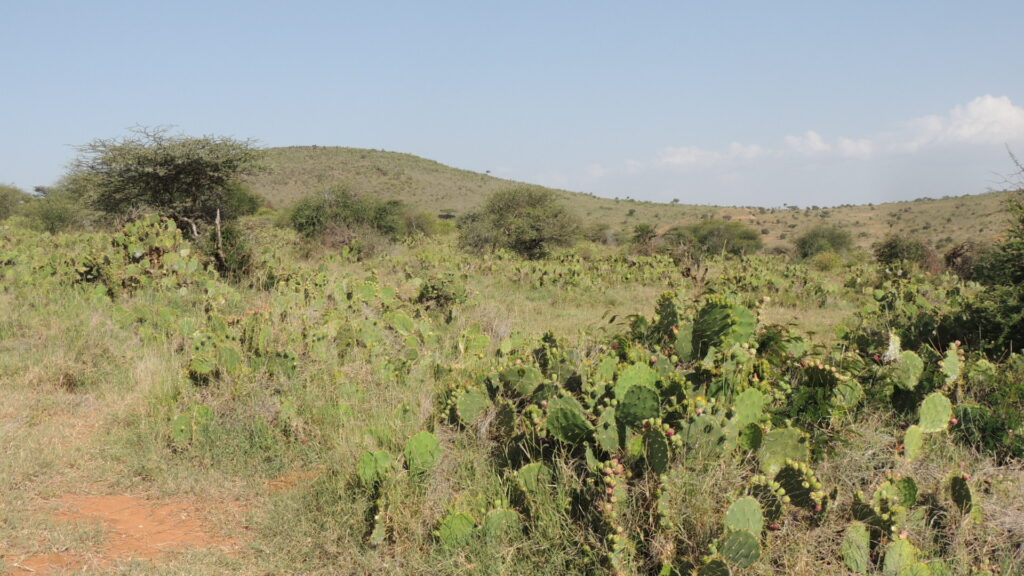
By Dr Arne Witt, CABI Africa According to the World Resources Centre, Africa accounts for only 2–3 percent of the world’s carbon dioxide emissions from energy and industrial sources. In fact, Africa’s per capita emissions of carbon dioxide in the year 2000 were 0.8 metric tons per person, compared with a global figure of 3.9…
Digital extension and advisory services for farmers amid COVID-19 come under the microscope
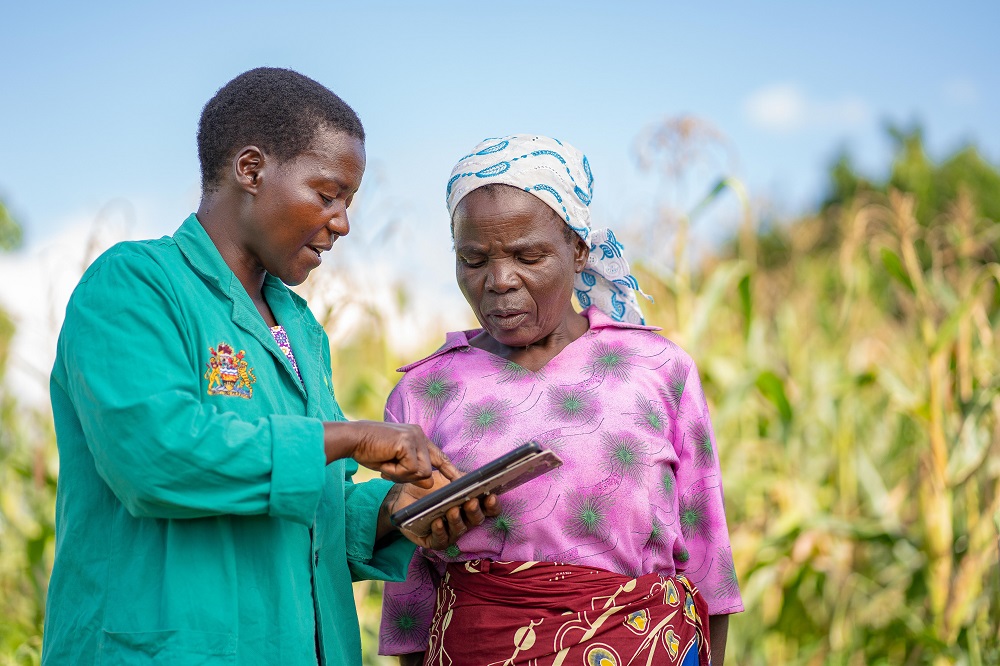
The challenges of using digital tools as part of extension and advisory services to help empower small and family farmers amid the COVID-19 pandemic have come under the microscope in a joint webinar hosted by the Food and Agriculture Organization of the United Nations (FAO) and Agrilink.
- « Previous
- 1
- 2
- 3
- Next »